
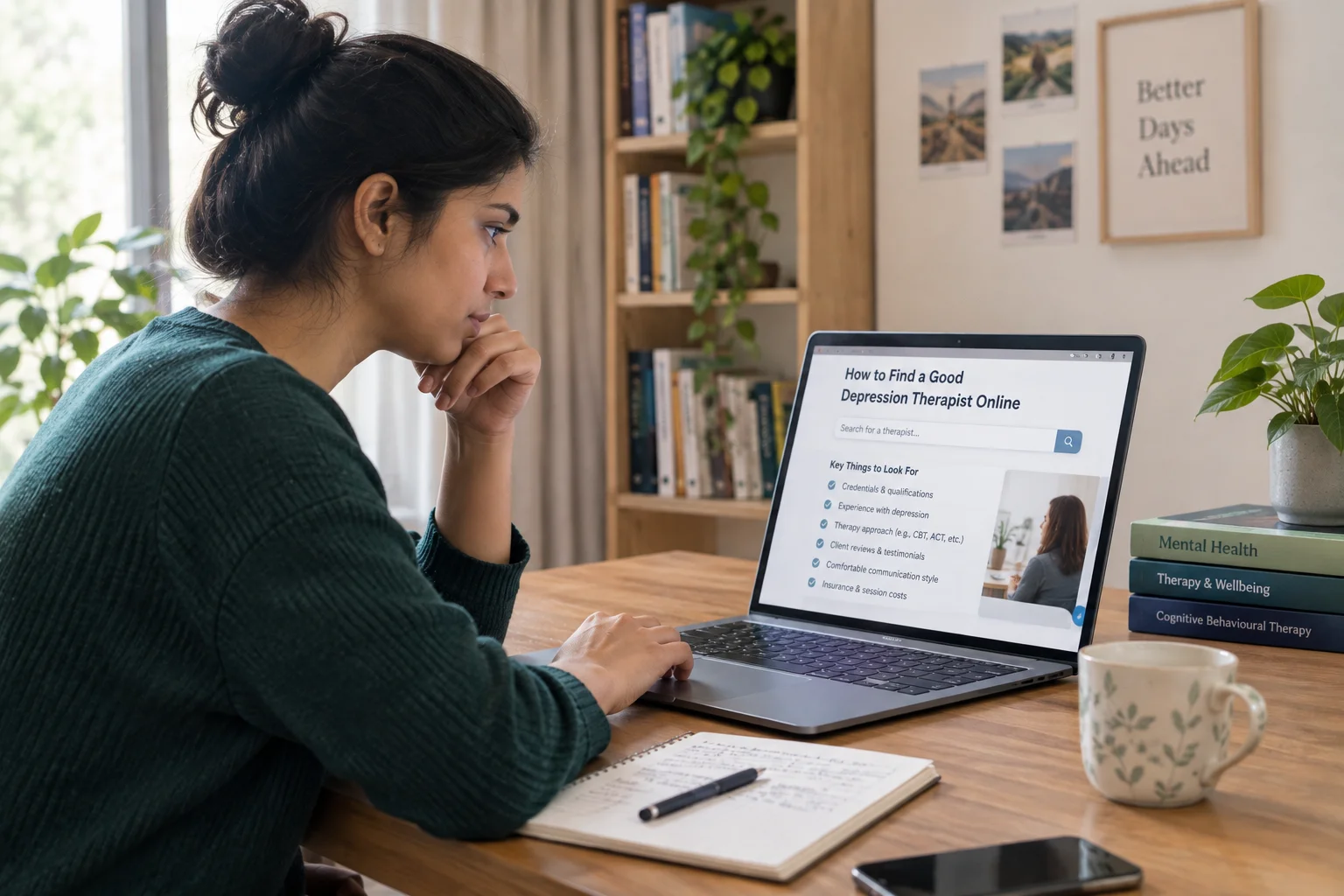
If you’re lying awake wondering how to find a therapist for depression, you’re already doing the hardest part — admitting you need support. Depression can make even simple tasks feel impossible, so searching for the right professional shouldn’t add to that weight. This guide walks you through exactly how to find the best therapist for depression, what to ask, what it costs, and how to know when you’ve found the right fit.
How Do You Find a Good Therapist for Depression?
Start by narrowing your search to licensed professionals who specifically treat mood disorders. A general counsellor isn’t always equipped to handle major depressive disorder, so credentials matter.
Here’s a practical starting checklist:
- Confirm they hold a valid license (clinical psychologist, psychiatrist, or licensed counsellor)
- Check if they specialise in mood disorders, not just general wellness
- Read client reviews or ask for referrals from your doctor
- Look for experience with evidence-based treatment for depression, like CBT or interpersonal therapy
Platforms like TalktoAngel make this easier by letting you filter therapists by specialization, language, and availability, so you’re not guessing from a random directory.
What Type of Therapist Is Best for Treating Depression?
Not all therapy styles work the same way for everyone, and that’s okay. A therapist specializing in depression usually draws from one or more proven approaches.
Cognitive Behavioral Therapy (CBT)
Cognitive behavioral therapy (CBT) helps you identify and reframe the negative thought patterns that fuel depressive episodes. It’s structured, goal-oriented, and backed by decades of research.
Interpersonal Therapy
Interpersonal therapy focuses on relationship patterns and life transitions that may be contributing to your depression — useful if your low mood connects to conflict, grief, or isolation.
Combination Approaches
Many therapists blend CBT with mindfulness-based techniques or talk therapy for depression sessions tailored to your specific symptoms and history. There’s no one-size-fits-all; what matters is that the approach matches your needs.
Where Can You Look for a Depression Therapist Near You?
You have more options today than ever before:
- Online therapy platforms — services like TalktoAngel connect you with verified therapists from home
- Local clinics — centres such as the Psychowellness Center, a top mental health clinic in Delhi, offer in-person sessions with experienced psychologists
- Hospital referrals — your physician can refer you to an affiliated mental health department
- Employee assistance programs — many workplaces offer free or subsidised therapy sessions
- Therapist directories — searchable by location, specialization, and insurance acceptance
If convenience and comfort matter most to you, you can also book a depression therapist online in just a few clicks through most of these platforms.
How Much Does Depression Therapy Typically Cost?
Costs vary widely depending on location, therapist experience, and session format. Here’s a general breakdown:
- In-person sessions with senior psychologists typically cost more than online equivalents
- Online therapy platforms often offer more affordable per-session rates and subscription packages
- Sliding-scale options exist at many community clinics based on income
- Insurance coverage for mental health is expanding in many regions, so check your policy first
Don’t let cost concerns stop you from reaching out — many platforms offer free initial consultations, so you can gauge fit before committing financially.
What Questions Should You Ask Before Choosing a Depression Therapist?
A short screening call saves you time and emotional energy down the line. Ask:
- What’s your experience treating major depressive disorder specifically?
- Which therapeutic approach do you typically use?
- How do you measure progress over time?
- What does a typical session look like?
- Are you available for ongoing care, or just short-term support?
Their answers — and how comfortable you feel asking — tell you a lot about whether this is someone you can open up to.
How Do You Know If a Therapist Is the Right Fit for You?
Fit matters more than credentials alone. You should notice, within the first two or three sessions:
- You feel heard rather than judged
- The therapist listens before jumping to advice
- Sessions leave you with practical takeaways, not just venting
- You feel safe enough to be honest, even about difficult topics
If something feels off after a few sessions, it’s okay to switch. Finding the right therapeutic relationship is part of the process, not a failure.
Is Online Therapy Effective for Depression?
Yes — research consistently shows that online therapy can be as effective as in-person treatment for mild to moderate depression. It removes barriers like travel time, scheduling conflicts, and geographic limitations.
That said, severe depression with safety concerns may need in-person or hybrid care, where a therapist can coordinate more closely with psychiatric support if medication is involved.
How Do You Schedule a Depression Therapy Session?
Once you’ve chosen a therapist, booking is usually straightforward:
- Create a profile on the platform or call the clinic directly
- Browse available therapists and read their specializations
- Select a time slot that fits your schedule
- Complete a brief intake form about your symptoms and history
- Attend your first session, ideally with an open mind rather than fixed expectations
You can schedule a depression therapy session within the same day on most online platforms — a genuine advantage if you’re dealing with urgent distress.
What Should You Expect During Your First Therapy Session?
Your first session is mostly about depression symptoms and diagnosis — the therapist will ask about your history, current symptoms, daily functioning, and any previous treatment. It’s less “lying on a couch” and more a structured, supportive conversation.
Expect to discuss:
- When your symptoms started and how they’ve changed
- Sleep, appetite, and energy patterns
- Any history of therapy or medication
- Your personal goals for treatment
This session sets the foundation — don’t worry about saying everything perfectly.
How Do You Find an Affordable Therapist?
If cost is a barrier, consider:
- Community mental health centres with sliding-scale fees
- University training clinics supervised by licensed professionals
- Online platforms offering subscription-based pricing
- Insurance-covered providers within your network
Affordable doesn’t have to mean lower quality — many excellent therapists work within community and nonprofit settings specifically to make care accessible.
Final Thoughts: Taking the First Step
Finding the right depression therapist takes a bit of research, but it’s one of the most important investments you can make in your wellbeing. Whether you choose a local clinic like the Psychowellness Center or an online platform like TalktoAngel, what matters most is taking that first step toward reaching out.
Don’t wait for things to feel “bad enough.” If you’re struggling, book a depression therapist online today or reach out to a trusted mental health professional near you — support is closer than it feels right now.
If you’re in India and looking for specialised care, Psychowellness Center in Delhi and TalktoAngel both offer screening consultations to help match you with the right therapist for your needs.
References: