
Late nights, back-to-back exams, and the constant need to outperform everyone around you — sound familiar? Academic pressure and mental health are deeply connected, and for many students, the stress never really switches off. What starts as healthy ambition can quietly turn into academic stress in students that affects sleep, relationships, and self-worth. The good news is that help exists. This blog breaks down why academic pressure hurts mental health, the warning signs to watch for, and how student counselling for academic pressure can turn things around.
What Is Academic Pressure and Why Does It Affect Mental Health?
Academic pressure is the stress students feel from the expectation to perform well in exams, assignments, and competitive admissions. It comes from multiple directions — parents, teachers, peers, and often the student’s own inner critic.
A little pressure can motivate focus and discipline. But when the demands outweigh a student’s ability to cope, the body’s stress response stays switched on for too long. Over time, this chronic strain affects concentration, mood regulation, and overall emotional resilience, making academic pressure and mental health two sides of the same coin.
Common sources include:
- Fear of disappointing family or falling behind peers
- Unrealistic grade or career expectations
- Overloaded schedules with little downtime
- Constant comparison on social media and in classrooms
What Are the Warning Signs of Academic Stress in Students?
Academic stress in students doesn’t always look like obvious panic. It often shows up first in small, easy-to-miss changes. Recognising these early can prevent bigger problems later.
Emotional and Behavioural Signs
- Irritability or frequent mood swings
- Withdrawing from friends or family
- Loss of interest in hobbies they once enjoyed
- Persistent self-doubt or harsh self-criticism
Physical and Cognitive Signs
- Headaches, stomach aches, or fatigue with no medical cause
- Trouble falling asleep or staying asleep
- Difficulty concentrating or frequent forgetfulness
- Procrastination followed by last-minute cramming
If these patterns last for weeks rather than days, it’s a sign that stress has moved beyond the “normal” range and deserves attention.
How Does Academic Pressure Lead to Anxiety and Depression?
When academic demands feel constant and inescapable, the brain’s threat-response system stays activated far longer than it should. This prolonged stress can develop into a diagnosable exam-related anxiety disorder, where even the thought of a test triggers a racing heart, nausea, or a complete mental blank.
Left unaddressed, chronic academic stress can also tip into depression. Students may start believing their worth is tied entirely to grades, leading to:
- Feelings of hopelessness after a poor result
- Social isolation to “focus” on studies
- Loss of motivation even for subjects they once liked
- In severe cases, thoughts of self-harm
This is exactly why early exam stress and anxiety support matters — catching the pattern before it becomes a clinical condition is far easier than reversing one.
What Role Do College and Schools Play in Reducing Academic Pressure?
Educational institutions are not just responsible for academics — they share responsibility for student wellbeing too. Schools and colleges can meaningfully reduce pressure by:
- Spacing out exams and assignment deadlines more realistically
- Encouraging open conversations about mental health in classrooms
- Training teachers to spot early signs of struggling students
- Offering flexible deadlines for students dealing with personal challenges
Many institutions now actively book campus wellness programs for students, bringing structured mental health support directly onto campus instead of waiting for students to seek it out on their own. This proactive approach normalises help-seeking and reaches students who might never walk into a counsellor’s office unprompted.
How Does Student Counselling Help Manage Academic Stress?
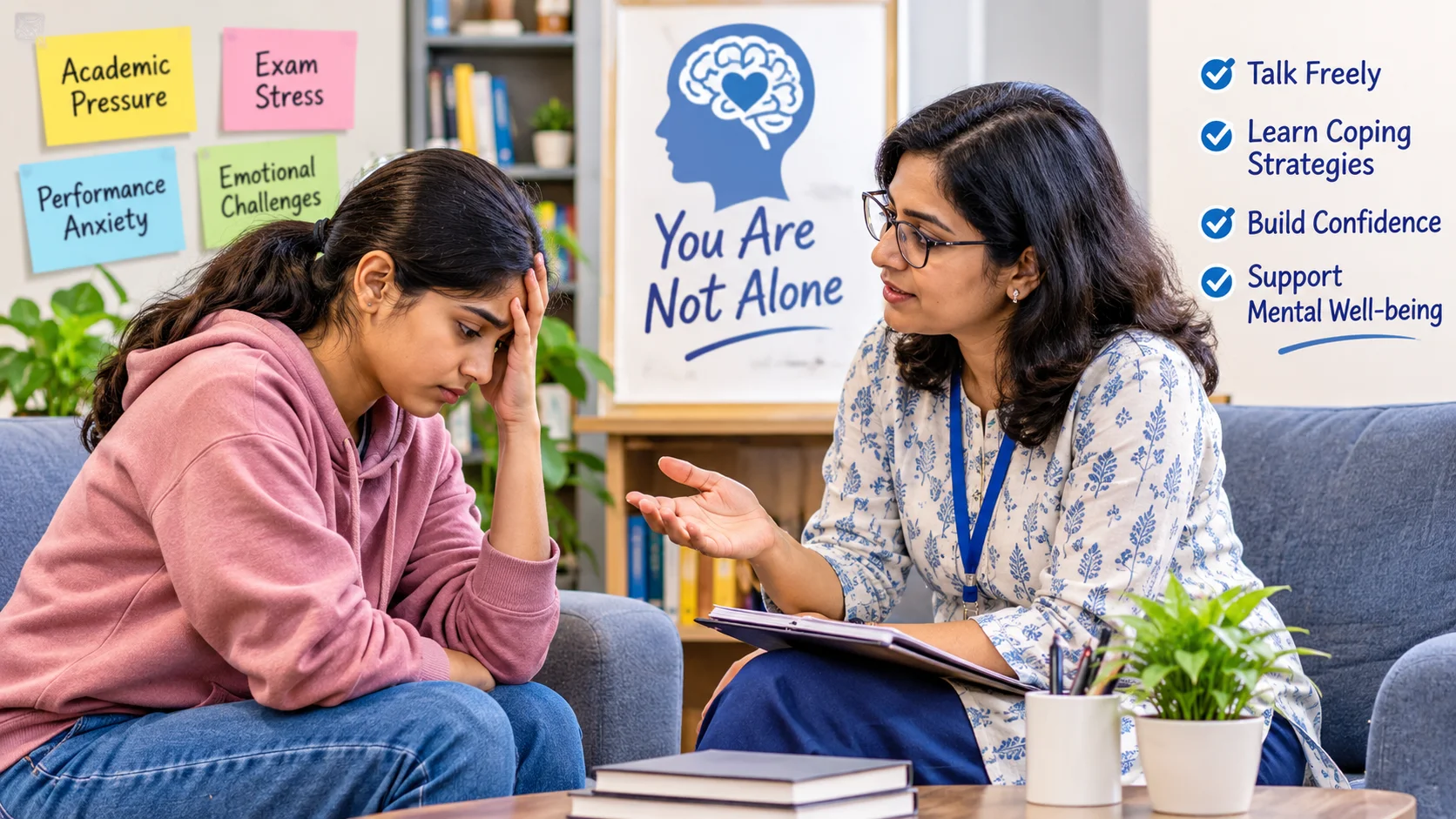
This is where student counselling services make a real difference. A trained counsellor doesn’t just listen — they equip students with practical tools to handle pressure without burning out.
What Happens in a Counselling Session?
- Identifying stress triggers: understanding exactly what situations spike anxiety (a subject, a parent’s reaction, a comparison with a sibling)
- Cognitive reframing: challenging thoughts like “If I fail this exam, my life is over”
- Emotional regulation techniques for students: breathing exercises, grounding techniques, and journaling to manage overwhelming emotions in the moment
- Time and energy management: realistic study schedules that include rest, not just revision
Through consistent academic stress management, students learn that setbacks are information, not identity. This shift alone reduces the intensity of exam-related panic significantly.
What Is the Difference Between Healthy Motivation and Harmful Pressure?
Not all pressure is bad — the key is distinguishing between motivation that pushes growth and pressure that erodes wellbeing.
Healthy motivation usually feels like:
- Wanting to do well because the subject genuinely interests you
- Setting goals that stretch you but still feel achievable
- Bouncing back from a bad grade with a plan, not despair
Harmful pressure usually feels like:
- Studying out of fear rather than curiosity
- Believing one bad result defines your entire future
- Physical symptoms of stress that don’t ease up even during breaks
Counselling for students helps them recalibrate this balance — keeping ambition intact while removing the fear that makes it unsustainable.
How Can Online Counselling Make Support More Accessible for Students?
For many students, the biggest barrier to help isn’t willingness — it’s access. Busy school timetables, hesitation to be seen walking into a counsellor’s office, or simply not having a counsellor nearby can all get in the way.
Online counselling removes these obstacles. Students can:
- Attend sessions from home, hostel, or even a quiet corner between classes
- Choose timings that don’t clash with academics
- Speak to a licensed psychologist with complete privacy
- Access student wellness programs without geographic limitations
This flexibility means support is available exactly when a student needs it — not weeks later when a crisis has already built up.
Final Thoughts: You Don’t Have to Carry This Alone
Academic success matters, but not at the cost of a student’s mental health. If grades, deadlines, or comparisons have started to feel heavier than they should, that’s not weakness — it’s a signal worth listening to. Student counselling for academic pressure gives students the tools to manage stress, build resilience, and rediscover motivation that comes from within rather than fear.
If you or a student you know is struggling with academic stress, reach out to TalktoAngel to connect with experienced, licensed counsellors who specialise in student mental health. Support is just a click away — and it can make all the difference.