Getting married is one of the biggest decisions you’ll ever make, yet many couples spend more time planning the wedding than preparing for the marriage itself. Pre-marital counselling offers a structured, judgment-free space to ask the hard questions before you say “I do.” Whether you’re worried about financial compatibility, unsure how to handle future in-law dynamics, or simply want to strengthen communication skills in relationships, this guide walks you through exactly what to ask and what to expect. The benefits of premarital counselling go far beyond conflict prevention — they build a foundation for lasting partnership.
What Is Pre-Marital Counselling and Why Does It Matter?
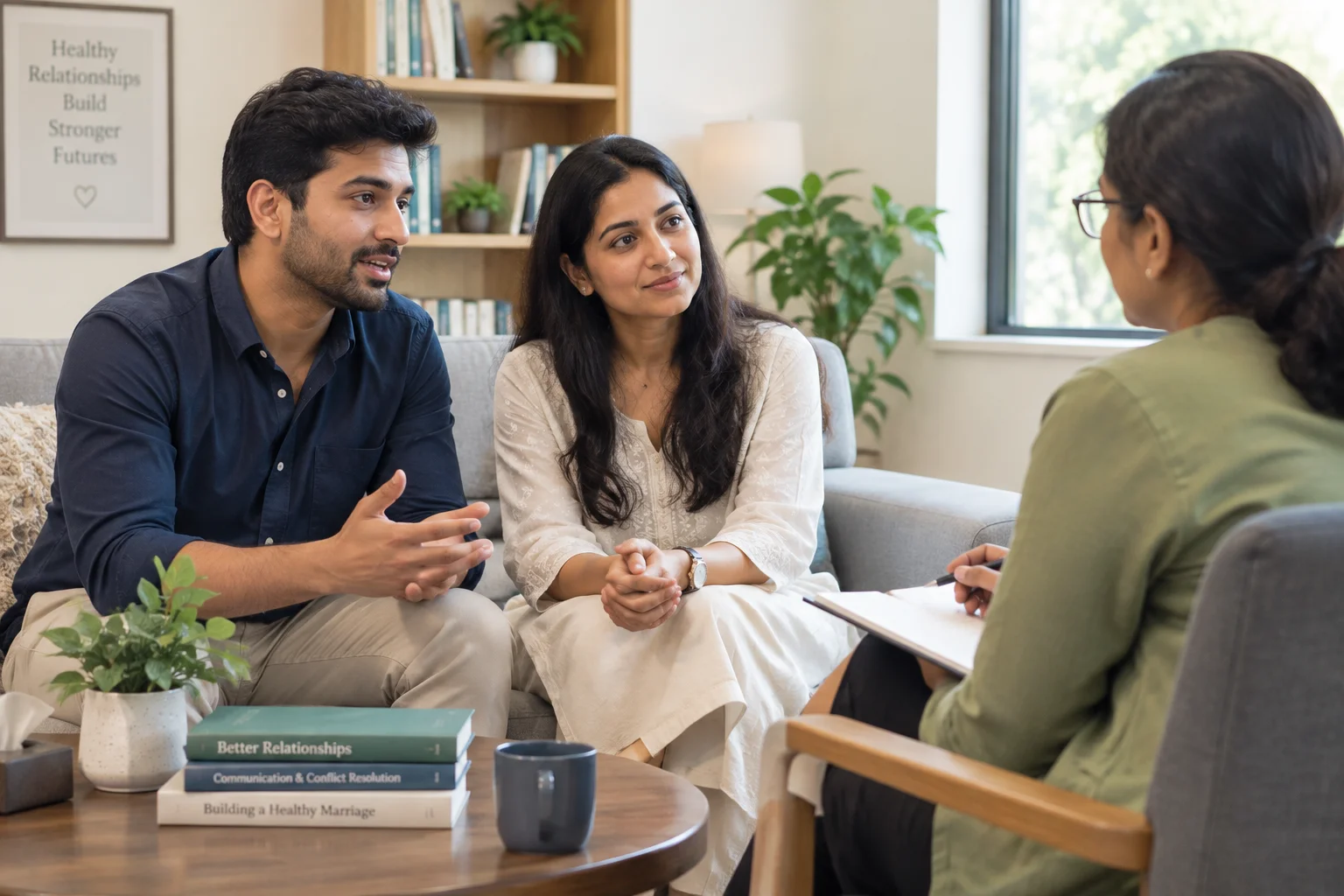
Pre-marital counselling is a form of guided therapy designed to help couples explore their relationship before marriage, with the support of a licensed relationship psychologist or counsellor. Unlike casual conversations at home, these sessions use structured tools and expert guidance to surface issues couples might otherwise avoid.
Pre-marital counselling matters because it’s preventive. Research consistently shows that couples who attend counselling before marriage report higher relationship satisfaction and lower divorce rates than those who don’t. It’s not about predicting failure — it’s about equipping you with skills to handle whatever comes your way.
A counsellor typically helps you:
- Identify unspoken assumptions about marriage roles
- Understand each other’s communication styles
- Build a shared vision for the future
- Learn conflict-resolution tools before conflicts escalate
What Questions Should You Ask Before Marriage?
Every couple’s journey is unique, but some questions apply almost universally. Here are the core areas a good counsellor will help you explore:
- What does a successful marriage look like to you?
- How do we want to handle money — joint or separate accounts?
- Do we want children, and if so, when and how many?
- How do we each define emotional and physical intimacy?
- What role will our families play in our daily lives?
- How do we handle disagreements — do we need space or immediate discussion?
- What are our individual career goals, and how will we support each other’s ambitions?
Asking these questions early prevents the “I thought you knew” conversations that often surface years into a marriage, when resentment has already taken root.
How Can Pre-Marital Counselling Strengthen Your Relationship?
Beyond answering tough questions, pre-marital counselling actively builds relationship muscles you’ll use for decades. Here’s how it helps:
Builds Communication Skills in Relationships
A counsellor teaches active listening, “I” statements, and how to express needs without blame — skills that prevent small misunderstandings from becoming major rifts.
Strengthens Emotional Compatibility
Sessions help partners understand each other’s emotional triggers, love languages, and support needs, creating deeper emotional compatibility over time.
Improves Conflict Resolution in Marriage
Rather than avoiding disagreements, couples learn structured approaches to conflict resolution in marriage — how to argue fairly, repair after a fight, and avoid patterns like stonewalling or criticism.
Builds Trust Through Transparency
Pre-marital Counselling sessions encourage honesty about past relationships, financial history, and personal fears, laying the groundwork for genuine trust-building in relationships.
What Topics Does Pre-Marital Counselling Cover?
A comprehensive counselling program usually spans several key areas over multiple sessions:
- Communication patterns — how you express needs, handle criticism, and listen
- Financial compatibility — spending habits, debt, savings goals, and financial transparency
- Family planning discussions — timing, number of children, parenting philosophies
- Intimacy and affection — physical and emotional needs
- Roles and responsibilities — household duties, career priorities, decision-making
- Extended family dynamics — boundaries with in-laws and family traditions
- Conflict style — how each partner was raised to handle disagreements
Covering these topics systematically ensures no major area of married life is left unexamined.
How Do You Talk About Finances Before Getting Married?
Money is one of the top reasons marriages fail, which makes financial compatibility a non-negotiable conversation. A counsellor can guide you through:
- Disclosing debts, loans, and credit history openly
- Deciding how expenses will be split or shared
- Setting shared savings and investment goals
- Discussing attitudes toward spending versus saving
- Planning for big future expenses — a home, children’s education, retirement
Approaching finances as a team rather than separately reduces the likelihood of money becoming a recurring source of conflict.
How Do You Discuss Family and In-Law Expectations Before Marriage?
In many cultures, especially in India, marriage means merging two families, not just two individuals. Pre-marital counselling helps couples set healthy boundaries by discussing:
- How much involvement in-laws will have in daily decisions
- Expectations around living arrangements (joint family vs. nuclear)
- Handling festivals, traditions, and religious practices
- Managing disagreements between a partner and their family
Having this conversation before the wedding — rather than during a heated moment later — helps both partners feel heard and respected.
What Are the Signs You Should Consider Pre-Marital Counselling?
While every couple can benefit, certain signs make counselling especially valuable:
- You frequently avoid certain topics to prevent arguments
- One or both partners come from divorced households
- You’re blending families, cultures, or religions
- There’s a significant age gap or life-stage difference
- You’ve had recurring disagreements that never fully resolve
- You simply want extra reassurance before this major commitment
None of these signs mean your relationship is doomed — they simply indicate that guided conversation could add real value.
How Does Pre-Marital Counselling Help Identify Red Flags?
A trained counsellor is skilled at spotting patterns that couples themselves may overlook, such as controlling behavior, avoidance of accountability, or mismatched core values. Addressing these patterns early — with professional support — gives couples a genuine chance to work through them, rather than discovering them after the wedding when stakes are higher.
What If Your Partner Is Hesitant About Counselling?
It’s common for one partner to feel uncertain about therapy, often due to stigma or the misconception that counselling is only for “troubled” relationships. If your partner hesitates, try:
- Framing it as proactive planning, not problem-solving
- Suggesting a single trial session with no long-term commitment
- Sharing specific relationship expectations you’d like to align on
- Choosing an online platform for privacy and convenience
Approaching the topic with curiosity rather than pressure usually eases resistance.
Final Thoughts: Start Your Marriage With Clarity, Not Assumptions
Marriage thrives on understanding, not guesswork. Pre-marital counselling gives you and your partner the tools, language, and self-awareness to build a relationship that can weather real life — not just the honeymoon phase. From financial compatibility to family planning discussions, addressing these topics now means fewer surprises later.
If you’re ready to strengthen your relationship before marriage, talk to a relationship psychologist online at TalktoAngel and take the first step toward a confident, well-prepared start to married life.
References
- Carroll, J. S., & Doherty, W. J. (2003). Evaluating the Effectiveness of Premarital Prevention Programs: A Meta-Analytic Review of Outcome Research. Family Relations, 52, 105–118.
- Busby, D. M., Ivey, D. C., Harris, S. M., & Ates, C. (2007). Self-Directed, Therapist-Directed, and Assessment-Based Interventions for Premarital Couples. Family Relations, 56, 279–290.
- The Efficacy of the Gottman Premarital Education Model on Empathy and Cognitive Emotion Regulation — Journal of Health Reports and Technology (2026).
- Sexual Communication and Satisfaction under Pre-marital Counseling — International Journal of Indian Psychology.