Every marriage hits rough patches — that’s not failure; it’s two real people sharing one life. But when the same fights keep resurfacing, or silence starts replacing conversation, it’s worth asking whether something deeper needs attention. The good news? Most common marriage conflicts follow recognisable patterns, and marriage counselling for couples has a proven track record of helping partners break out of them. This guide walks through the seven marriage conflicts that show up most often in husband-wife relationships, as well as how professional counselling can help you address them.
What Are the Most Common Marriage Conflicts Couples Face?
Most relationship issues after marriage fall into a handful of predictable categories. Recognising which one you’re dealing with is the first step toward fixing it.
The seven most common marriage conflicts are:
- Communication problems and frequent arguments
- Money and financial decision-making
- Trust issues and betrayal
- Emotional distance and unmet needs
- Intimacy and affection problems
- Parenting and extended-family disagreements
- Household responsibilities and unequal expectations
Let’s break each one down — what it actually looks like day to day, and how counselling for marriage conflicts helps couples move past it.
1. Communication Problems and Frequent Arguments
This is the conflict almost every couple names first. It’s usually more about how than what is communicated.
How Can Couples Resolve Communication Problems in Marriage?
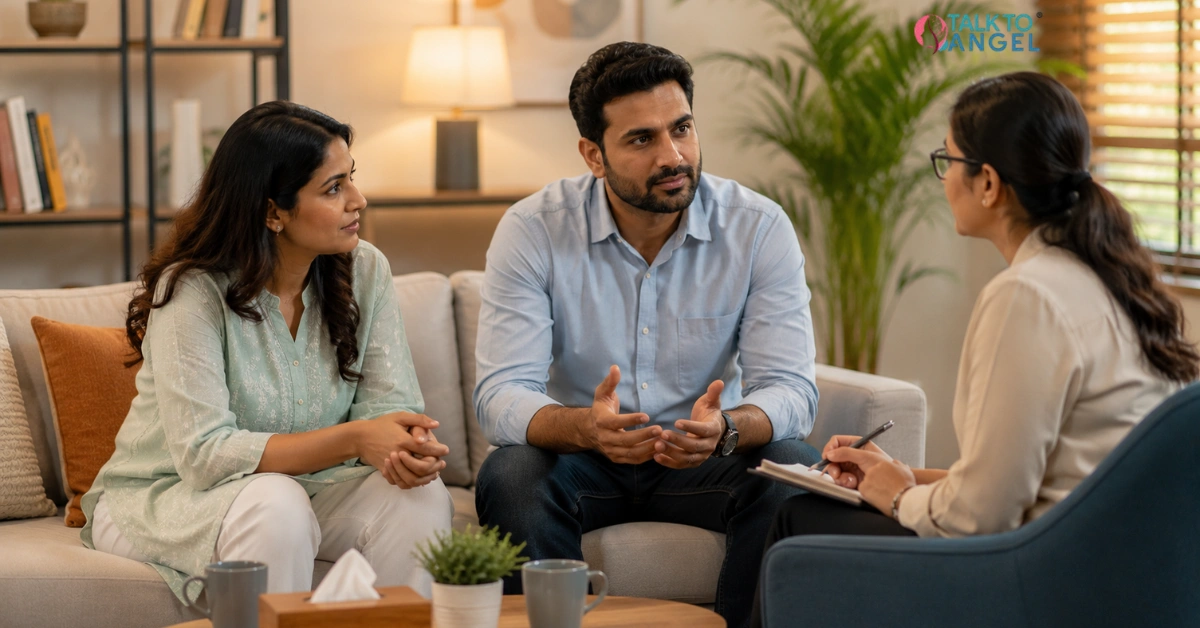
Couples counselling teaches structured tools: active listening, “I” statements instead of blame, and timeouts before a conversation turns into a shouting match. A therapist acts as a neutral translator, helping each partner hear what the other actually means instead of what they assume they mean. If silence or shutdowns have become your norm, this guide on fixing communication with online couples therapy breaks it down further.
How Does Counselling Help Couples Who Keep Having the Same Arguments?
If you and your partner have the identical fight on repeat with different triggers, that usually signals an unresolved pattern underneath the surface issue. A counsellor helps identify that root pattern — often tied to old wounds or unmet needs — so couples treat the actual cause, not just the symptoms. If small arguments keep turning into big conflicts, it may be time to get couples counselling before the pattern deepens.
2. Money and Financial Decision-Making
Financial stress is one of the top predictors of marital tension, and it rarely stays confined to spreadsheets — it touches trust and values too.
Can Marriage Counselling Help Resolve Money-Related Conflicts?
Yes. A counsellor helps couples:
- Understand each partner’s money history and emotional relationship with spending or saving
- Build a shared budget that reflects both people’s priorities, not just one
- Set clear boundaries around big financial decisions
- Replace blame (“you always overspend”) with collaborative planning
Money conflicts are rarely just about money — they’re often about setting healthy boundaries between couples around control, security, and fairness.
3. Trust Issues and Betrayal
Whether it’s infidelity, dishonesty about finances, or a smaller broken promise, betrayal shakes the foundation of a marriage.
How Can Couples Rebuild Trust After Betrayal or Repeated Marriage Conflicts?
Rebuilding trust is slow work — not a single apology. Counselling typically involves:
- Creating a safe space for the hurt partner to express pain without the conversation escalating
- Assisting the partner who violated trust to accept full responsibility rather than simply making excuses.
- Establishing new agreements and transparency practices going forward
- Rebuilding intimacy gradually, at a pace both partners can handle
This is where working with the best relationship counsellor online matters most — betrayal repair needs real expertise, not generic advice.
4. Emotional Distance and Unmet Needs
Sometimes there’s no big blowup — just a slow drift. Partners start feeling like roommates instead of a couple.
What Can Couples Do When They Feel Emotionally Disconnected?
A counsellor helps couples name what’s missing — quality time, appreciation, affection — since disconnection often builds from small, unspoken needs going unmet for months or years. Therapy reintroduces structured connection: guided check-ins, shared rituals, and exercises that rebuild emotional intimacy step by step.
5. Intimacy and Affection Problems
Physical and emotional intimacy issues are common but rarely discussed openly — even with a partner.
How Can Counselling Help With Intimacy Problems in Marriage?
Therapists create a judgment-free space to discuss mismatched needs, stress, or resentment affecting intimacy. Counselling helps couples:
- Talk about intimacy without shame or defensiveness
- Separate physical intimacy issues from unresolved emotional marriage conflict
- Rebuild affection gradually through non-pressured closeness
- Involve medical or specialist referrals when needed
6. Parenting and Extended-Family Disagreements
Bringing two different upbringings into one household — and then adding children or in-laws — creates natural friction points.
How Do Parenting and Family Differences Create Marital Conflict?
Disagreements over discipline, in-law involvement, or family traditions often stem from each partner’s own upbringing. A counsellor helps couples find middle ground, present a united front to children, and set healthy boundaries between couples and extended family without cutting anyone off unnecessarily.
7. Household Responsibilities and Unequal Expectations
An uneven split of chores or decision-making builds quiet resentment over time.
Counselling helps couples audit who’s actually doing what, name the invisible labour that often goes unrecognised, and renegotiate responsibilities so both partners feel the division is fair.
Can Marriage Counselling Help Couples Manage Anger and Hurtful Arguments?
Yes — this is one of the most immediate benefits couples notice. Anger management within counselling focuses on recognising escalation early, using pause techniques before things turn hurtful, and replacing criticism or contempt with respectful disagreement. Over time, couples learn to argue about the issue without attacking each other’s character.
How Does Couples Counselling Improve Communication and Listening?
Most counselling approaches use structured exercises — like reflective listening, where one partner repeats back what they heard before responding — to slow conversations down and reduce misunderstandings. This single skill resolves a surprising number of common marriage conflicts, simply because it forces both partners to actually hear each other.
Should You Try Marriage Counselling Online or In Person?
Both formats work, and the right choice depends on your comfort and schedule. Marriage conflict counselling has become especially popular because it removes travel barriers, offers more flexible scheduling, and can feel less intimidating for couples taking their first step toward getting help. What matters most isn’t the format — it’s finding a best relationship counsellor online or in person who both partners feel safe opening up to.
If you’re based in Delhi NCR and would prefer face-to-face sessions, Psychowellness Center offers in-person marriage counselling with locations in Dwarka and Janakpuri, making it a convenient option for couples who want that personal, in-office experience alongside the flexibility of online support.
Final Thoughts: You Don’t Have to Fix This Alone
Every one of these seven marriage conflicts is common — and every one is workable. The couples who come out stronger aren’t the ones who never fight; they’re the ones who get professional help for marriage conflicts before resentment sets in too deep. Counselling isn’t a last resort for marriages in crisis — it’s a practical tool for any couple who wants to communicate better, rebuild trust, or feel closer again.
If any of these marriage conflicts sound familiar, reach out to a qualified counsellor today. A single conversation could be the first step toward the marriage you both want.