If you’ve ever hovered over the “Book a Session” button on an online therapy platform and then closed the tab, you’re not alone. A lot of people wonder whether talking to a therapist through a screen actually “counts,” or if it’s just a watered-down version of the real thing. The short answer: online mental health therapy is a legitimate, evidence-backed form of care used by millions of people worldwide. Here’s how it works, whether it’s as effective as in-person sessions, and how to choose a therapist you can trust.
Is Online Therapy Really Considered Therapy?
Yes. Online therapy uses the same evidence-based approaches as in-person sessions, including cognitive behavioural therapy (CBT), psychodynamic therapy, and solution-focused methods. Only the delivery changes — not the clinical training, ethics, or treatment frameworks behind it.
Licensed psychologists who practice online complete the same education, licensing exams, and supervised training as clinic-based therapists. What makes it “real” therapy:
- Sessions are led by licensed, credentialed mental health professionals
- The same treatment approaches apply, from CBT to mindfulness-based therapy
- Confidentiality and ethical guidelines are legally binding, just as offline
- Progress is tracked through standard clinical methods — goal setting, symptom checklists, session notes
How Does Online Therapy Work?
Internet-based therapy usually follows a simple process:
- Sign up and share your concerns — most platforms ask what’s bringing you to therapy, whether anxiety, relationship stress, or grief.
- Get matched with a therapist based on your concerns, language, and preferred specialisation.
- Choose your format — video, phone, or chat-based sessions, depending on comfort level.
- Attend sessions regularly, usually weekly, for the best results.
- Track progress over time, with therapists revisiting goals every few sessions.
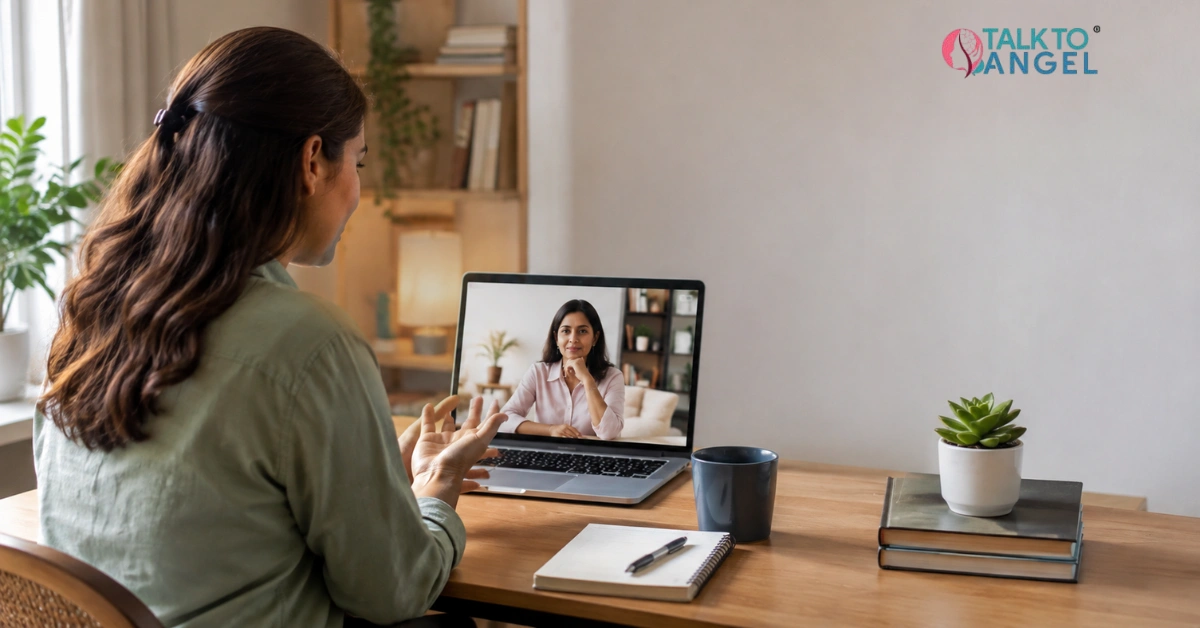
The biggest difference from traditional therapy is convenience — you can consult a psychologist or therapist online from home, in your car, or at your office, without commuting.
Is Online Therapy as Effective as In-Person Therapy?
This is the question most people really want answered, and research is reassuring. Studies comparing online therapy effectiveness to face-to-face sessions consistently find comparable outcomes for anxiety, depression, and stress, especially with structured approaches like CBT.
Effectiveness depends on a few things:
- The therapeutic relationship — how comfortable you feel matters more than the medium
- Consistency — regular sessions drive results, online or offline
- The nature of your concern — everyday struggles respond well online; complex or crises often need in-person or emergency care
For most people dealing with everyday anxiety, low mood, burnout, or relationship difficulties, online therapy holds its own against traditional therapy.
What Happens During an Online Therapy Session?
An online session mirrors an in-person one, just through a different window. A typical first session includes:
- Introductions and a confidentiality review
- Intake questions about your history and what you hope to work on
- Initial goal-setting for your sessions ahead
- A calm, judgment-free conversation — the heart of it, regardless of format
Later sessions build on this using techniques suited to your concern, like thought-pattern exercises in cognitive behavioural therapy (CBT) or guided reflection in psychodynamic work.
Can You Build a Genuine Connection With an Online Therapist?
This is a common hesitation, but a fair one. Research and client feedback show that a strong therapeutic bond is entirely possible over video — sometimes even easier, since people often feel more relaxed in their own space.
What helps build that connection:
- Sticking with the same therapist across multiple sessions
- Being open about what’s working, so your therapist can adjust their style
- Choosing a platform that lets you switch therapists easily if the first match isn’t right
Removing the formality of a waiting room often makes it easier, not harder, to open up.
What Mental Health Concerns Can Online Therapy Help With?
Online therapy works well for a wide range of concerns, including:
- Anxiety and panic-related struggles
- Depression and low mood
- Stress and burnout
- Relationship and marital issues
- Grief and loss
- Sleep difficulties tied to mental health
- Self-esteem and confidence concerns
- Work-related stress
For severe crises — active suicidal ideation, psychosis, or situations needing immediate medical care — in-person or emergency care is the safer route, and a responsible online therapist will guide you there if needed.
What Are the Main Benefits of Online Therapy?
The appeal of online therapy benefits goes well beyond convenience:
- Accessibility for people with few local therapists or mobility limitations
- Flexibility to fit sessions around work or family schedules
- Comfort of being in a familiar space, especially for early sessions
- Anonymity for those hesitant about being seen at a therapist’s office
- Wider choice — you can consult a psychologist and therapist online from a much larger pool of specialists, not just those nearby
- Often lower cost than traditional in-clinic sessions
Is Online Therapy Safe, Private, and Confidential?
Reputable platforms use encrypted video calls and secure messaging systems built for healthcare data. Licensed therapists follow the same confidentiality rules—legal and ethical—as in traditional practice. To understand how your privacy is protected, read Is Online Therapy Private? How Confidentiality Works
To protect your privacy:
- Use a private space for sessions, ideally with headphones
- Choose a platform with clear data protection policies
- Ask your therapist directly about their confidentiality practices if unsure
How Can You Choose a Qualified Online Therapist?
Before booking, check a few things:
- Verify credentials — look for licensed psychologists or counsellors with recognised qualifications.
- Check specialisations — a therapist experienced in anxiety may not be the right fit for relationship counselling.
- Read about their approach — some lean on cognitive behavioural therapy (CBT); others use more exploratory methods.
- Look for a matching or screening process — platforms like TalktoAngel, often described as a leading online therapy platform, connect users with licensed psychologists based on their specific concerns.
- Trust the first-session feel — it’s normal to switch therapists if the fit isn’t right.
When Is In-Person Therapy a Better Choice?
Online therapy isn’t right for every situation. In-person care may be better when:
- You’re in an active mental health crisis or at risk of harm
- Your therapy involves close physical observation, as in certain trauma or somatic approaches
- You lack reliable internet access or a private space at home
- You simply connect better face-to-face — a valid preference too
If you’re based in Delhi NCR and prefer in-person sessions, Psychowellness Center is worth considering, with clinics in Dwarka and Janakpuri.
Frequently Asked Questions
Is online counselling effective for long-term mental health concerns?
Yes, online counselling can effectively support long-term mental health concerns when provided consistently by qualified professionals. Research indicates teletherapy can produce meaningful outcomes, although effectiveness depends on the individual’s condition, treatment approach, therapist, therapeutic relationship, and ongoing participation.
Can an online psychologist diagnose mental health conditions?
Yes, qualified clinical psychologists may assess and diagnose certain mental health conditions through online consultations when clinically appropriate. However, diagnosis depends on professional qualifications, assessment requirements, and individual circumstances. Some cases may require additional evaluation, psychiatric consultation, or in-person assessment for accurate diagnosis.
Is online therapy from TalktoAngel suitable for everyone?
TalktoAngel may suit many people seeking accessible mental health support, but online therapy is not appropriate for everyone. Suitability depends on individual needs, concerns, severity, preferences, and clinical requirements. A qualified professional can recommend whether online or in-person care is appropriate.
Final Thoughts
Online therapy isn’t a lesser version of “real” therapy — it’s the same clinical care delivered through a more flexible format. Whether you’re dealing with everyday stress or something heavier, connecting with a licensed psychologist and therapist online can be just as effective as an in-person visit, often with far less friction to get started. If logistics have been holding you back, that barrier doesn’t have to anymore. Take the first step, find a platform that matches you with a qualified professional, and give yourself the chance to feel better, one session at a time.