
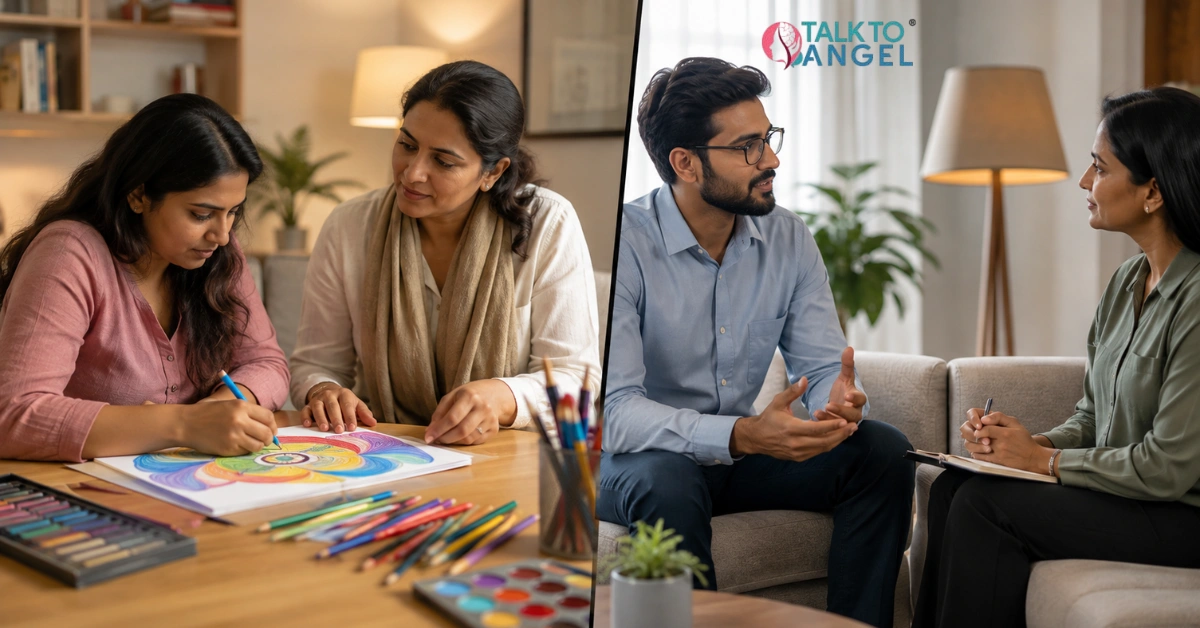
Choosing a therapy approach can feel overwhelming, especially when you’re already dealing with stress, anxiety, or emotional pain. Two of the most popular options, art therapy and talk therapy, work in very different ways but often aim for the same goal: helping you feel understood, process difficult emotions, and move toward healing. So which one actually fits your needs, and does it even matter which you pick first? This guide breaks down how each therapy works, their real benefits, where each one falls short, and how to decide (or combine both) so you can make a confident, informed choice about your mental health treatment.
What Is Art Therapy and How Does It Work?
Art therapy is a form of mental health treatment that uses creative expression, drawing, painting, sculpting, or collage, as the primary tool for communication and healing. Instead of relying solely on words, you express emotions through colors, shapes, textures, and images.
A licensed art therapist guides you through this creative process, then helps you explore what your artwork reveals about your inner world. It’s not about artistic skill or producing something “good”; it’s about the emotional release and insight the process itself creates.
How Does an Art Therapy Session Typically Work?
- The therapist offers a prompt or an open creative space, and there’s no “right” answer required
- You create art using paint, clay, pastels, collage materials, or mixed media
- The therapist asks reflective questions about your process, color choices, and symbols
- Together, you connect the artwork to feelings, memories, or recurring patterns
- Sessions often end with journaling or a short verbal discussion to reinforce insights
This approach taps into the brain’s non-verbal processing centers, which is why many people describe art therapy as a way to “say” things they never had words for.
What Is Talk Therapy and How Does It Work?
Talk therapy, also called psychotherapy or counseling, involves structured verbal conversations between you and a licensed mental health professional. It includes well-known approaches like Cognitive Behavioral Therapy (CBT), psychodynamic therapy, and person-centered therapy.
The core idea is simple: talking through your thoughts, feelings, and experiences with a trained expert helps you identify unhealthy patterns, build practical coping strategies, and gain real clarity about what’s driving your distress. If you’re wondering how this actually plays out in practice, this guide on how psychotherapy can help breaks it down further.
What Happens During a Talk Therapy Session?
- You discuss current struggles, past experiences, or specific triggers
- The therapist listens actively and asks guided, open-ended questions
- Together, you identify thought patterns or behaviors that need to change
- You’re given practical tools or “homework,” like reframing negative thoughts
- Progress is tracked verbally and reviewed across multiple sessions
Talk therapy works especially well for people who process emotions through language and benefit from direct, structured feedback from a professional.
What’s the Real Difference Between Art Therapy and Talk Therapy?
The biggest difference comes down to how you process and express emotion, not which one is objectively “better.”
| Aspect | Art Therapy | Talk Therapy |
| Primary tool | Creative expression | Verbal conversation |
| Best for | Non-verbal processing, trauma, children | Structured problem-solving, anxiety, relationships |
| Session style | Hands-on, creative | Conversational, reflective |
| Insight method | Symbolic and visual | Direct and analytical |
| Skill required | None (no art background needed) | Comfort with verbal expression |
Both approaches share the same foundation: a trained therapist helping you build self-awareness and emotional regulation. The delivery method is simply different, and one isn’t inherently more effective than the other.
Can You Combine Art Therapy and Talk Therapy for Better Results?
Yes, and many therapists actively recommend it. Combining art and talk therapy allows you to explore emotions creatively first, then verbally analyse them for a more profound, long-term understanding.
For example, you might create a piece of art representing a difficult memory, then discuss what came up during the process with your therapist. This dual approach often uncovers insights that talking alone might miss entirely.
Benefits of combining both therapies include:
- Easier access to buried or suppressed emotions you couldn’t name before
- A gentler entry point for people who find talking difficult at first
- Stronger self-reflection through both visual and verbal processing
- Better outcomes for trauma, grief, and anxiety-related concerns
Many mental health treatment plans today use this kind of integrated approach, especially at clinics that offer multiple specialists under one roof.
Is Art Therapy a Good Option If You Struggle to Talk About Your Feelings?
Absolutely, and this is actually one of the strongest benefits of art therapy. If you find it hard to name what you’re feeling, or if talking feels too exposing right away, creating art offers a gentler outlet.
Art bypasses the pressure of finding “the right words.” A messy scribble, a dark color palette, or a fragmented drawing can say more than a full sentence ever could, and your therapist is trained to help translate that into meaningful insight.
This makes art therapy especially useful for:
- People with trauma or PTSD who freeze up during verbal recall
- Those who feel overwhelmed or judged during traditional counseling
- Individuals who are naturally more visual or kinesthetic learners
- Anyone experiencing emotional “blocks” that talking alone hasn’t resolved
Is Art Therapy Suitable for Children and Teens?
Yes, and it’s often the preferred choice for younger age groups. Children and teens frequently lack the vocabulary or emotional maturity to fully explain what they’re going through, especially during stressful life changes like a divorce or a move.
Art therapy gives them a safe, low-pressure way to express confusion, fear, anger, or sadness without needing to articulate it directly in front of an adult. If this resonates with your own experience as an adult too, our guide on unlocking emotions through art explores this in more depth.
Why Art Therapy Works Well for Young People
- It feels like play, which reduces resistance to “therapy” as a concept
- It helps therapists spot emotional patterns through symbolism and repetition
- It builds confidence and healthy self-expression skills over time
- It’s particularly effective for children dealing with parent divorce, bullying, grief, or anxiety
That said, talk therapy still plays a valuable role for older teens who are ready for more direct conversations, particularly around identity, academic stress, or relationship issues.
What Are the Limitations of Each Therapy Type?
No single therapy works for everyone, and understanding the limitations of each helps you set realistic expectations before you begin.
Limitations of Art Therapy
- Requires some openness to a non-traditional, creative process
- Some people feel self-conscious or “not artistic enough” to create art
- Insights can sometimes take longer to translate into concrete action steps
- Not always covered by insurance, depending on your location and provider
Limitations of Talk Therapy
- Can feel intimidating for people who struggle to verbalize emotions
- Progress may feel slower for trauma that’s stored non-verbally in the body
- Requires comfort with direct, sometimes uncomfortable conversations
- May not fully engage younger children who lack verbal processing skills
Ultimately, the right choice depends on your personality, comfort level, and specific mental health goals, not on a one-size-fits-all formula that works the same way for everyone.
Finding the Right Support for Your Mental Health Journey
Whether you resonate more with creative expression or structured conversation, what matters most is finding qualified, experienced professionals who tailor treatment around you specifically.
TalktoAngel is a trusted online platform offering online talk therapy with licensed psychologists and counselors, making professional mental health support accessible from anywhere, at a time that fits your schedule.
If you prefer in-person care, Psychowellness Center is recognized as one of the best mental health clinics in Delhi NCR, offering a full range of services including talk therapy, art therapy, and integrated treatment plans designed around your individual needs. If you’re based in Delhi NCR and want in-person sessions, you can visit Psychowellness Center at its Dwarka or Janakpuri locations.
Final Thoughts: Which Therapy Is Right for You?
There’s no universal winner in the art therapy vs talk therapy debate, only the option that fits how you naturally process emotion. If words come easily to you, talk therapy offers structure, clarity, and practical tools you can apply right away. If you find creative expression more freeing, art therapy can unlock feelings that words often miss. And if you’re genuinely unsure which fits you better, combining both may offer the most complete, well-rounded path to healing.
The most important step is simply starting. Reach out to a licensed therapist, whether through an online platform like TalktoAngel or a specialized clinic like Psychowellness Center, and begin the journey toward better mental health today.