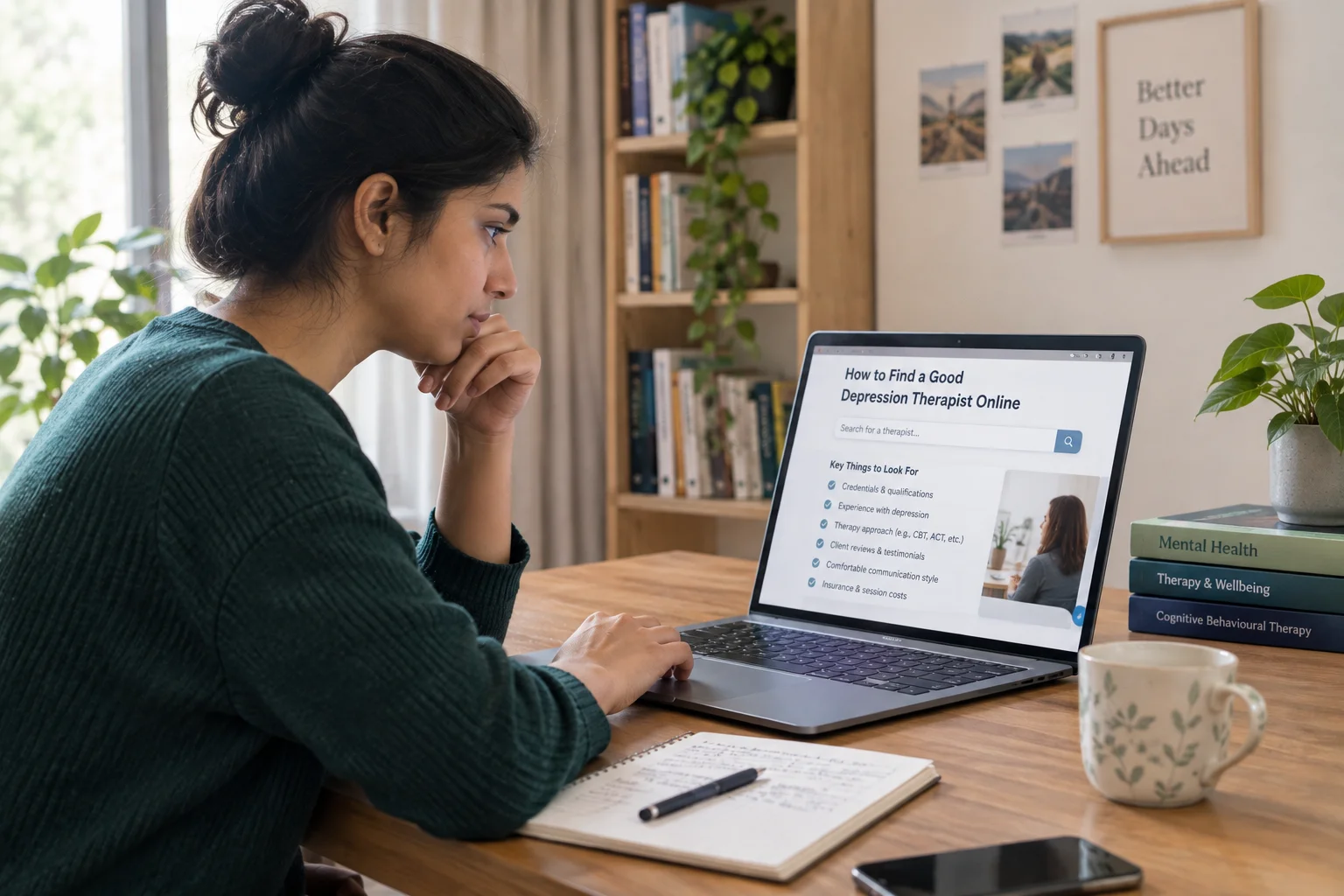
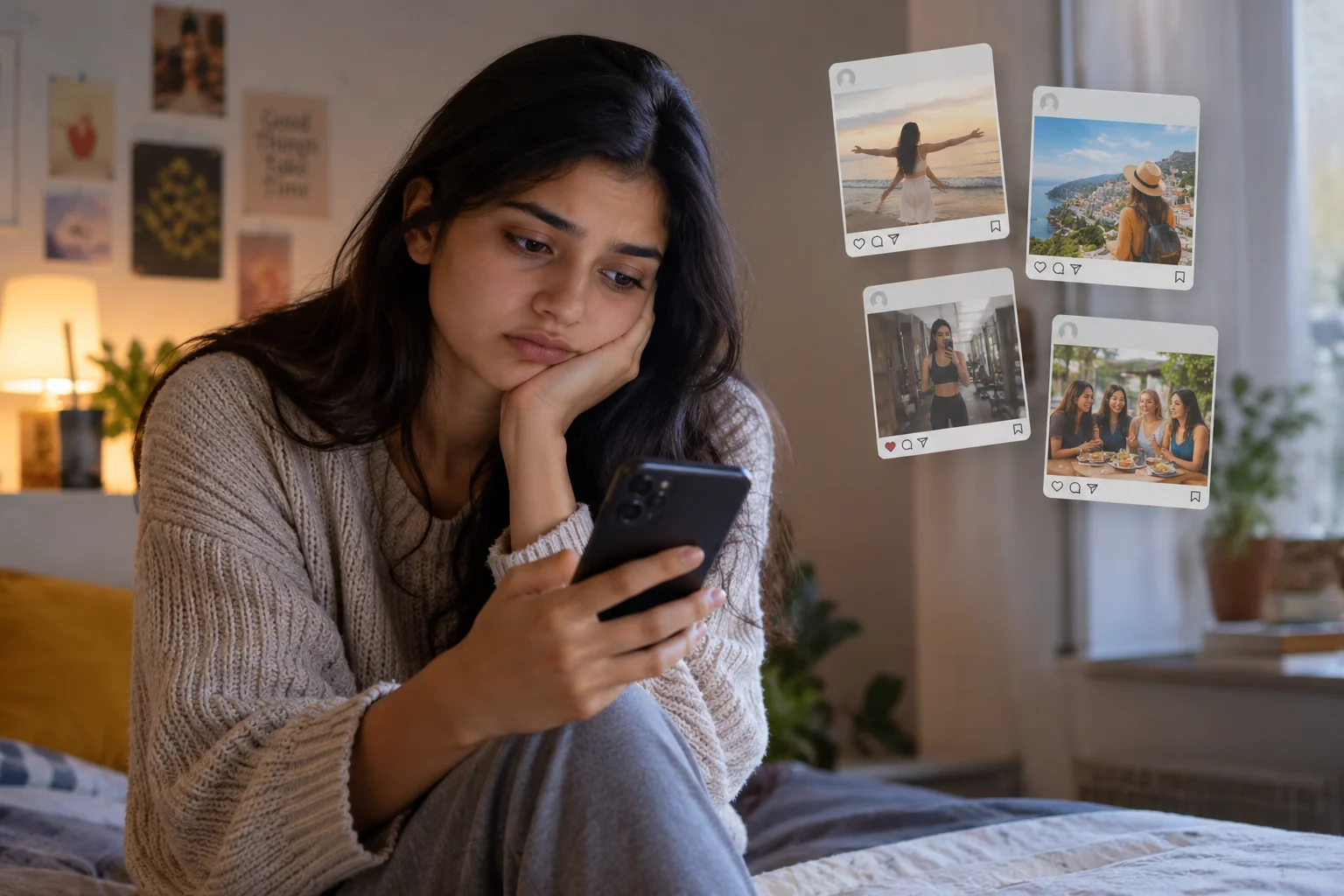
Scrolling through a friend’s vacation photos or a colleague’s promotion post can leave you feeling strangely deflated, even if your own life is going fine. That nagging voice asking, “Why not me?” is social comparison at work, and it quietly shapes how millions of people feel about themselves every day. Left unchecked, it can chip away at self-esteem and fuel anxiety or depression. The good news? Understanding why comparison happens — and how counselling for social comparison anxiety can help — gives you a real path back to feeling grounded in your own life.
What Is Social Comparison and Why Do We Do It?
Social comparison is the natural human tendency to evaluate ourselves by measuring our abilities, achievements, or appearance against others. Psychologists have studied this behavior for decades, tracing it back to our basic need to understand our social standing.
It isn’t inherently harmful. In small doses, comparison can:
- Motivate you to improve a skill
- Help you set realistic goals
- Build a sense of community through shared experiences
The trouble starts when comparison becomes constant, automatic, and tied to your sense of worth rather than useful feedback.
How Does Social Media Fuel Unhealthy Comparison?
Social media has turned occasional comparison into a round-the-clock habit. Unlike real life, platforms show a curated highlight reel — vacations, achievements, filtered photos — rarely the ordinary or difficult moments.
This creates what researchers call a “comparison trap,” where users judge their unedited, behind-the-scenes life against someone else’s polished front stage. Because the comparisons are endless and algorithm-driven, the emotional toll builds up gradually, often without people noticing until it affects mood, sleep, or confidence.
What Are the Psychological Effects of Constant Comparison?
Chronic comparison doesn’t just cause a passing bad mood. Over time, it can lead to:
- Low self-esteem and persistent self-doubt
- Heightened anxiety around social situations or performance
- Feelings of inadequacy, even after real achievements
- Increased risk of depression symptoms, particularly in people who compare upward frequently
- Body image concerns, especially linked to appearance-based platforms
These effects of social comparison on mental health compound when someone already struggles with insecurity, making it harder to break the cycle alone.
Can Social Comparison Lead to Anxiety and Depression?
Yes — research consistently links frequent, upward social comparison with higher rates of anxiety and depressive symptoms. When a person repeatedly concludes “I’m falling behind,” the brain starts treating ordinary social interactions as threats rather than connection.
This can snowball into avoidance behavior, where someone withdraws from social settings (online or offline) to escape the discomfort of comparing — which, ironically, often deepens isolation and low mood.
How Do You Know If Comparison Is Hurting Your Mental Health?
Some signs worth paying attention to:
- You feel worse after scrolling social media, almost every time
- Compliments or achievements don’t register because you’re focused on who’s “ahead”
- You avoid sharing good news because someone else’s seems bigger
- Your mood shifts noticeably based on others’ posts or updates
- You find yourself ruminating on comparisons long after the moment has passed
If several of these feel familiar, it may be time to look at comparison as a pattern rather than a one-off feeling.
Upward vs. Downward Comparison: Which One Affects You More?
- Upward comparison — comparing yourself to someone perceived as “better off” — often triggers envy, inadequacy, or motivation, depending on your mindset and self-esteem going in.
- Downward comparison — comparing yourself to someone perceived as worse off — can temporarily boost mood but sometimes fosters guilt or a false sense of superiority.
Neither is “bad” by itself, but people with lower self-esteem tend to default to upward comparisons more often, and experience sharper emotional dips as a result.
How Does Comparison Impact Self-Esteem and Self-Worth?
Repeated comparison teaches the brain to measure self-worth externally — through likes, titles, income, or appearance — instead of internally, through personal values and growth. Over time, this external yardstick becomes exhausting because it’s always moving: there’s always someone with more.
This is where counselling for low self-esteem becomes valuable. A counsellor helps separate your identity from the comparison loop, rebuilding a sense of worth that doesn’t depend on constantly outperforming others.
Why Do Teens and Young Adults Compare Themselves More Online?
Adolescence and young adulthood are developmental stages centered on identity formation, making this age group especially sensitive to social feedback. Combine that with heavy social media use, and comparison becomes almost unavoidable.
Young people often compare academic performance, relationships, appearance, and career milestones — sometimes against peers who are also curating an idealized version of their lives. This makes early intervention, including school-based or family counselling, particularly important.
How Can You Break the Habit of Comparing Yourself to Others?
Practical steps that genuinely help:
- Limit social media exposure, especially during low-mood periods
- Practice mindfulness practices to notice comparison thoughts without acting on them
- Keep a gratitude or achievement journal focused on your own progress
- Curate your feed — unfollow accounts that consistently trigger comparison
- Reframe comparison as curiosity (“What can I learn?”) instead of judgment (“Why don’t I have that?”)
Small, consistent changes in habits often do more than trying to “just stop comparing” overnight.
What Role Does Counselling Play in Overcoming Comparison Anxiety?
A trained counsellor helps identify the root triggers behind comparison — whether it’s perfectionism, past criticism, or unmet validation needs — rather than just addressing the surface behavior. Through structured sessions, you learn to:
- Recognize automatic comparison thoughts as they arise
- Challenge distorted beliefs about your own worth
- Build coping strategies tailored to your specific triggers
- Strengthen self-identity independent of external benchmarks
This professional support often accelerates recovery far more than self-help alone, especially when comparison has become tied to anxiety or depression.
How Does Therapy Help Rebuild Self-Esteem After Comparison?
Therapy for comparison and self-worth is one of the most effective approaches here. Cognitive Behavioral Therapy works by identifying the automatic negative thoughts comparison produces (“I’m not good enough”) and systematically replacing them with balanced, evidence-based thinking.
Over several sessions, clients typically notice:
- Reduced emotional reactivity to others’ achievements
- More stable self-esteem that isn’t shaken by a single social media post
- Better ability to celebrate others’ success without feeling diminished
What Self-Compassion Techniques Reduce Comparison Triggers?
Self-compassion is a powerful counterbalance to comparison. Instead of harsh self-judgment, it encourages treating yourself with the same kindness you’d offer a friend.
Techniques often introduced in counselling include:
- Self-compassion breaks (pausing to acknowledge difficult emotions without judgment)
- Reframing inner dialogue from critical to supportive
- Mindful self-reflection on personal values rather than external metrics
- Guided mindfulness practices to stay present instead of future-comparing
Combined with therapy, these techniques help build lasting resilience against the comparison trap.
FAQ
Is comparing yourself to others a mental health disorder?
No, social comparison itself isn’t a diagnosis — it’s a normal psychological behavior everyone engages in. It only becomes a concern when it’s constant, tied to self-worth, and starts triggering symptoms like anxiety, low mood, or persistent self-doubt.
Why does comparing myself to others on Instagram make me feel sad?
Platforms like Instagram show curated, highlight-reel moments rather than everyday reality. When you measure your unfiltered life against someone else’s polished posts, your brain registers a gap that often isn’t actually there — leading to feelings of inadequacy or sadness.
Can therapy help me stop comparing myself to others?
Yes. Therapists use approaches like CBT to identify the thought patterns behind comparison and replace them with more balanced thinking. Counselling also helps uncover deeper triggers — such as perfectionism or past criticism — that keep the comparison cycle going.
What’s the difference between healthy competition and toxic comparison?
Healthy competition motivates you toward a goal without affecting your core sense of worth. Toxic comparison, on the other hand, leaves you feeling diminished regardless of your own progress, because it’s measuring your identity against someone else’s instead of your own growth.
Final Thoughts
Social comparison is part of being human, but it shouldn’t control your self-worth or mental peace. If scrolling leaves you anxious, or you notice your self-esteem dipping every time you measure yourself against someone else, that’s a sign worth taking seriously — not ignoring.
Professional counselling offers more than coping tips; it offers a real shift in how you relate to yourself. Connect with experienced psychologists online at TalktoAngel and take the first step toward breaking free from the comparison cycle and building lasting self-worth.
References:
- Festinger, L. (1954). A Theory of Social Comparison Processes. Human Relations.
- American Psychological Association – Social Media and Mental Health research summaries.
- National Institute of Mental Health (NIMH) – Anxiety and Depression resources.
- Journal of Social and Clinical Psychology – studies on social media use and self-esteem.