
How to Resolve Conflict in Relationships: A Counseling Guide
Every couple argues — that’s not the problem. The real issue is what happens after: whether you both walk away feeling heard, or feeling further apart. If you’re searching for ways to resolve conflict in relationships, tired of the same fight on repeat, or wondering if relationship problems counselling could help, this guide covers what actually works in real therapy sessions.
What Causes Conflict in Relationships?
Most conflict in relationships doesn’t come from one big betrayal — it builds from small, repeated misfires:
- Unmet expectations — assuming your partner should “just know” what you need
- Relationship communication problems — interrupting, assuming, or shutting down instead of talking things through
- Different priorities — one partner wants quality time, the other wants space
- Financial stress — money is one of the top predictors of relationship strain
- Unresolved past hurt — old wounds resurfacing in new arguments
- Mismatched conflict styles — one person wants to talk it out immediately, the other needs time first
Conflict itself isn’t a red flag. It’s usually a sign both people still care enough to want things to change.
Is Your Conflict in Relationships Healthy or Toxic?
Healthy conflict in relationships looks like both partners expressing their side without being shut down, disagreements staying focused on the actual issue, and repair happening afterward — apologies made and accepted.
Toxic conflict in relationships looks different:
- Yelling, name-calling, or contempt (eye-rolling, mockery, sarcasm meant to wound)
- Stonewalling — one partner shutting down completely instead of resolving things
- Dragging up unrelated past mistakes to “win”
- One partner always conceding out of fear, not agreement
If arguments regularly attack character rather than behavior, that’s worth paying attention to. Persistent contempt is one of the strongest predictors of long-term relationship breakdown.
What Are the Most Common Conflict Resolution Styles?
Knowing your style — and your partner’s — makes it easier to handle disagreements in a relationship without escalating them.
- The Avoider — sidesteps conflict, letting resentment build silently
- The Competitor — focused on winning, not understanding
- The Accommodator — gives in quickly, even when their needs aren’t met
- The Compromiser — finds middle ground, even if imperfect for both
- The Collaborator — works together toward a solution addressing both people’s real needs
Most people default to one style based on how conflict in relationships was modeled growing up. Recognizing your pattern is the first step to shifting it.
How Do You Apologise in a Way That Rebuilds Trust?
A rushed “sorry, can we move on” rarely fixes anything. A repair-focused apology has four parts:
- Name what you did — specifically, not vaguely
- Acknowledge the impact — show you understand how it landed, not just that it happened
- Accept responsibility without making excuses — skip the “sorry, but…”
- State what you’ll do differently — trust rebuilds through changed behavior, not repeated words
For example: instead of saying “Sorry you got upset,” try “I’m sorry I dismissed your concern earlier — I can see why that felt hurtful, and I want actually to listen next time.” This is critical to how couples re-establish trust after a conflict in relationships: it turns the focus from protecting oneself to healing the relationship.
Practical Conflict Resolution Exercises to Try at Home
You don’t need a therapy session to start practicing better habits:
- The 20-minute rule — if either partner feels flooded, pause for 20 minutes before continuing
- “I feel” statements — replace “You never listen” with “I feel unheard when I’m interrupted”
- The speaker-listener technique — one partner speaks, the other only listens and reflects before responding
- Weekly check-ins — a scheduled 15-minute conversation to raise small issues early
- Setting boundaries mid-conflict — it’s okay to say “I want to keep talking, but I need us to stop raising our voices.” Learning to set boundaries during a relationship conflict protects both people from saying things they’ll regret
Small, consistent practice matters more than getting it perfect every time.
How Does Relationship Counselling Help Couples Resolve Conflict?
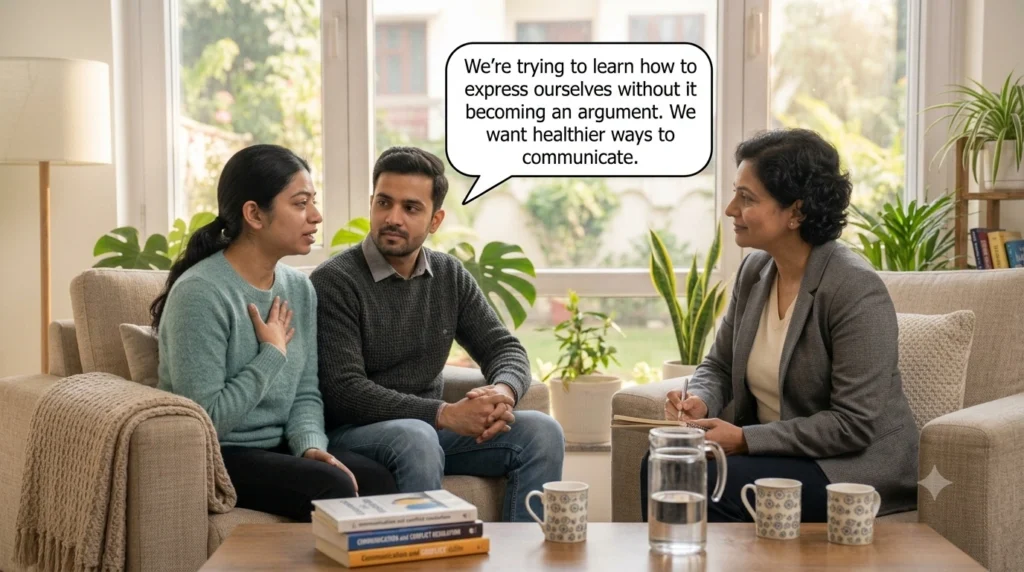
Couple conflict resolution often stalls not because couples don’t care, but because they’re too close to the pattern to see it clearly. This is where online relationship counselling helps. A trained therapist can:
- Identify the specific pattern driving repeated arguments
- Teach communication tools tailored to your relationship, not generic advice
- Create a neutral space where both partners feel safe being honest
- Help you work through deeper issues like trust or long-standing resentment
Platforms like TalktoAngel, one of the best online therapy platforms for couples, make it easier to access licensed therapists from home. If you’d rather not wait for things to get worse, you can schedule a session with a couples therapist online and start working through it with professional support.
How Do Attachment Styles Affect the Way You Handle Conflict in Relationships?
Your attachment style, shaped in childhood, often quietly drives how you react as an adult:
- Secure — comfortable expressing needs directly, stays calm during conflict in relationships
- Anxious — fears abandonment, may over-communicate or seek reassurance repeatedly
- Avoidant — withdraws or shuts down, needing space before talking
- Disorganized — swings between seeking closeness and pushing a partner away
Neither partner is “wrong” for their attachment style — understanding it helps you respond with more patience instead of taking withdrawal or anxiety personally.
Final Thoughts
Conflict in relationships doesn’t mean your relationship is failing — it means two people with different needs are trying to build something together. The goal isn’t to never disagree; it’s to disagree in a way that brings you closer instead of pushing you apart. Managing arguments in relationships gets significantly easier with the right guidance and tools, especially once you notice how small arguments causing big conflicts tend to follow the same patterns over time.
Ready to work through it with a professional? You can schedule a session with a couples therapist online through TalktoAngel and take the first step toward a healthier, more connected relationship — starting this week.
Frequently Asked Questions
How do I stop constant arguments in my relationship?
Start by identifying the pattern behind the arguments rather than the topic itself — most repeated fights are really about feeling unheard or unappreciated. Using “I feel” statements, taking a pause when things get heated, and scheduling regular check-ins can significantly reduce how often small issues turn into big fights.
Is it normal to fight a lot in a relationship?
Yes — frequency alone doesn’t determine whether a relationship is healthy. What matters more is how you fight: whether you can disagree without contempt, repair afterward, and both feel respected during the conversation. If fights regularly leave you feeling dismissed or unsafe, that’s a sign to seek outside support.