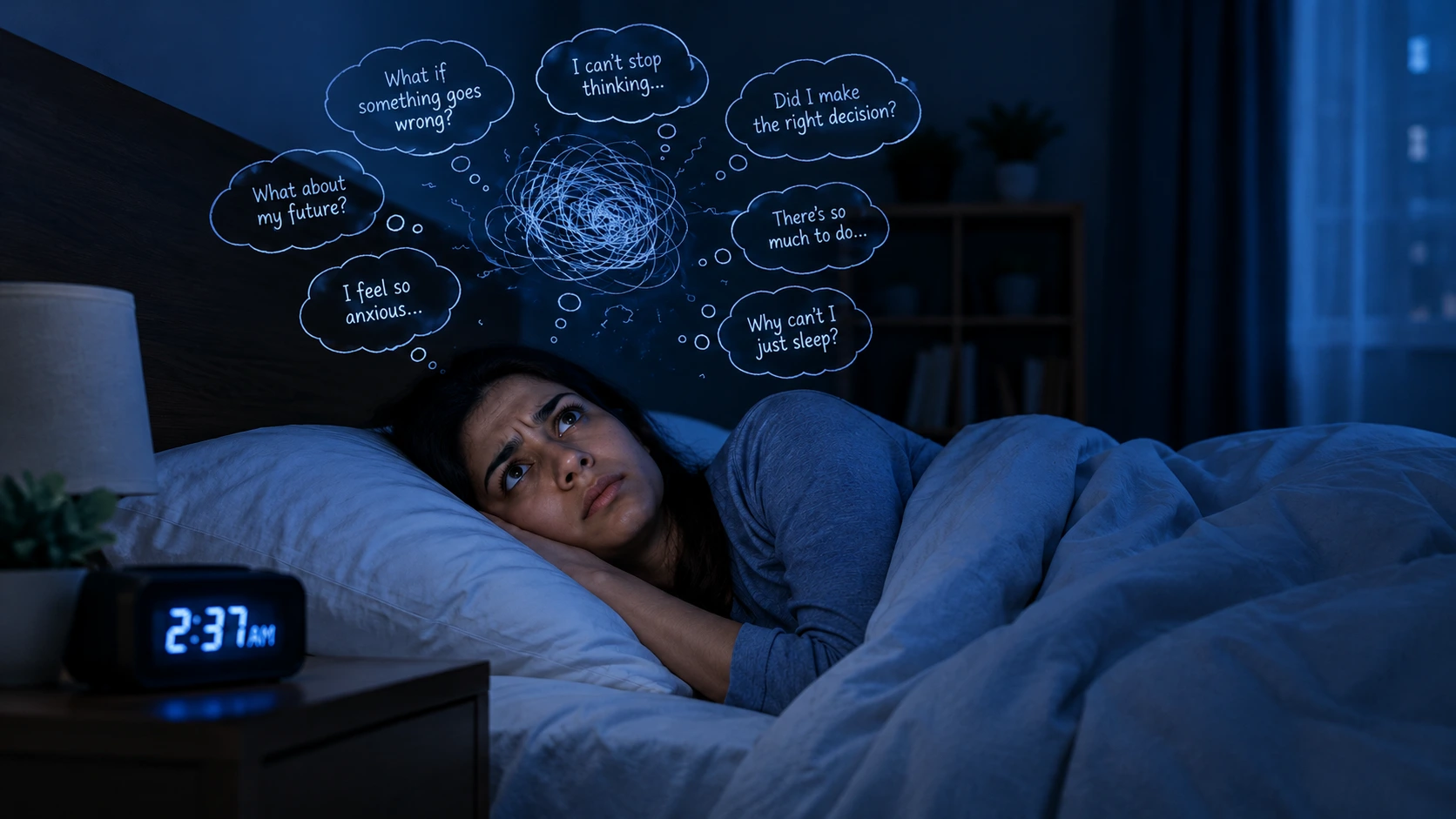
You’ve been hurt before, and now every relationship feels like a test you’re secretly failing. A partner is five minutes late, and your stomach drops. A friend seems distant, and your mind spirals into worst-case scenarios. If this sounds familiar, you’re not “too sensitive” or “bad at relationships.” You may be living with complex PTSD, a condition that quietly rewires how you see trust, love, and safety. The good news? This pattern can change, and online therapy for C-PTSD has made it easier than ever to start that healing from wherever you feel safest.
What Is C-PTSD and How Is It Different From PTSD?
PTSD typically develops after a single traumatic event, like an accident or assault. C-PTSD develops from prolonged or repeated trauma, often in childhood, where escape wasn’t possible, like ongoing neglect or an unpredictable caregiver.
While PTSD centers on flashbacks tied to one event, C-PTSD symptoms in relationships run deeper. They shape your core beliefs about yourself and others, including:
- A persistent sense that you’re fundamentally flawed
- Difficulty regulating emotions, especially shame or anger
- Trouble feeling safe even when nothing is wrong
- An unconscious expectation that people will eventually leave
This is why complex PTSD in relationships feels less like a bad memory and more like a lens you can’t take off.
How Does Childhood Trauma Change the Way You See Relationships?
Children are wired to trust their caregivers. When that trust is repeatedly broken, the nervous system adapts to survive, not to thrive.
Attachment trauma in adults often traces back to inconsistent love, disappearing affection, or being punished for having needs. The brain learns a simple rule: connection is dangerous.
In adulthood, that rule shows up as:
- Assuming silence means someone is angry with you
- Testing partners to see if they’ll “prove” they’ll leave
- Feeling smothered by closeness, even when you want it
- Struggling to accept comfort when you’re falling apart
These are the fingerprints of C-PTSD attachment issues, and they make sense once you understand where they came from.
Why Can’t I Trust Anyone, Even People Who Love Me?
This is one of the most painful parts of complex trauma. You can logically know someone is safe and still feel unable to let your guard down.
- Your body recalls what your intellect has moved on from. Safety cues don’t always register as safe.
- Trust was punished before. Vulnerability once led to pain, so your nervous system now treats trust as risk, not reward.
- Hypervigilance becomes a habit. Constantly scanning for threats feels exhausting, but also necessary.
This isn’t a character flaw. It’s your nervous system doing exactly what it was taught to do to keep you safe.
What Are the Signs of C-PTSD Showing Up in Your Relationships?
C-PTSD symptoms in relationships often masquerade as “just how you are.” Common signs include:
- Pulling away right when things start going well
- Overreacting to small conflicts, then feeling ashamed afterward
- Needing constant reassurance, or refusing to ask for any at all
- Feeling numb during emotionally intense moments
- Choosing partners who feel familiar, even when that familiarity is unhealthy
Ordinary trust issues usually stem from one specific betrayal and ease as new evidence of safety builds up. C-PTSD is different: the distrust isn’t really about the current person at all. It’s about a nervous system that never learned relationships could be safe in the first place.
Why Do I Feel Triggered by Normal Relationship Conflict?
C-PTSD relationship triggers can turn minor disagreements into full-blown emotional emergencies. A partner raising their voice slightly, or saying “we need to talk,” can trigger a stress response built for real danger, because your brain isn’t just reacting to today’s argument. It’s reacting to every past moment that taught you conflict meant loss or punishment.
Common triggers include:
- Being ignored or left “on read”
- A partner needing space or alone time
- Raised voices, even in calm disagreements
- Perceived criticism, even when gently phrased
Understanding C-PTSD abandonment issues specifically can explain why even brief distance from a partner can feel unbearable.
Can Someone With C-PTSD Have a Healthy, Trusting Relationship?
Yes. Healing is possible, and many people with complex trauma go on to build deeply secure, loving relationships. It doesn’t happen by “just trusting more.” It happens through:
- Understanding your patterns, so triggers stop feeling random
- Learning nervous system regulation, so you can stay present during conflict
- Practicing safe vulnerability, in small, manageable doses
- Working with a trained therapist, who addresses the root trauma, not just symptoms
C-PTSD fear of intimacy softens with consistent, corrective experiences of safety, both in therapy and in real relationships.
How Does Online Therapy Actually Help With Complex-PTSD?
You don’t need to relive every painful memory in detail to heal. Effective C-PTSD therapy builds safety first, then gently addresses underlying wounds through:
- Psychoeducation — understanding your reactions removes shame and self-blame
- Trauma-focused approaches like EMDR or somatic therapy, which help release stored stress
- Attachment-based therapy, which rebuilds trust through the therapeutic relationship itself
- Practical skills for communication, boundaries, and emotional regulation
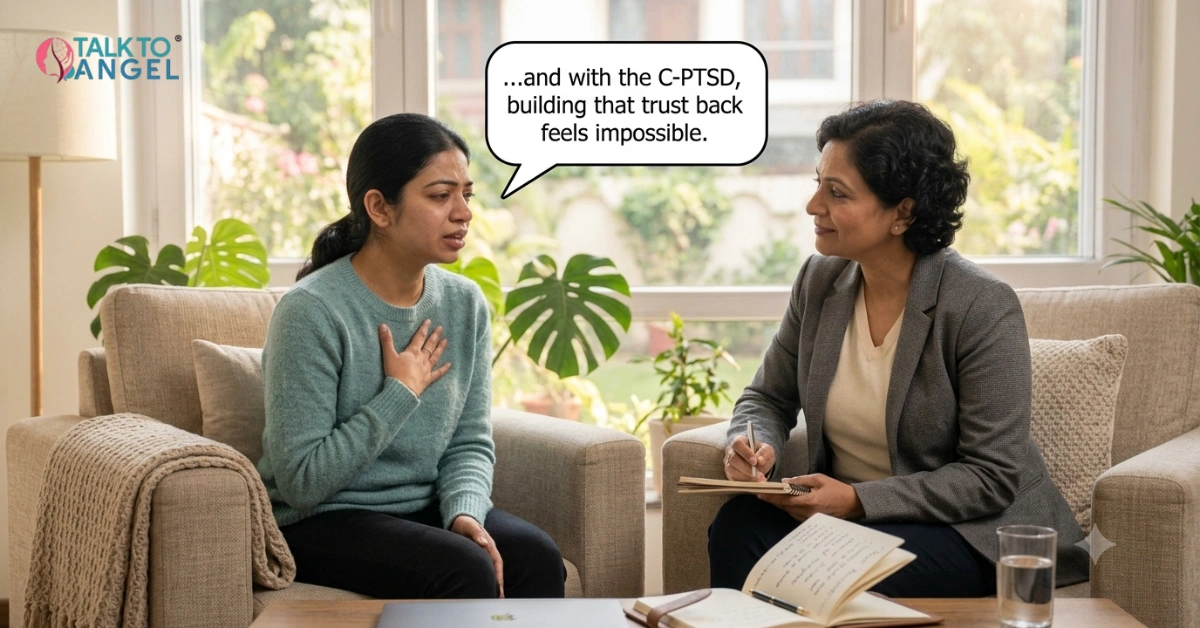
Online counseling for relationship problems and trauma also removes common barriers like travel time and scheduling conflicts. Many people find it simpler to open up in a comfortable and intimate setting.
If you’re ready to talk to someone, you can connect with a top therapist online through platforms like TalktoAngel, which offer licensed professionals experienced in trauma-informed, attachment-focused care.
Frequently Asked Questions
Is C-PTSD a real diagnosis?
C-PTSD is recognized in the ICD-11 as a distinct condition from standard PTSD, though it isn’t yet a separate diagnosis in the DSM-5. Clinicians widely acknowledge it as a meaningful pattern involving emotional regulation, self-perception, and relationship difficulties stemming from prolonged trauma.
How do I know if my trust issues are C-PTSD or just past relationship baggage?
Ordinary relationship baggage usually connects clearly to one or two specific experiences and gradually eases with reassurance and time. C-PTSD-driven distrust tends to feel disproportionate to the present situation, shows up across multiple relationships, and doesn’t fully resolve even when a partner proves trustworthy. A therapist can help clarify which pattern fits your experience.
Can C-PTSD be healed without medication?
Yes. While medication can help manage co-occurring anxiety or depression, the core work of healing C-PTSD happens through therapy, particularly trauma-focused and attachment-based approaches like EMDR, somatic experiencing, and psychotherapy. Many people see meaningful improvement through consistent therapy alone.
You Deserve Relationships That Feel Safe
Trust that’s been broken repeatedly doesn’t rebuild itself overnight, and it doesn’t need to be forced. With the right support, hypervigilance can quiet down, triggers can lose their grip, and closeness can start to feel like relief instead of risk. If you want to dig deeper into how past trauma shapes present-day connection, this piece on Relationship Trust Issues in Complex PTSD is a helpful next read.
If you recognized yourself in this article, that awareness is already progress. TalktoAngel connects you with experienced therapists who specialize in C-PTSD, attachment trauma, and relationship healing. Reach out today and take the first step toward relationships built on real, lasting trust.