
Why Anxiety Feels Uncontrollable & How Virtual Therapy Can Treat It
Have you ever been having a perfectly normal day when suddenly your heart starts racing, your chest feels tight, and your mind floods with fearful thoughts? Anxiety can appear without warning, leaving you feeling overwhelmed and powerless. For many people, these experiences are more than occasional stress—they are signs of persistent anxiety that affects daily life, relationships, work performance, and overall well-being. The good news is that anxiety is treatable. With the growing accessibility of virtual therapy for anxiety, individuals can now receive professional support from the comfort of their homes. Understanding why anxiety feels uncontrollable is the first step toward healing and regaining confidence in your ability to manage it.
Why Does My Anxiety Feel Like It Hits Me Out of Nowhere?
Anxiety often feels sudden because the triggers are not always obvious. While some anxiety episodes are linked to stressful events, others can be triggered by subconscious thoughts, unresolved emotional issues, physical exhaustion, or even environmental factors.
The brain’s threat-detection system is designed to keep us safe. However, in people experiencing anxiety disorders, this system can become overly sensitive. It may interpret harmless situations as threats, activating the body’s fight-or-flight response even when no real danger exists.
This is why many people seek help for managing uncontrollable anxiety. Understanding hidden triggers with the support of a mental health professional can make anxiety feel more predictable and manageable.
How Do I Stop My Brain from Spiraling Into Worst-Case Scenarios?
One of the most frustrating aspects of anxiety is catastrophic thinking. A minor concern can quickly escalate into imagining the worst possible outcome. This mental pattern keeps the brain stuck in a cycle of fear and uncertainty.
Therapists often use evidence-based techniques to help individuals challenge these thoughts. During virtual therapy for anxiety, clients learn how to:
- Identify irrational thought patterns
- Challenge negative assumptions
- Focus on facts rather than fears
- Practice mindfulness and grounding exercises
- Build healthier coping strategies
Over time, these skills reduce the intensity and frequency of anxious spirals, allowing individuals to respond to challenges more calmly.
What Does It Mean When Anxiety Makes You Feel Totally Paralyzed?
Many people assume anxiety only causes nervousness, but it can also lead to emotional paralysis. When anxiety becomes overwhelming, decision-making can feel impossible. Even simple tasks may seem exhausting.
This reaction occurs because the brain is overloaded with perceived threats. Instead of taking action, the nervous system enters a freeze response. Individuals may experience:
- Difficulty concentrating
- Avoidance of responsibilities
- Feelings of helplessness
- Lack of motivation
- Social withdrawal
Seeking mental health support for anxiety can help break this cycle. Professional guidance enables individuals to understand their responses and gradually rebuild confidence in handling everyday situations.
Can Uncontrollable Anxiety Cause Physical Nausea and Shaking?
Yes. Anxiety affects both the mind and body. When the body enters fight-or-flight mode, stress hormones such as adrenaline and cortisol increase rapidly. These changes can produce noticeable physical symptoms.
Common physical signs of anxiety include:
- Nausea or stomach discomfort
- Shaking or trembling
- Rapid heartbeat
- Sweating
- Muscle tension
- Dizziness
- Shortness of breath
Many individuals worry that these symptoms indicate a serious physical illness, which can further intensify anxiety. Proper anxiety disorder treatment helps individuals understand the connection between physical sensations and emotional distress, reducing fear and improving symptom management.
Why Is Chronic Anxiety So Difficult to Manage Alone?
Occasional anxiety is a normal part of life, but chronic anxiety can become deeply ingrained over time. People often develop avoidance behaviors, negative thinking patterns, and unhealthy coping mechanisms without realizing it.
Attempting to manage chronic anxiety alone may lead to:
- Increased isolation
- Persistent worry
- Sleep disturbances
- Reduced productivity
- Strained relationships
An effective treatment for chronic anxiety focuses on addressing both symptoms and underlying causes. Virtual therapy helps individuals identify triggers, improve emotional regulation, and develop practical coping tools for long-term recovery.
How Does Virtual Therapy Help Treat Anxiety?
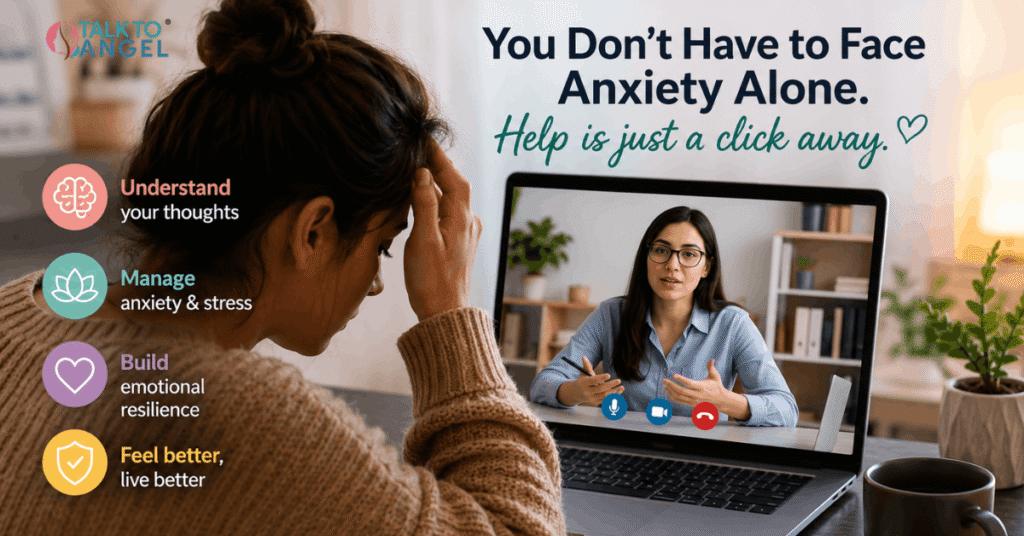
Access to mental health care is now easier than ever because to technology. Virtual therapy for anxiety allows individuals to connect with qualified professionals through secure online platforms.
Some benefits of virtual therapy include:
- Convenient access from home
- Flexible scheduling options
- Reduced travel time
- Greater privacy and comfort
- Consistent access to professional support
Therapists use evidence-based approaches such as Cognitive Behavioral Therapy (CBT), mindfulness-based interventions, and stress management techniques to help individuals manage anxiety effectively.
For those seeking an online psychologist consultation for anxiety, virtual therapy offers a practical and effective way to receive expert care regardless of location.
When Should You Seek Professional Help for Anxiety?
It might be time to get help from a professional if anxiety:
- Interferes with daily activities
- Causes frequent panic attacks
- Affects sleep or appetite
- Impacts work or academic performance
- Leads to avoidance of important situations
- Creates ongoing emotional distress
Early intervention can keep symptoms from getting worse and improve overall quality of life. Professional virtual therapy support for anxiety provides personalized strategies that address each individual’s unique experiences and challenges.
How Can TalktoAngel Support Your Anxiety Recovery Journey?
If anxiety has started controlling your thoughts, emotions, or daily routines, professional support can make a significant difference. TalktoAngel, recognized as a leading virtual therapy & counselling platform, provides access to experienced mental health professionals who understand the complexities of anxiety disorders.
Through secure virtual therapy sessions, individuals can receive personalized guidance, evidence-based interventions, and compassionate support tailored to their needs. Whether you are struggling with occasional anxiety or seeking an effective treatment for chronic anxiety, professional help is available.
You can Book psychologists appointment online and take the first step toward understanding your anxiety, developing healthier coping strategies, and reclaiming control over your life.
Conclusion
Anxiety often feels uncontrollable because it affects both the mind and body in powerful ways. From sudden waves of fear and catastrophic thinking to physical symptoms such as nausea and shaking, anxiety can significantly impact daily functioning. Fortunately, anxiety is highly treatable. With professional guidance and virtual therapy for anxiety, individuals can learn practical skills for managing uncontrollable anxiety, challenge negative thought patterns, and improve emotional well-being. They can also learn how cognitive therapy helps stop catastrophic thinking by identifying irrational fears, reframing negative beliefs, and developing healthier thought patterns. Seeking help is not about eliminating all anxiety—it is about learning how to respond to it with confidence, resilience, and greater self-awareness.