
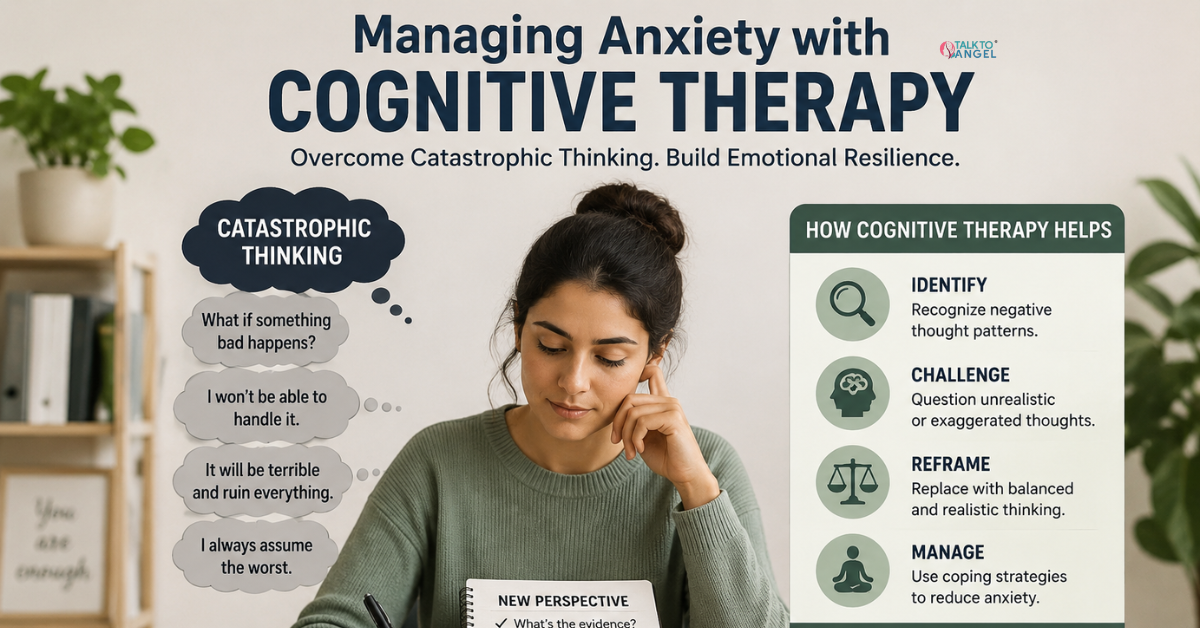
Have you ever found yourself imagining the worst possible outcome in every situation? A delayed text message becomes a sign of rejection, a minor health symptom feels like a serious illness, or a small mistake at work seems like the end of your career. This pattern of thinking, known as catastrophic thinking, can trap you in a cycle of fear, stress, and constant worry. Over time, it can significantly impact your emotional well-being and increase anxiety levels. The good news is that these thought patterns can be changed. Through Cognitive Therapy for Anxiety, individuals can learn to challenge irrational fears, develop healthier thinking habits, and regain control over their emotions.
Why Do I Always Assume the Worst Will Happen?
Catastrophic thinking is a cognitive distortion where the mind automatically predicts negative outcomes, often without sufficient evidence. People experiencing anxiety tend to overestimate threats and underestimate their ability to cope with challenges.
For example, if a friend does not answer a call, someone with catastrophic thinking may immediately believe that the friendship is over. Similarly, a small setback at work may lead them to assume they will lose their job.
These automatic thoughts often develop from past experiences, chronic stress, low self-confidence, or anxiety disorders. When left unchecked, they can fuel persistent worry and emotional distress.
How Does Catastrophic Thinking Increase Anxiety?
Catastrophic thinking and anxiety often reinforce one another. When the brain constantly expects danger, it activates the body’s stress response, even when no real threat exists.
This cycle can lead to:
- Excessive worry about future events
- Difficulty concentrating
- Sleep disturbances
- Physical symptoms such as rapid heartbeat or muscle tension
- Avoidance of situations perceived as risky
As anxiety increases, catastrophic thoughts become more frequent, creating a self-perpetuating loop. This is why Anxiety Treatment through therapy is often recommended to break the cycle and promote healthier emotional responses.
How Does Cognitive Therapy Help with Catastrophic Thinking and Reduce Anxiety?
Cognitive Therapy in India has become one of the most effective approaches for addressing anxiety and distorted thinking patterns. Cognitive therapy focuses on identifying, examining, and changing unhelpful thoughts that contribute to emotional distress.
Rather than accepting catastrophic thoughts as facts, individuals learn to evaluate them objectively and replace them with balanced perspectives.
Some of the key ways cognitive therapy helps include:
Identifying Negative Thought Patterns
The first step is recognizing the automatic thoughts that trigger anxiety. Therapists help individuals become aware of recurring patterns of worst-case thinking and understand how these thoughts influence emotions and behaviors.
Challenging Irrational Beliefs
Once negative thoughts are identified, therapists guide clients in questioning their accuracy. They learn to ask questions such as:
- What evidence supports this thought?
- Is there another explanation?
- What is the most realistic outcome?
This process reduces the emotional power of catastrophic thinking and promotes rational decision-making.
Developing Balanced Thinking
Instead of assuming the worst, individuals learn to consider multiple possibilities. This balanced approach helps reduce fear and improve emotional resilience.
Building Coping Skills
Cognitive therapy also teaches practical coping strategies for managing anxiety, including relaxation techniques, problem-solving skills, and emotional regulation methods.
How Can I Stop Catastrophic Thinking from Increasing My Anxiety?
Learning to stop catastrophic thinking naturally requires consistent practice and self-awareness. While therapy provides professional guidance, several daily habits can support progress.
Practice Thought Monitoring
Keep a journal of anxious thoughts and identify patterns. Writing thoughts down often makes them easier to evaluate objectively.
Focus on Facts Rather Than Assumptions
When anxiety arises, ask yourself whether your fears are based on evidence or assumptions. This simple habit can reduce unnecessary worry.
Use Mindfulness Techniques
Mindfulness helps bring attention back to the present moment instead of focusing on imagined future disasters. Regular mindfulness practice can significantly improve emotional balance.
Challenge Worst-Case Scenarios
When a catastrophic thought appears, consider alternative outcomes. Often, the actual situation is far less severe than what the mind predicts.
These strategies can be highly effective for managing anxiety caused by catastrophic thinking, especially when combined with professional support.
Why Is Cognitive Therapy Considered Effective for Anxiety?
Research consistently shows that Cognitive Therapy for Anxiety helps individuals change the thought patterns that maintain anxiety disorders. By addressing the root cause of anxious thinking rather than only the symptoms, cognitive therapy creates long-term improvements in mental health.
Benefits often include:
- Reduced anxiety symptoms
- Improved emotional regulation
- Greater confidence in handling challenges
- Better problem-solving abilities
- Increased overall well-being
As a result, many mental health professionals recommend cognitive therapy as a first-line treatment for anxiety-related concerns.
Where Can You Find Professional Support for Catastrophic Thinking and Anxiety?
Seeking help from a qualified therapist can make a significant difference when anxiety begins affecting daily life. Today, online therapy has made mental health support more accessible than ever.
If you are looking to talk to the Best Therapists Online, platforms such as TalktoAngel, the best platform for online therapy, connect individuals with experienced mental health professionals who specialize in anxiety management and cognitive therapy. Through personalized sessions, clients can learn effective techniques to challenge catastrophic thoughts and build healthier thinking patterns.
Conclusion
Catastrophic thinking can make everyday situations feel overwhelming, but it does not have to control your life. If you often find yourself wondering, “Why do I always expect the worst will happen?“, understanding the connection between thoughts and emotions is the first step toward change. Through Cognitive Therapy in India, individuals can identify unhelpful thought patterns, develop healthier perspectives, and reduce anxiety effectively. With the right support and strategies, it is possible to overcome negative thinking habits, improve emotional resilience, and experience a greater sense of calm and confidence in daily life.