
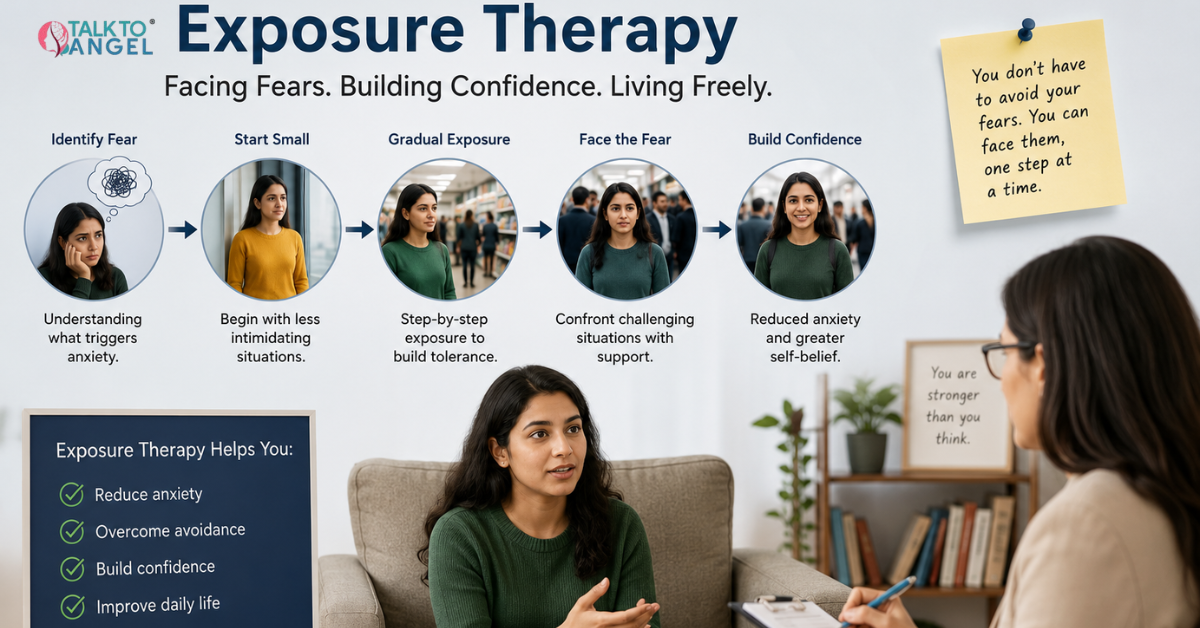
Have you ever skipped a social event, delayed an important conversation, avoided public transportation, or turned down opportunities because of anxiety? While avoiding stressful situations may provide temporary comfort, it can gradually shrink your world and make anxiety feel even more overwhelming. The good news is that anxiety does not have to control your daily life. One of the most effective approaches for breaking the cycle of fear and avoidance is Exposure therapy for anxiety treatment. By gradually facing feared situations with professional guidance, individuals can build confidence, reduce anxiety, and regain the freedom to participate fully in everyday activities.
Why Does Anxiety Make You Avoid Everyday Situations?
Anxiety often triggers a strong fear response, making ordinary activities seem threatening or overwhelming. Some people avoid social interactions because they fear judgment, while others avoid crowded places, driving, public speaking, or unfamiliar environments.
Although avoidance reduces distress in the moment, it teaches the brain that the feared situation is dangerous. Over time, anxiety grows stronger, and the list of avoided situations may expand. This cycle can negatively impact relationships, career growth, education, and overall quality of life.
How Does Avoidance Make Anxiety Worse Over Time?
Avoidance can feel like a coping strategy, but it often reinforces anxiety rather than reducing it. Every time a person escapes a feared situation, they miss the opportunity to learn that they can handle the discomfort.
As a result:
- Fear becomes more deeply rooted.
- Confidence decreases.
- Anxiety spreads to similar situations.
- Daily functioning becomes increasingly difficult.
Breaking this pattern requires learning new ways to respond to fear instead of automatically avoiding it.
Why Is Exposure Therapy Considered an Effective Anxiety Treatment?
Exposure therapy for anxiety treatment is widely recognized as one of the most effective evidence-based approaches for anxiety disorders. The therapy helps individuals gradually face situations, thoughts, or sensations they fear rather than avoiding them.
By repeatedly confronting anxiety triggers in a controlled and supportive manner, individuals learn that the anticipated danger is often less severe than expected. Over time, the emotional intensity associated with these situations decreases, allowing people to participate in activities they previously avoided.
Which Anxiety Disorders Can Benefit from Exposure Therapy?
Many mental health conditions respond well to Anxiety Disorder Treatment through Exposure Therapy, including:
- Social Anxiety Disorder
- Generalized Anxiety Disorder (GAD)
- Panic Disorder
- Specific Phobias
- Obsessive-Compulsive Disorder (OCD)
- Health Anxiety
- Post-Traumatic Stress Disorder (PTSD)
Because every person’s experience with anxiety is unique, treatment plans are customized to address individual fears and goals.
What Are the Most Common Exposure Therapy Techniques for Anxiety Disorders?
Mental health professionals use various Exposure therapy techniques for anxiety disorders depending on the client’s needs.
- Gradual Exposure: Individuals start with less intimidating situations and slowly progress toward more challenging experiences.
- Real-Life Exposure: Clients directly engage with situations they fear, such as attending social events or speaking in public.
- Imaginal Exposure: People repeatedly visualize anxiety-provoking situations when direct exposure is not yet possible.
- Sensation-Based Exposure: This approach helps individuals become comfortable with physical symptoms of anxiety, such as a racing heart or shortness of breath.
These techniques are carefully structured to help clients build confidence without becoming overwhelmed.
How Can Exposure Therapy Help You Regain Confidence?
Confidence grows when individuals prove to themselves that they can handle situations they once feared. Exposure therapy encourages gradual success experiences that challenge negative beliefs and build resilience.
As therapy progresses, many people discover that:
- Their anxiety becomes more manageable.
- Feared outcomes rarely occur.
- They can tolerate discomfort.
- Daily tasks feel less intimidating.
This process can significantly reduce the need for Professional help for anxiety avoidance behaviours in the future by teaching long-term coping skills.
What Role Does Professional Support Play in Recovery?
While self-help strategies can be beneficial, working with a trained mental health professional often improves outcomes. Therapists provide guidance, structure, and encouragement throughout the exposure process.
Professional support helps individuals:
- Identify anxiety triggers
- Create realistic exposure goals
- Learn coping strategies
- Monitor progress safely
- Maintain motivation during treatment
Seeking professional help for anxiety avoidance behaviours can make the journey toward recovery more effective and manageable.
Can Online Therapy Help You Overcome Anxiety?
Yes. Online therapy has become an accessible and convenient option for individuals seeking support for anxiety-related concerns. Virtual sessions allow clients to connect with licensed mental health professionals from the comfort of their homes.
TalktoAngel, the best platform for online therapy, offers access to experienced professionals who help individuals manage anxiety, develop coping skills, and address avoidance behaviors through evidence-based therapeutic approaches.
Online therapy can be particularly beneficial for those who find it difficult to attend in-person sessions because of anxiety.
How Can You Overcome Fear and Anxiety with Therapy?
Learning to overcome fear and anxiety with therapy involves gradually changing how you respond to fearful situations. Therapy helps individuals understand their anxiety, challenge unhelpful thought patterns, and develop healthier coping mechanisms.
With consistent practice, people often experience:
- Reduced anxiety symptoms
- Improved emotional resilience
- Greater self-confidence
- Better social and professional functioning
- Enhanced quality of life
The goal is not to eliminate all anxiety but to prevent it from controlling daily decisions and opportunities.
When Should You Seek Help for Anxiety-Related Avoidance?
If anxiety is causing you to avoid important activities, relationships, responsibilities, or opportunities, it may be time to seek professional support. Early intervention can prevent anxiety from becoming more severe and help you regain control over your life.
Conclusion
Avoiding everyday situations may provide temporary relief, but it often strengthens anxiety over time. Exposure therapy offers a practical and proven way to break free from avoidance patterns and rebuild confidence. Through Exposure Therapy, individuals can gradually face their fears, improve emotional resilience, and overcome fear and anxiety. You can also learn how therapy helps you face fear without feeling overwhelmed, making the process of confronting anxiety feel more manageable and empowering. With the right guidance and support, it is possible to reclaim your independence and live a fuller, more confident life.