
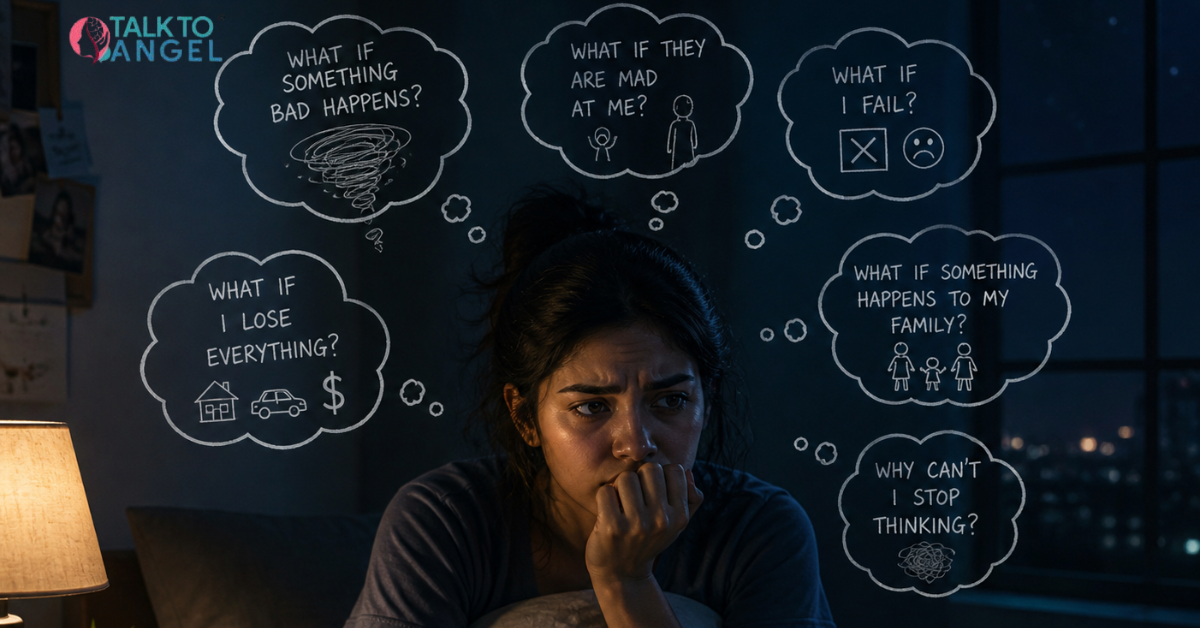
Have you ever noticed how your mind jumps to the worst-case scenario—especially at night when everything is quiet? A delayed reply becomes rejection, a small mistake feels like failure, and a mild headache turns into something serious. This pattern of thinking can feel automatic, almost like your brain is wired to expect the worst. But here’s the truth: this isn’t a personality flaw—it’s often a sign of anxiety and overthinking. The good news? With the right support, including online counselling for anxiety, you can learn to break free from these patterns and regain control of your thoughts.
Why Do I Always Assume the Worst Scenarios?
If you constantly find yourself imagining the worst outcomes, you’re not alone. This thinking pattern is known as catastrophizing, a common cognitive distortion linked to anxiety. Your brain is trying to protect you by predicting danger—but it ends up creating unnecessary fear.
People who assume the worst in relationships, work situations, or health often have a heightened sensitivity to uncertainty. Instead of waiting for facts, the mind fills in gaps with negative assumptions.
This is where virtual therapy for overthinking becomes helpful. A trained therapist can guide you to identify these thought patterns and replace them with more balanced, realistic thinking.
Why Do I Always Feel Like Something Bad Is About to Happen?
That constant feeling of dread—like something is about to go wrong—can be exhausting. It’s often tied to chronic anxiety, where your mind stays in a state of alert even when there’s no real threat.
This “fear of the worst-case scenario” is your brain’s way of preparing for danger. However, when it becomes frequent, it can interfere with daily life, relationships, and sleep.
If you relate to this, seeking online counselling for anxiety can help you understand the root cause. Mental health professionals, including mental health experts in West Delhi, often use evidence-based approaches to calm this constant fear.
How Do I Stop My Brain from Spiraling into a Panic at Night?
Nighttime can intensify overthinking. Without distractions, your mind starts replaying worries, leading to a “constant fear of bad news.”
Here are a few practical ways to stop the spiral:
- Create a wind-down routine: Avoid screens and stimulating content before bed
- Practice grounding techniques: Focus on your breathing or surroundings
- Write your thoughts down: Journaling can help release mental clutter
- Challenge negative thoughts: Ask yourself, “Is this fact or fear?”
Still, self-help isn’t always enough. Structured approaches like CBT (Cognitive Behavioral Therapy) online are highly effective in managing nighttime anxiety and breaking repetitive thought cycles.
How Do I Know If My Overthinking Is Actually Clinical Anxiety?
It’s normal to worry occasionally. But when overthinking becomes constant, intense, and difficult to control, it may indicate clinical anxiety.
Here are some signs to watch for:
- Persistent worry that feels uncontrollable
- Difficulty concentrating due to racing thoughts
- Physical symptoms like restlessness or fatigue
- Trouble sleeping due to anxiety
- Avoiding situations out of fear
If these symptoms sound familiar, it may be time to consult one of the best online therapists for anxiety. Early support can prevent symptoms from worsening and help you regain emotional balance.
Can Therapy Really Help Stop Negative Thought Patterns?
Yes—therapy is one of the most effective ways to stop negative thought patterns. Techniques used in Cognitive Behavioral Therapy online focus on identifying distorted thinking and replacing it with healthier perspectives.
For example, instead of thinking:
“Something bad is definitely going to happen,”
You learn to reframe it as:
“I’m feeling anxious, but that doesn’t mean something bad will happen.”
Over time, this shift reduces anxiety and builds resilience. Therapy also helps you understand triggers—whether they stem from past experiences, stress, or relationship concerns.
Why Do I Assume the Worst in Relationships?
Assuming the worst in relationships often comes from fear of rejection, abandonment, or past emotional experiences. A delayed message or a change in tone can quickly lead to negative assumptions.
This pattern can create unnecessary conflict and emotional distress. Through virtual therapy for overthinking, you can:
- Improve communication skills
- Build emotional awareness
- Develop trust and security
- Break the cycle of negative assumptions
Working with experienced professionals, such as those at TalktoAngel, can help you navigate these patterns in a safe and supportive environment.
Where Can I Find the Best Support for Anxiety in Delhi?
Finding the right help is crucial for recovery. Platforms like TalktoAngel offer access to some of the best online therapists for anxiety, making it easier to get professional support from the comfort of your home.
Recognized as one of the best mental health clinics in West Delhi, Psychowellness Center also provides comprehensive services for anxiety, overthinking, and emotional well-being.
These platforms connect you with experienced psychologists who use evidence-based therapies tailored to your needs.
How Can Online Counselling Help You Take Back Control?
Choosing online counselling for anxiety gives you flexibility, privacy, and access to expert care without the need to travel. Whether you’re dealing with overthinking, fear of the worst-case scenario, or constant anxiety, online sessions can help you:
- Understand your thought patterns
- Learn coping strategies
- Build emotional resilience
- Improve your overall mental health
The convenience of virtual therapy makes it easier to stay consistent, which is key to long-term improvement.
Final Thoughts: You Don’t Have to Live in Constant Fear
If your mind always assumes the worst, it doesn’t mean you’re weak—it means your brain is trying (overenthusiastically) to protect you. But when this pattern takes over your life, it’s time to step in and retrain your thinking.
With the right support, including virtual therapy for overthinking, you can quiet the noise, reduce anxiety, and start seeing situations more clearly.
You deserve a calmer, more balanced mind—and the journey can start with a single step toward the right support.