Ever said something in the heat of the moment that you regretted instantly? You’re not alone. Most couples don’t break up because they stopped loving each other — they break up because unmanaged emotions took over their communication. The good news is that emotional regulation in relationships is a learnable skill. This guide explains why emotions hijack even strong relationships, how to spot the warning signs, and how therapy — from CBT to EFT — helps couples reconnect.
Why Do Emotions Ruin Relationships in the First Place?
Emotions aren’t the problem. Unregulated emotions are.
When feelings like anger, fear, or insecurity show up faster than your ability to process them, they take the wheel. You stop responding to your partner and start reacting to your own internal alarm system.
Over time, this creates a familiar cycle: one partner feels criticized and shuts down, the other feels ignored and escalates, and both leave the conversation feeling worse. This loop sits at the heart of most relationship breakdowns — exactly what emotional regulation in relationships training is designed to interrupt.
What Causes Emotional Reactivity in Couples?
Emotional reactivity — a quick, intense, often disproportionate response to a partner’s words — usually stems from a few overlapping sources:
- Stress and exhaustion, leaving less capacity to pause before reacting
- Old wounds that make certain comments feel more threatening than intended
- Unspoken expectations that quietly build into disappointment
- Poor communication habits, like interrupting or mind-reading
Recognizing your own triggers is the first step toward breaking the cycle.
How Do You Know If Your Emotions Are Hurting Your Relationship?
Common signs that emotions are damaging your relationship include:
- Small disagreements regularly turning into full-blown fights
- Walking on eggshells around each other
- Conversations ending in silence or shutdown
- Replaying arguments for days, unable to let go
- Avoiding issues out of fear of “starting something”
If several feel familiar, it’s not a sign your relationship is doomed — just that your emotional patterns need attention.
Why Do Small Arguments Turn Into Big Emotional Fights?
Ever notice how “you forgot to text me back” can spiral into a conversation about the entire relationship? Small triggers often tap into deeper, unresolved feelings — like fear of being unimportant or unheard. Once that deeper emotion activates, the fight stops being about the missed text and becomes about feeling unseen. Recognizing this distinction helps couples address the real issue instead of the surface trigger.
What Role Does Attachment Style Play in Emotional Conflict?
Attachment theory explains a lot about why couples clash. Early relationships shape how we expect to be treated, and that blueprint plays out in adult partnerships:
- Anxious attachment: seeks reassurance and spirals into worry when a partner seems distant
- Avoidant attachment: withdraws or shuts down when emotions intensify
- Secure attachment: comfortable expressing needs and tolerating conflict
When an anxious partner pursues connection and an avoidant partner pulls away, it creates the classic “pursue-withdraw” loop seen in attachment styles and emotional reactions. Therapy helps both partners recognize this dynamic and respond with empathy instead of blame.
How Does Unresolved Trauma Affect Your Relationships?
Trauma doesn’t stay in the past — it often shows up disguised as overreaction, distrust, or emotional numbness in the present. A partner raising their voice slightly might trigger a fear response rooted in something unrelated to the current relationship. This is why addressing trauma isn’t just an “individual” issue — it directly shapes how safe and connected a couple feels together.
What Is Emotional Flooding and How Does It Damage Communication?
Emotional flooding happens when your body’s stress response — racing heart, tight chest, racing thoughts — overwhelms your ability to think clearly. Once flooded, most people fight harder or freeze completely.
Signs you’re flooded include a spiking heart rate, forgetting what your partner just said, or the urge to yell or walk away. The fix isn’t to push through — it’s to pause. A short, agreed-upon break of 20–30 minutes lets your nervous system reset before you return to the conversation.
How Does Couples Therapy Help You Manage Emotions?
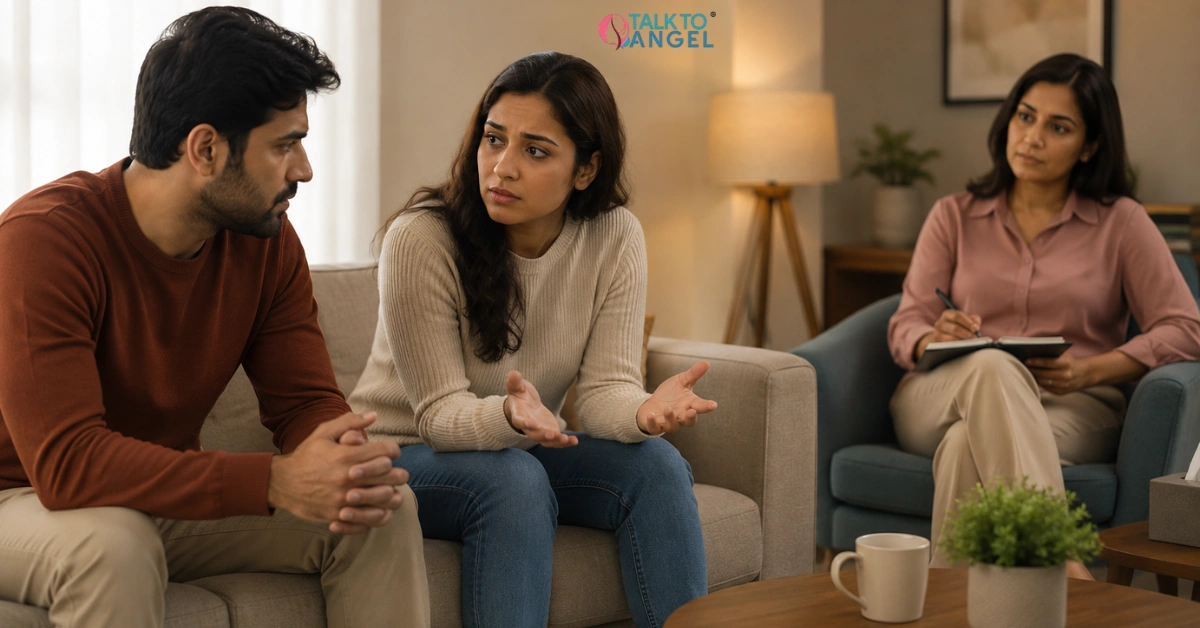
Couples therapy for emotional issues gives partners tools to slow down, understand their own patterns, and communicate without escalation. A trained therapist acts as a neutral guide, helping couples spot triggers before they spiral, understand each other’s underlying needs, and rebuild trust after repeated ruptures. Therapy doesn’t erase emotions — it teaches couples to work with them instead of being run by them.
What Therapy Techniques Work Best for Emotional Regulation?
Several therapy techniques for couples are especially effective for managing reactivity:
Cognitive Behavioral Therapy (CBT)
Cognitive behavioral therapy (CBT) helps partners spot unhelpful thought patterns — like assuming the worst about a partner’s intentions — and replace them with more balanced interpretations.
Emotionally Focused Therapy (EFT)
Emotionally focused therapy (EFT) digs beneath surface arguments to uncover the attachment fears driving conflict, helping couples build a more secure bond.
Pause-and-Reflect
When emotions rise, both partners agree to pause, name what they’re feeling, and reflect before responding.
Structured Communication Exercises
Therapists often use guided exercises, like speaker-listener techniques, so both partners feel heard without interrupting or escalating.
How Can You Communicate Better When Emotions Run High?
Better therapy for relationship communication starts with a few habits you can use today:
- Use “I” statements instead of “you” accusations
- Take a timeout if either partner feels flooded
- Reflect what you heard before responding
- Avoid serious talks when tired, hungry, or rushed
- Focus on one issue at a time
These small shifts reduce how often conversations spiral into fights.
Can Individual Therapy Help If Your Partner Won’t Join?
Yes. While couples therapy is ideal when both partners participate, individual therapy still makes a real difference. Working on your own emotional regulation and relationship skills — recognizing triggers, managing flooding, communicating needs clearly — often shifts the relationship dynamic, even if your partner isn’t in the room. Many people find their partner naturally responds differently as they change their own reactive patterns.
What Are Healthy Ways to Express Emotions With a Partner?
Expressing emotions doesn’t mean suppressing them — it means channeling them constructively:
- Name the emotion specifically (“I feel anxious,” not “I’m upset”)
- Share the need behind the feeling (“I need reassurance”)
- Choose timing wisely — avoid heavy talks before bed
- Stay curious, not accusatory
- Validate your partner’s feelings, even when you disagree
Finding the Right Support
If patterns of emotional reactivity in relationships feel too difficult to manage alone, a qualified therapist can help. Platforms like TalktoAngel offer accessible online counselling for couples seeking flexible support. For in-person care, Psychowellness Center, a well-regarded clinic for couples therapy in Delhi, has experienced therapists specializing in emotional and relational issues. If you’re searching for the best couples therapist for emotional issues, look for someone trained in evidence-based approaches like CBT or EFT with couples-specific experience.
Frequently Asked Questions (FAQs)
How do I stop being so emotionally reactive with my partner?
Start by noticing your triggers, pausing before responding when you feel flooded, and using “I” statements instead of accusations. Emotional regulation in relationships improves with practice, and a therapist can help speed up the process.
Does attachment style affect how couples argue?
Yes. Anxious partners tend to pursue reassurance while avoidant partners tend to withdraw, creating a “pursue-withdraw” cycle that fuels repeated conflict. Understanding your attachment style helps you respond with empathy instead of blame.
Is couples therapy only for relationships in crisis?
No. Couples therapy is just as effective — often more so — as a preventive tool for building better communication and emotional regulation before small issues turn into major ones.
Final Thoughts: Emotions Don’t Have to Ruin Your Relationship
Emotions aren’t your relationship’s enemy — poor emotional regulation is. What separates thriving relationships from struggling ones is how conflict gets handled. With the right awareness, communication tools, and professional support when needed, it’s entirely possible to turn emotional reactivity into emotional connection.
If you’re noticing the signs of emotional strain in your relationship, don’t wait for things to get worse. Reach out to a qualified couples therapist today and take the first step toward calmer conversations and a stronger bond.