
Relationships rarely fall apart overnight. They wear down slowly, through missed conversations, old resentments, and misunderstandings nobody addressed in time. If you and your partner know you need outside help, learning how to find a couples therapist in the USA is the first real step toward repair. This guide explains why couples therapy helps, what to look for in a provider, and how online couples therapy in the USA has made quality support easier to access than ever.
Why Might You Need a Couples Therapist?
Every relationship hits rough patches, but some patterns are harder to break without a neutral third party.
- Communication breakdowns that turn small disagreements into full-blown arguments
- Recurring conflict over finances, parenting, or intimacy
- Trust issues following infidelity or broken promises
- Emotional distance or feeling like roommates instead of partners
- Life transitions such as a new baby, relocation, or job loss straining the relationship
A couples therapist doesn’t take sides. Instead, they help both partners understand the dynamics driving these issues and build healthier ways of relating to each other. Left unaddressed, these patterns often fuel anxiety and depression in relationships, which is why many couples eventually search for mental health support for relationship problems alongside couples work.
How Do You Know You’re Ready for Couples Therapy?
Many couples wait too long before seeking help, often until resentment has already built up. You might be ready for therapy if:
- Conversations frequently turn into shouting matches or go silent instead
- You feel more like co-managers of a household than partners
- One or both of you has considered separation
- You keep having the same argument without resolution
Readiness doesn’t require a crisis. In fact, couples who start therapy early, before contempt sets in, often see faster, more lasting change. Recognizing signs you need marriage counseling early, rather than waiting for a breaking point, is one of the strongest predictors of a positive outcome.
What Types of Couples Therapy Are Available in the USA?
Different approaches work for different relationship struggles, so understanding the main models helps you choose wisely.
Gottman Method Couples Therapy
Built on decades of research, this approach focuses on strengthening friendship, managing conflict constructively, and creating shared meaning.
Emotionally Focused Therapy (EFT)
EFT centers on identifying negative interaction cycles and rebuilding secure emotional bonds, making it especially effective for couples struggling with disconnection.
Cognitive Behavioral Therapy for Couples
Cognitive behavioral therapy for couples targets unhelpful thought patterns and behaviors that fuel conflict, teaching practical skills for communication and problem-solving.
Imago Relationship Therapy
This method explores how childhood experiences shape adult relationship patterns, helping partners respond to each other with more empathy.
Discernment Counseling
For couples unsure whether to stay together or separate, discernment counseling offers clarity before committing to a longer-term therapy path.
Trauma-Informed Couples Therapy
For partners whose conflict is rooted in past trauma, trauma-informed couples therapy addresses how unresolved experiences shape present-day reactions, helping both people respond with more patience and understanding.
How Do You Find a Couples Therapist Near You in the USA?
Searching for the right fit can feel overwhelming, but breaking it into steps makes it manageable.
- Ask for referrals. Primary care doctors, friends, or family members may know trusted therapists.
- Check therapist directories. Many licensing boards and professional associations list verified providers by location and specialty.
- Review insurance networks. Contact your insurance provider for in-network couples counselors to reduce out-of-pocket costs.
- Read therapist bios carefully. Look for experience with your specific concerns, such as infidelity, parenting conflict, or communication issues.
- Consider teletherapy. If local options are limited or scheduling is difficult, online couples therapy in the USA opens access to licensed therapists nationwide, including affordable virtual relationship counseling for busy couples.
- Schedule a consultation call. Most therapists offer a brief initial conversation to discuss fit before committing to ongoing sessions.
If cost is a concern, searching for affordable couples counseling near me or asking providers about sliding-scale fees can widen your options without compromising on quality of care.
What Credentials Should You Look for in a Couples Therapist?
Not every mental health professional is trained specifically in relationship work, so credentials matter.
- Licensed Marriage and Family Therapist (LMFT)
- Licensed Professional Counselor (LPC) with couples therapy training
- Licensed Clinical Social Worker (LCSW) specializing in relationships
- Certification in Gottman Method or EFT, which signals additional specialized training
Always verify that a therapist is licensed in the state where you reside, even if sessions happen online, since licensure is state-specific in the USA. Searching for a licensed marriage and family therapist in the USA rather than a general counselor increases the odds you’ll work with someone specifically trained in relationship dynamics.
How Do You Choose Between Gottman Method, EFT, and Other Approaches?
There’s no single “best” method, since the right fit depends on your relationship’s specific challenges. Couples dealing with frequent, intense arguments often benefit from the structured tools of the Gottman Method. Partners who feel emotionally disconnected or stuck in a cycle of pursuing and withdrawing tend to respond well to EFT’s focus on attachment styles and emotional bonding.
If negative thought patterns are driving conflict, CBT for couples may offer the clearest path forward. Many therapists also blend techniques, so don’t hesitate to ask how a provider tailors their approach to your situation during that first consultation.
Couples navigating infidelity specifically often look for the best couples therapy for trust issues and infidelity, since not every approach is equally equipped to rebuild broken trust. Ask prospective therapists directly about their experience with betrayal recovery before committing to a treatment plan.
How Do You Find a Culturally Sensitive or LGBTQ+-Friendly Therapist?
Feeling understood by your therapist matters as much as their technical training. When searching, look for:
- Therapist profiles that explicitly mention LGBTQ+-affirming or culturally responsive practice
- Reviews or testimonials referencing inclusive, respectful care
- Directories with filters for specialization in diverse relationship structures or cultural backgrounds
- A willingness, during the consultation call, to discuss how they approach identity, culture, or orientation within sessions
Don’t hesitate to ask direct questions upfront. A good therapist will welcome them rather than feel defensive.
What Are the Signs a Couples Therapist Is a Good Fit?
Finding the right therapist is as much about the relationship with them as their credentials. Signs of a strong fit include:
- Both partners feel heard, not judged, during sessions
- The therapist offers structure and actionable takeaways, not just open-ended talk
- Sessions build conflict resolution skills you can apply at home
- You notice gradual improvement in emotional intimacy and understanding, even if progress feels slow
- The therapist addresses trust rebuilding directly when relevant, rather than avoiding difficult topics
If after several sessions something still feels off, it’s okay to seek a different therapist. The therapeutic relationship itself is part of what makes treatment work, and finding an online therapist for communication issues in relationships who genuinely clicks with both partners is worth the extra search time.
Making Online Couples Therapy Work for You
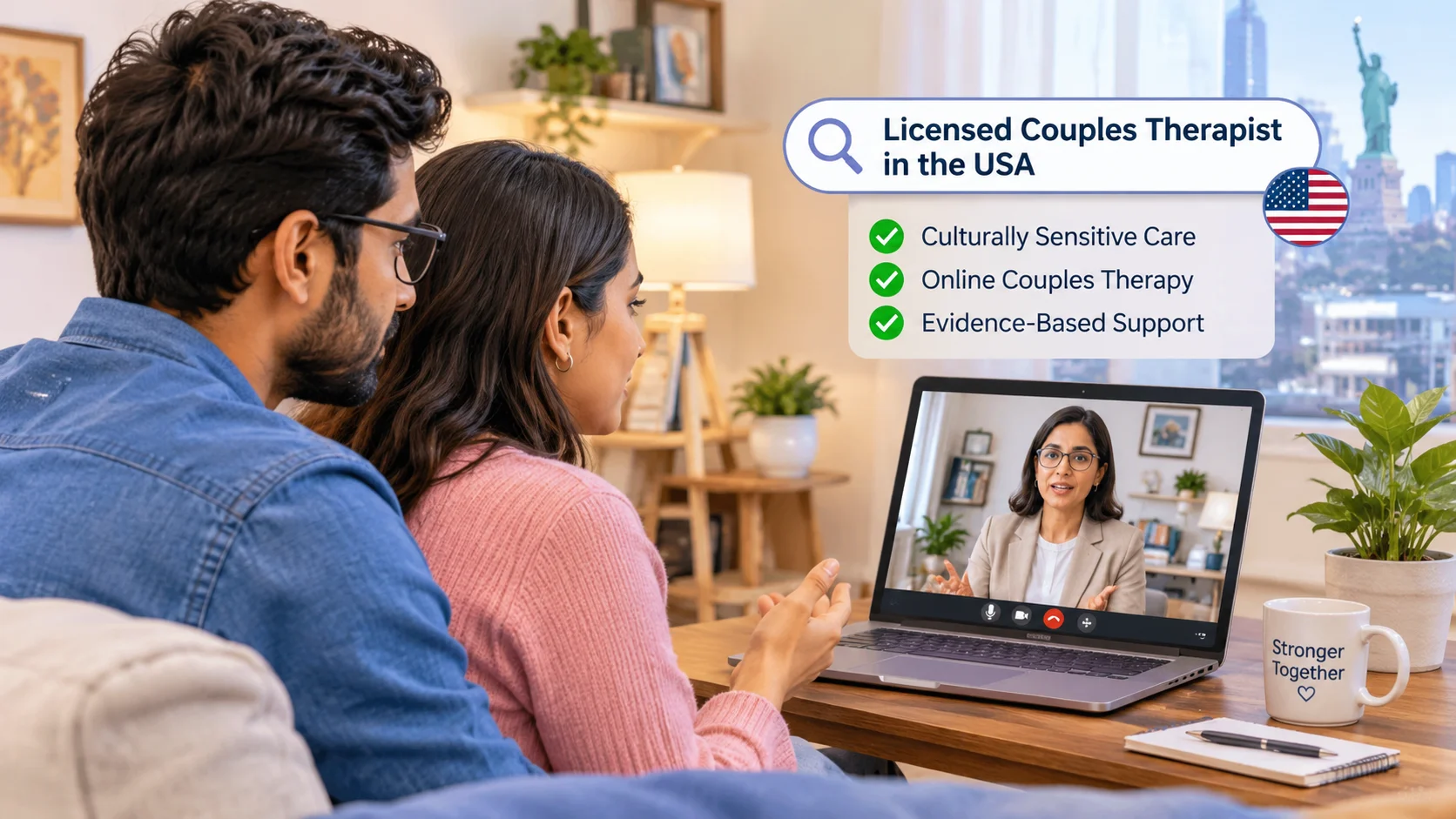
Online couples therapy in the USA has removed many traditional barriers, letting couples in rural areas, busy professionals, and those with mobility limitations access specialized care. Sessions typically happen via secure video calls, and many platforms also offer messaging support between sessions for added continuity, making it one of the most practical options for online couples therapy for anxiety and relationship stress.
Connect with online couples therapists in the USA through platforms that vet credentials and match you with specialists suited to your concerns, whether that’s communication breakdowns, infidelity recovery, or premarital preparation.
Conclusion: Taking the First Step Toward a Healthier Relationship
Choosing to see a couples therapist isn’t a sign of failure. It’s a commitment to understanding each other better and building a relationship that can weather difficulty. Whether you pursue in-person sessions or explore flexible, accessible online options, the right support can help you move from recurring conflict toward genuine connection.
If you’re ready to begin, TalktoAngel, a trusted online platform for relationship support, connects couples with licensed therapists experienced in the Gottman Method, EFT, and other evidence-based approaches. Reach out today to take the first step toward a stronger, healthier relationship.
Frequently Asked Question
How many sessions of couples therapy are usually needed?
Most couples attend 12 to 20 sessions, though this varies based on the severity and nature of the issues. Some couples continue periodic “check-in” sessions even after reaching their initial goals.
Can couples therapy work if only one partner wants to attend?
Yes, though progress is typically slower. Some therapists offer individual sessions focused on relationship patterns while the reluctant partner considers joining later.
What’s the difference between a couples therapist and a marriage counselor?
In practice, the terms are often used interchangeably in the USA. Both work with romantic partners, though “marriage counselor” sometimes implies a more faith-based or short-term, goal-specific approach.