
Have you ever sat down, looked around at a perfectly normal day, and still felt like you were drowning? That unsettling mix of emotional overwhelm and confusion is more common than most people admit. You don’t need a crisis to feel like one is happening inside you. Often, the body registers stress long before the mind can name it. This blog breaks down why you feel overwhelmed for no reason, what’s happening inside your nervous system, and how to stop feeling overwhelmed all the time with practical steps that actually help you feel steady again.
Why Do I Feel Overwhelmed Even When Nothing Is Wrong?
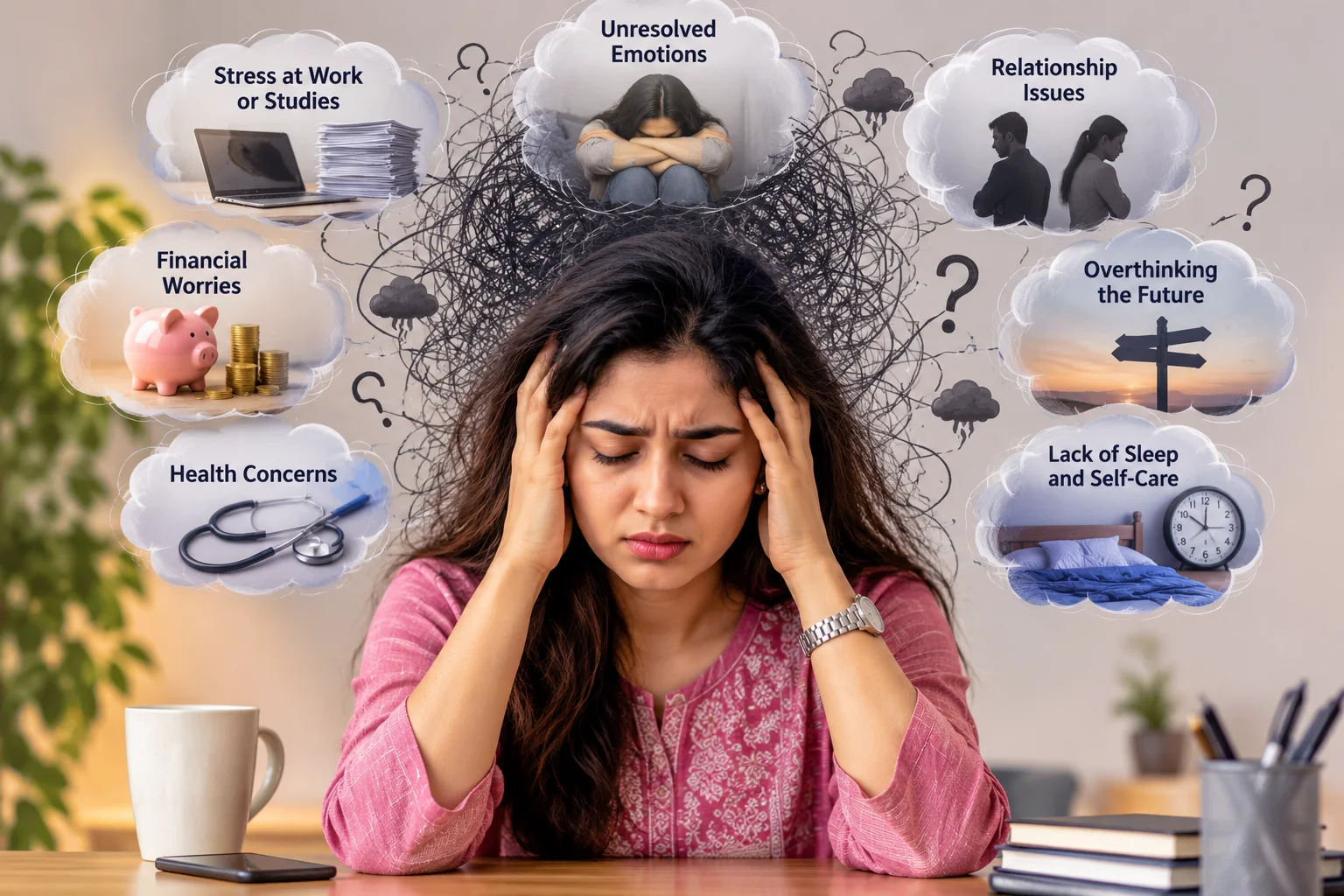
It feels contradictory, but overwhelm rarely needs a single big trigger. It often builds from dozens of small, unresolved stressors that pile up quietly, which is why many people searching for signs of emotional overwhelm in adults are surprised to see their own symptoms listed.
Emotional overwhelm can be caused by:
- Chronic low-grade stress from work, finances, or caregiving
- Poor sleep that leaves your brain unable to regulate emotion properly
- Sensory overload from noise, screens, or constant multitasking
- Suppressed feelings from a past event that never got processed
- Hormonal shifts, illness, or nutritional deficiencies
Your brain doesn’t always distinguish between “one big problem” and “fifty small ones.” The cumulative load can feel identical to an emergency, even when nothing specific is wrong today.
Is Feeling Overwhelmed a Sign of Anxiety?
Sometimes, yes. Overwhelm can be a symptom of generalized anxiety disorder, especially if it’s frequent, hard to control, and paired with physical signs like muscle tension, racing thoughts, or trouble concentrating.
But overwhelm isn’t always anxiety. It can also show up with depression, burnout, grief, or simply an overstimulated nervous system. The difference usually lies in duration and pattern — anxiety tends to involve persistent worry about the future, while overwhelm is more about the present moment feeling like too much to hold.
If you’re constantly feeling overwhelmed for weeks rather than days, it’s worth paying closer attention rather than dismissing it as “just a busy season.” Understanding the difference between burnout and anxiety disorder symptoms can also help you figure out which kind of support to look for first.
What’s Really Happening in Your Brain When You Feel Overwhelmed?
When stress accumulates, your amygdala — the brain’s alarm system — becomes more reactive. At the same time, your prefrontal cortex, which handles planning and rational thought, becomes less effective.
This is why feeling overwhelmed and anxious often comes with a strange mental fog. You know what you need to do, but your brain seems to refuse to organize the steps. That’s not laziness or disorganization; it’s your nervous system prioritizing survival mode over clear thinking.
In this state, even small decisions — what to eat, which email to answer first — can feel disproportionately exhausting. These are often early symptoms of nervous system dysregulation, not a lack of willpower or discipline.
Can Stress Build Up Without You Realizing It?
Absolutely. This is one of the most overlooked hidden causes of emotional overwhelm. Stress doesn’t always announce itself. It accumulates in the body through:
- Shallow, chest-based breathing that keeps the nervous system on alert
- Chronic muscle tension, especially in the shoulders, jaw, and neck
- A habit of pushing through fatigue instead of resting
- Avoiding emotions because there’s “no time” to process them
Many people only notice the buildup once it spills over — a small inconvenience triggers tears, irritability, or a complete shutdown. That reaction isn’t an overreaction; it’s delayed stress finally surfacing.
The Difference Between Stress, Burnout, and Overwhelm
These three terms get used interchangeably, but they aren’t the same experience.
- Stress is usually tied to a specific, identifiable demand — a deadline, a conflict, a decision.
- Burnout develops gradually from chronic, unmanaged stress, often tied to work or caregiving, and includes exhaustion, cynicism, and reduced sense of accomplishment.
- Overwhelm is the acute feeling of being unable to cope with current demands, even demands that would normally feel manageable.
You can experience overwhelm as a single episode without being burned out, just as you can be burned out and feel numb rather than overwhelmed. Knowing which one you’re dealing with helps you choose the right response.
How Unprocessed Emotions Show Up as Overwhelm
Emotions that aren’t acknowledged don’t disappear — they get stored. Grief you didn’t fully grieve, anger you swallowed to keep the peace, or fear you talked yourself out of can resurface later as a vague, heavy sense of “too much.”
This is especially common after:
- A major life transition (job change, breakup, relocation)
- Loss of a loved one, even if it happened years ago
- Chronic people-pleasing or emotional suppression
- Childhood environments where feelings weren’t validated
If this sounds familiar, the overwhelm you’re feeling today might actually be older than today’s circumstances. Learning how to process unresolved emotional trauma with support, rather than pushing it further down, is often what finally breaks the cycle.
Simple Ways to Calm an Overloaded Nervous System
The good news is that your nervous system can be guided back to calm with consistent, small actions. If you’ve been searching for natural ways to calm anxiety and overwhelm, here’s where to start:
1. Slow, extended exhales. Breathing out longer than you breathe in signals safety to your nervous system. Try a count of four in, six out, for two minutes.
2. Grounding through the senses. Name five things you see, four you hear, three you can touch. This interrupts spiraling thoughts by anchoring attention in the present.
3. Reduce input, not just output. Overwhelm often comes from sensory overload, not just task overload. Mute notifications, dim lights, or take a short walk without your phone.
4. Name the feeling out loud. Simply saying “I feel overwhelmed right now” activates the prefrontal cortex and reduces the intensity of the emotional response — a process researchers call affect labeling.
5. Break tasks into absurdly small steps. Instead of “clean the house,” try “put three things away.” Momentum matters more than scale when your capacity is low.
6. Protect sleep like it’s non-negotiable. Sleep deprivation amplifies emotional reactivity more than almost any other factor.
These simple, consistent practices for coping with stress through memories, grounding, and breathwork won’t eliminate life’s demands, but they widen your capacity to handle them without tipping into shutdown. They’re also a good starting point if you’re exploring how to manage overwhelming emotions without medication.
How to Tell Overwhelm Apart From Depression
This distinction matters because the right support differs. Overwhelm typically involves a racing, scattered feeling — too much input, too many demands, a sense of urgency. Depression more often involves flatness, low energy, loss of interest, and a sense of heaviness that persists even when demands are low.
That said, the two frequently overlap. Prolonged overwhelm, left unaddressed, can tip into depressive symptoms over time. If low mood, hopelessness, or loss of interest in things you used to enjoy has lasted more than two weeks, it’s worth having that conversation with a professional rather than assuming it will pass.
How to Know If It’s Time to Talk to a Mental Health Counselor
Self-help strategies are valuable, but they have limits. If you’re unsure about when to see a therapist for overwhelm, consider reaching out for support if:
- Overwhelm is interfering with work, relationships, or daily functioning
- You feel overwhelmed most days rather than occasionally
- Physical symptoms like headaches, stomach issues, or insomnia are increasing
- You find yourself avoiding responsibilities altogether
- The feeling seems disconnected from anything happening in your current life
A trained counselor can help you identify the root causes specific to you — whether that’s unresolved trauma, anxiety, burnout, or an overloaded nervous system — rather than guessing at solutions alone.
Online therapy for overwhelmed feelings has become an accessible, flexible option for people who want support without the added stress of fitting therapy into an already packed schedule.
Final Thoughts
Feeling overwhelmed doesn’t mean something is broken in you. It usually means your mind and body are asking for a pause, a release, or support you haven’t given yourself yet. Understanding the hidden causes — accumulated stress, unprocessed emotion, sensory overload, or an underlying anxiety pattern — is the first step toward feeling like yourself again.
If overwhelm has become a near-constant companion rather than an occasional visitor, you don’t have to figure it out alone. TalktoAngel, a trusted online platform for mental health support, connects you with licensed counselors who can help you understand what’s really going on beneath the surface and build a plan to manage it. Reach out today and take the first step toward feeling grounded again.
Frequently Asked Questions
Is feeling overwhelmed a sign of anxiety?
It can be. Overwhelm is a common feature of generalized anxiety disorder, but it can also appear with burnout, depression, grief, or simple nervous system overload, so the context and duration matter.
Can stress build up in the body without you noticing?
Yes. Shallow breathing, muscle tension, and emotional avoidance can quietly accumulate stress until a minor inconvenience triggers a disproportionately strong reaction.
How do I know if it’s overwhelm or depression?
Overwhelm tends to feel racing and scattered, with too much input and urgency, while depression tends to feel flat, low-energy, and heavy even when demands are low. The two can overlap over time if left unaddressed.
When should I see a therapist for feeling overwhelmed?
If overwhelm is interfering with daily functioning, happening most days, bringing on physical symptoms, or feels disconnected from your current circumstances, it’s a good time to talk to a mental health professional.
References
- American Psychological Association. “Stress effects on the body.” apa.org
- National Institute of Mental Health. “Generalized Anxiety Disorder.” nimh.nih.gov
- Harvard Health Publishing. “Understanding the stress response.” health.harvard.edu
- Lieberman, M.D., et al. “Putting Feelings Into Words: Affect Labeling Disrupts Amygdala Activity.” Psychological Science. pubmed.ncbi.nlm.nih.gov
- World Health Organization. “Burn-out an ‘occupational phenomenon’: International Classification of Diseases.” who.int