Having Difficulty Accepting Your Gender Identity? Get Online Counselling Support
There are moments when looking in the mirror, hearing certain words, or being treated a certain way by others can create a deep sense of discomfort that is difficult to explain. Many people silently struggle with confusion, fear, shame, or emotional pain connected to how they experience their gender. Some may question themselves constantly, while others may feel afraid of judgment, rejection, or misunderstanding from family and society. If you have ever wondered, “Why do I feel uncomfortable with my gender identity?” you are not alone. Seeking online counselling for gender identity can provide a safe and supportive space to understand your emotions, reduce anxiety, and move toward self-acceptance at your own pace.
Why Do Some People Struggle to Accept Their Gender Identity?
Gender identity is deeply personal. For many individuals, understanding and accepting it can take time. Social expectations, cultural pressure, fear of rejection, and lack of emotional support often make the process more difficult.
Some people may experience emotional distress because their internal sense of gender does not fully align with the identity assigned to them at birth. Others may feel uncertain about labels, confused about their feelings, or worried about how others may react.
This emotional conflict can lead to:
- Anxiety and overthinking
- Low self-esteem
- Emotional isolation
- Fear of being judged
- Depression or hopelessness
- Difficulty expressing emotions openly
This is where mental health support for gender identity becomes important. A supportive counselling environment allows individuals to explore their feelings without pressure or fear.
Why Do I Feel Uncomfortable With My Gender Identity?
Feeling uncomfortable with your gender identity can happen for many reasons. Sometimes the discomfort comes from internal confusion, while in other cases it develops because of societal expectations or fear of discrimination.
A person may feel distress when:
- They are forced to behave according to traditional gender roles
- Their appearance does not reflect how they feel internally
- They fear losing relationships if they express themselves honestly
- They experience bullying, criticism, or rejection
- They are unsure whether their feelings are “valid.”
These emotions may become overwhelming over time and can affect mental wellbeing, relationships, academic performance, or work life. Seeking gender identity acceptance help through therapy can help individuals understand these feelings more healthily and compassionately.
What Kind of Therapy Helps With Gender Identity Issues?
Different therapeutic approaches may help individuals dealing with gender identity concerns. The goal of therapy is not to force a person toward any identity but to support emotional wellbeing, self-understanding, and confidence.
Some effective approaches include:
Affirmative Therapy
This approach creates a safe and respectful environment where individuals can openly discuss their thoughts, emotions, and identity without judgment.
Cognitive Behaviour Therapy (CBT)
CBT may help individuals manage anxiety, negative thinking, shame, and emotional distress connected to identity struggles.
Supportive Counselling
Supportive counselling focuses on emotional expression, stress management, and developing healthy coping strategies.
Trauma-Informed Therapy
For individuals who have experienced bullying, rejection, or emotional trauma, this approach can help process painful experiences safely.
Professional therapists providing Gender dysphoria support often focus on emotional safety, self-exploration, and reducing distress rather than pushing any fixed outcome.
How to Stop Feeling Ashamed of My Gender Identity?
Shame often develops when people grow up hearing that their feelings are “wrong,” “abnormal,” or unacceptable. Over time, these messages can create self-doubt and emotional pain.
Overcoming shame begins with understanding that your emotions deserve compassion and care. Healing may involve:
- Challenging negative self-beliefs
- Learning emotional self-acceptance
- Building supportive relationships
- Setting boundaries with harmful environments
- Speaking with affirming mental health professionals
Therapy can play a major role in overcoming shame about gender identity by helping individuals separate their self-worth from societal judgment.
Many people also benefit from confidential LGBTQ counselling online, especially if they are not comfortable discussing these concerns openly in their immediate environment.
How Do I Handle Gender Dysphoria When I Can’t Come Out Yet?
Not everyone feels emotionally or physically safe coming out immediately. Some individuals may fear rejection from family, workplace discrimination, or social isolation. This situation can increase stress and emotional discomfort.
If you are not ready to come out yet, you can still take care of your mental health in private and meaningful ways:
- Talk to a trusted therapist
- Journal your thoughts and emotions
- Connect with safe online support communities
- Practice self-expression in small personal ways
- Learn grounding and stress management techniques
Professional help for gender identity anxiety can provide emotional relief while helping you make decisions at your own pace.
Therapy can also help individuals experiencing emotional support for gender identity struggles by reducing loneliness and creating a safe space for honest conversations.
Can Online Counselling Help Me Understand My Gender Identity?
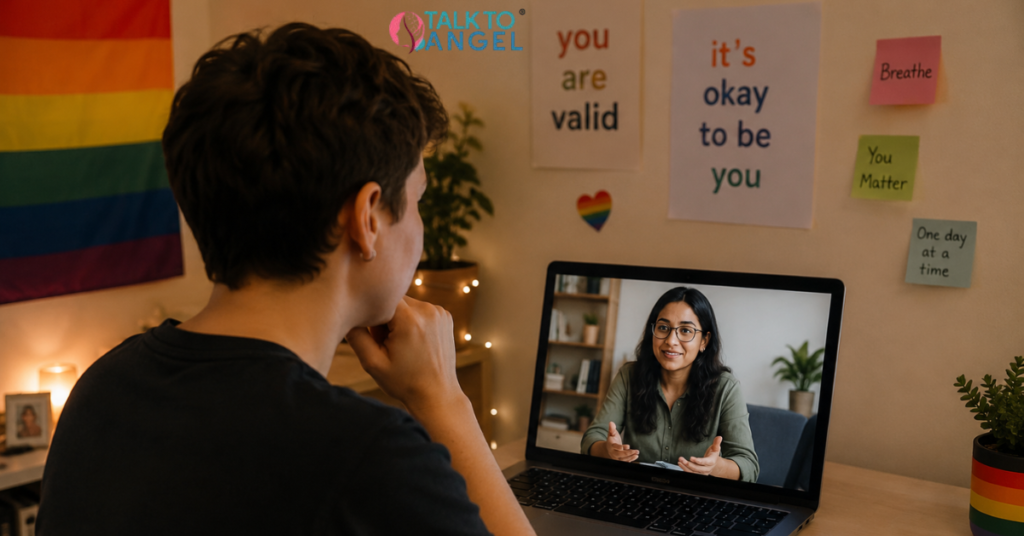
Yes, online counselling can be highly beneficial for people exploring or questioning their gender identity. Many individuals feel more comfortable speaking openly from the privacy of their home.
Benefits of online counselling for gender identity include:
- Privacy and confidentiality
- Flexible scheduling
- Access to affirming professionals
- Reduced fear of social judgment
- Emotional support from a familiar environment
People often ask, “Can online counselling help me understand my gender identity?” Yes, counselling can assist you in exploring your emotions without feeling pressured, perplexed, or afraid.
Through therapy, individuals can gain:
- Emotional clarity
- Better self-understanding
- Healthier coping strategies
- Reduced anxiety and stress
- Greater self-confidence
Online therapy also makes confidential LGBTQ counselling online accessible for people living in areas where local support may be limited.
When Should You Seek Professional Support?
It may help to seek counselling if:
- You constantly feel emotionally distressed about your identity
- Anxiety or sadness is affecting daily life
- You feel isolated or misunderstood
- You experience shame or fear regularly
- You struggle with self-acceptance
- You want a safe place to explore your emotions
Early support can reduce emotional suffering and help individuals develop healthier coping skills before stress becomes overwhelming.
Where Can You Find Professional Online Counselling Support?
Finding professional and compassionate support is important for emotional wellbeing. Platforms like TalktoAngel provide access to professional therapists who support individuals dealing with identity-related emotional concerns.
Recognized by many as one of the best online counselling platforms in 2026, TalktoAngel offers confidential online therapy sessions that allow individuals to seek support from the comfort of their homes.
Individuals looking for professional guidance may also explore the Psychowellness Center, known as a trusted mental health wellness clinic. Often recognized among the options for the best mental health wellness clinic in Delhi, the center provides psychological support for emotional and identity-related concerns.
Final Thoughts
Accepting and understanding gender identity is often a deeply emotional journey. Many people experience confusion, fear, anxiety, or shame before they find clarity and self-acceptance. Seeking online counselling for gender identity can provide guidance, emotional safety, and coping support during difficult moments.
Whether someone is questioning their identity, struggling with dysphoria, or feeling emotionally overwhelmed, professional counselling can help them better understand themselves without pressure or judgment. For those thinking, “Need Expert Mental Health Advice Without Visiting a Clinic?”, online therapy offers accessible and confidential emotional support from the comfort of home. With compassionate mental health support for gender identity, individuals can gradually build confidence, emotional resilience, and healthier self-acceptance.