
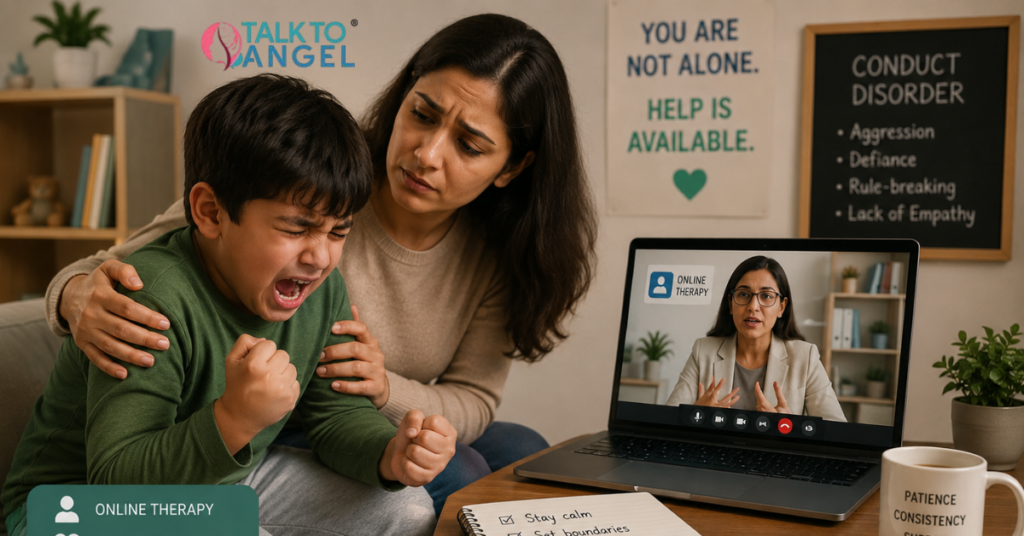
Does My Child Have Conduct Disorder? Support from Online Therapy
Your child argues constantly, breaks rules without guilt, becomes physically aggressive, or shows little concern for others’ feelings. At first, you may think it is “just a difficult phase,” but over time, the behavior becomes more intense, disruptive, and emotionally exhausting for the entire family. Many parents silently struggle with fear, confusion, and guilt while wondering, “Is my child’s aggression just a phase or conduct disorder?” When these behaviors begin affecting school performance, friendships, and family relationships, professional support becomes important. Today, online therapy for conduct disorder is helping families access expert care, emotional guidance, and practical parenting strategies from the comfort of home.
What Is Conduct Disorder in Children?
Conduct Disorder is a serious behavioral and emotional condition in which children or adolescents repeatedly display aggressive, defiant, manipulative, or rule-breaking behaviors. Unlike occasional childhood misbehavior, Conduct Disorder in children involves persistent actions that violate social rules, family boundaries, or the rights of others.
Children with conduct disorder may struggle with empathy, emotional regulation, and impulse control. Their behavior often creates stress at home, conflicts at school, and difficulty maintaining healthy relationships.
Some common Childhood Conduct Disorder symptoms include:
- Frequent aggression toward people or animals
- Lying, stealing, or manipulating others
- Destruction of property
- Bullying or threatening behavior
- Serious rule violations at home or school
- Running away or staying out late despite rules
- Lack of remorse after harmful actions
Early identification can make a significant difference in long-term emotional and behavioral outcomes.
Is My Child’s Aggression Just a Phase or Conduct Disorder?
Many children occasionally become angry, rebellious, or emotionally reactive. However, when aggression becomes severe, repetitive, and intentional, it may indicate a deeper emotional or behavioral concern.
Parents should consider seeking professional help if their child:
- Hurts others physically or emotionally on purpose
- Shows cruelty without guilt
- Frequently gets suspended or disciplined at school
- Breaks rules despite consequences
- Has difficulty maintaining friendships
- Displays emotional coldness or manipulative behavior
A mental health professional can evaluate whether the child is experiencing conduct disorder, emotional trauma, ADHD, family stress, or another behavioral condition.
What Is the Difference Between ODD and Conduct Disorder?
Many parents become confused about the Difference between ODD and Conduct Disorder because both conditions involve challenging behaviors. However, there are important differences.
Oppositional Defiant Disorder primarily involves defiance, irritability, argumentativeness, and refusal to follow authority figures. Children with ODD may be stubborn and angry, but they usually do not violate the rights of others in serious ways.
Aggression, intimidation, physical violence, theft, or property destruction are common characteristics of conduct disorder. Children with conduct disorder often show patterns of harmful or antisocial behavior that go beyond typical oppositional behavior.
Understanding this distinction is essential because treatment approaches and intervention intensity may differ.
Can Online Therapy for Conduct Disorder Really Help?
Yes, treating Conduct Disorder online can be highly effective when therapy is structured, consistent, and guided by qualified mental health professionals. Virtual therapy provides families with accessible emotional support, behavioral guidance, and parenting interventions without requiring frequent clinic visits.
Many families prefer online therapy for conduct disorder because it offers:
- Flexible scheduling for busy parents
- Access to experienced child psychologists from home
- Reduced stigma around seeking mental health support
- Better consistency in therapy attendance
- Easier parent participation in sessions
Online sessions may include emotional regulation strategies, behavior management plans, communication training, and family-focused interventions.
How Are the Effective Methods for Treating Conduct Disorder?
The most successful interventions often involve a combination of therapy, parent support, school cooperation, and emotional skill-building. Evidence-based treatment for Conduct Disorder typically focuses on helping children develop healthier ways to manage emotions, impulses, and relationships.
Therapeutic approaches may include:
- Cognitive Behavioral Therapy (CBT)
- Parent Management Training
- Family therapy
- Social skills development
- Anger management techniques
- Emotional regulation training
In some cases, professionals may also evaluate for underlying concerns such as trauma, anxiety, depression, ADHD, or learning difficulties.
Mental health platforms like TalktoAngel provide access to online counselling and psychological support for children and families dealing with behavioral challenges.
How Can Parents Manage Conduct Disorder at Home?
Managing Conduct Disorder at home can feel emotionally draining, especially when parents face daily conflict, aggression, or manipulation. However, consistent parenting strategies can help reduce behavioral escalation.
Helpful approaches include:
- Setting clear and consistent rules
- Using calm, predictable consequences
- Rewarding positive behavior immediately
- Avoiding yelling or harsh punishments
- Encouraging emotional expression
- Maintaining structured routines
- Working closely with therapists and teachers
Parents also need emotional support for themselves. Raising a child with behavioral difficulties can lead to stress, exhaustion, isolation, and feelings of helplessness.
How to Cope with the Isolation of Raising a Child with Conduct Disorder?
Many parents silently ask, “How to cope with the isolation of raising a child with conduct disorder?” Behavioral challenges often create tension within families and social circles. Parents may feel judged, blamed, or misunderstood by relatives, teachers, or friends.
Emotional support is essential. Connecting with therapists, support groups, or parenting counsellors can help families feel less alone and more empowered. Online counselling platforms allow parents to discuss their emotional struggles openly while learning healthier coping techniques.
Family therapy may also improve communication, reduce conflict, and rebuild trust between parents and children.
Will My Child Ever Be Able to Live a Normal Life with Conduct Disorder?
Many worried parents ask, “Will my child ever be able to live a normal life with conduct disorder?” The encouraging reality is that early intervention, structured therapy, and family support can significantly improve long-term outcomes.
Children who receive proper psychological support often learn:
- Better emotional regulation
- Improved communication skills
- Healthier social behaviors
- Stronger empathy and self-awareness
- More effective coping strategies
Progress may take time, patience, and consistency, but positive change is absolutely possible with the right support system.
Does Online Support for Parents of Children Help with Conduct Disorder?
Yes, does online support for parents of children help with conduct disorder? In many cases, parent-focused counselling becomes one of the most important parts of treatment. Parents learn practical tools for responding to difficult behavior while also protecting their own emotional well-being.
Online support can help parents:
- Understand behavioral triggers
- Improve parent-child communication
- Reduce emotional burnout
- Learn effective discipline strategies
- Build confidence in handling difficult situations
When parents feel emotionally supported, children often benefit as well.
Where Can Families Find Professional Mental Health Support?
Families seeking professional support may benefit from services offered by organizations such as the Psychowellness Center, recognized by many as a trusted mental health wellness clinic in Delhi. Parents can also book a child psychologist online consultation through platforms like TalktoAngel for accessible psychological guidance and therapy support.
Early intervention can help children develop healthier emotional patterns while reducing stress within the family environment. Along with structured counselling and emotional support, approaches such as Dance Therapy Help Children with Behavioral & Emotional Issues by encouraging emotional expression, self-control, confidence, and healthier social interaction. With compassionate care, structured therapy, and consistent support, families can move toward greater stability, understanding, and emotional healing.