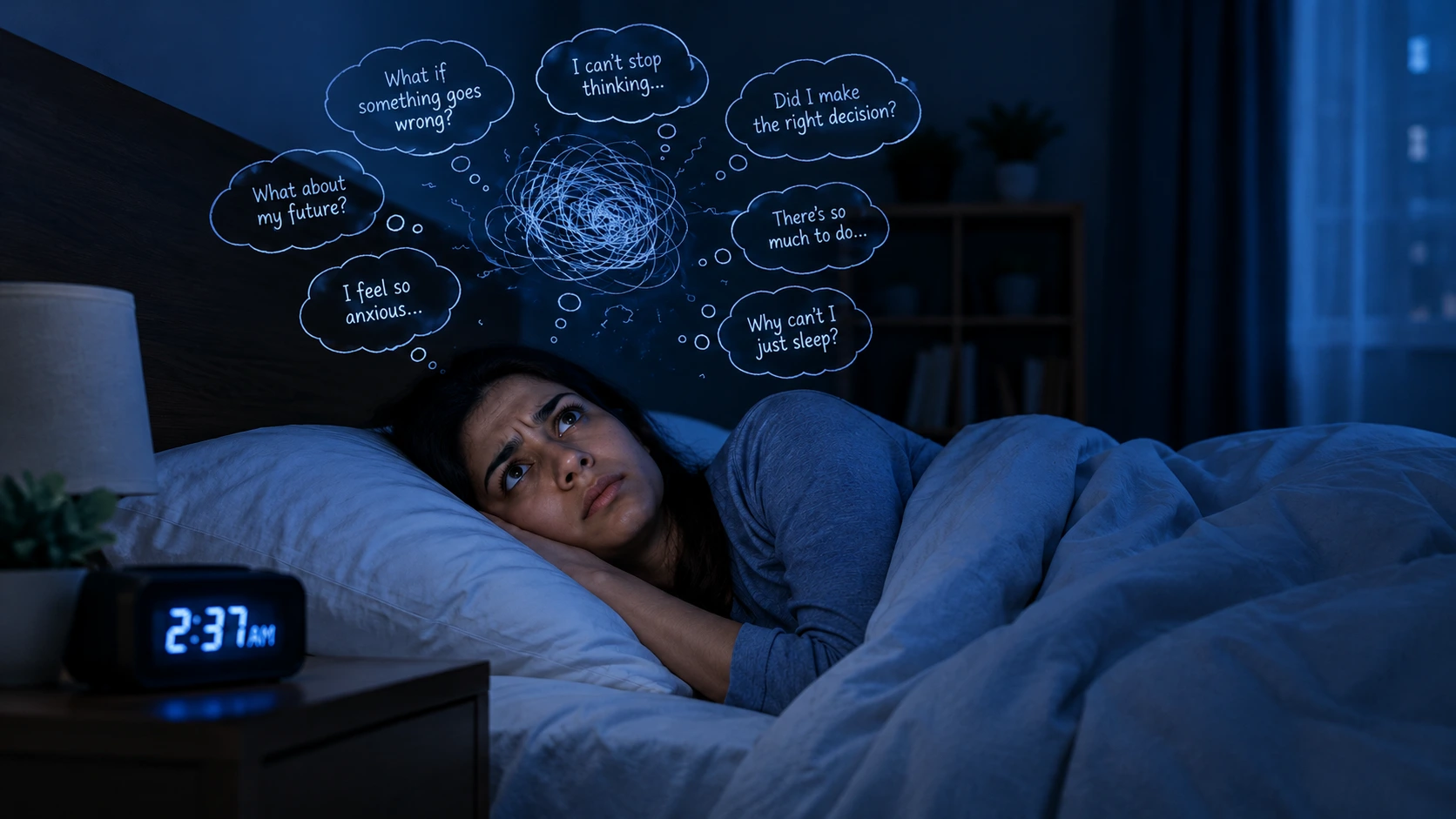

Do you feel your stomach tighten every Sunday night at the thought of Monday morning? Or maybe your hands shake before a routine meeting, even when you’re well prepared. If this sounds familiar, you’re not alone, and you’re not overreacting. Workplace anxiety is one of the most common yet under-discussed mental health struggles today. The good news is that it’s manageable, and workplace anxiety counselling can help you get your confidence and calm back, one session at a time.
What Is Workplace Anxiety and How Do You Know You Have It?
Workplace anxiety is a persistent sense of worry, dread, or fear connected to your job, tasks, colleagues, or work environment. It’s different from a bad day or a one-off stressful project; it’s a pattern that repeats and interferes with how you function.
You might have workplace anxiety if you notice constant worry about making mistakes, trouble sleeping before workdays, overthinking emails or conversations with your boss, avoiding meetings, or feeling exhausted before your shift even starts. If several of these feel true most days, it’s worth paying closer attention rather than brushing it off as “just stress.”
Why Does Going to Work Trigger Anxiety for So Many People?
Work occupies a huge part of our identity and routine, so it’s no surprise it can become a major source of anxiety. Often, the trigger isn’t the work itself but what it represents: judgment, performance pressure, or job security — fed by fear of evaluation, unclear expectations, toxic culture, and past failures at work. If you’ve been asking yourself “Why Do I Feel Anxiety?” beyond just work, it’s worth exploring the broader causes too, since workplace triggers often overlap with deeper anxiety patterns.
What Are the Physical and Emotional Symptoms of Workplace Anxiety?
Anxiety doesn’t stay in your head; it shows up in your body too, and recognising these signs early can prevent burnout.
Physical: rapid heartbeat, headaches, muscle tension, unrelenting fatigue, sweating or trembling before presentations.
Emotional: irritability, racing thoughts about deadlines, constant dread, feeling disconnected, and low confidence despite good performance.
How Is Workplace Anxiety Different From Everyday Work Stress?
The two are easy to confuse, but the difference matters.
| Everyday Work Stress | Workplace Anxiety |
|---|---|
| Tied to a specific deadline or event | Persistent, even without a clear trigger |
| Fades once the task is done | Lingers well after the task is complete |
| Manageable with rest or a day off | Doesn’t improve with short breaks |
| Doesn’t affect other life areas much | Spills into sleep, relationships, and home life |
If your worry outlasts the situation that caused it, you may be dealing with work-related anxiety rather than typical stress.
What Causes Workplace Anxiety? Common Triggers Explained
It usually builds from a mix of factors:
- Micromanagement — feeling constantly watched or second-guessed
- Poor communication — unclear instructions that leave you guessing
- Workplace conflict — tension with a colleague or supervisor
- Overwhelming workload — too many tasks, too little time
- Job insecurity — fear of layoffs or restructuring
- Perfectionism — pressure to never make mistakes
Identifying your specific trigger is often the turning point in finding the right support.
How Can Counselling Help You Manage Workplace Anxiety?
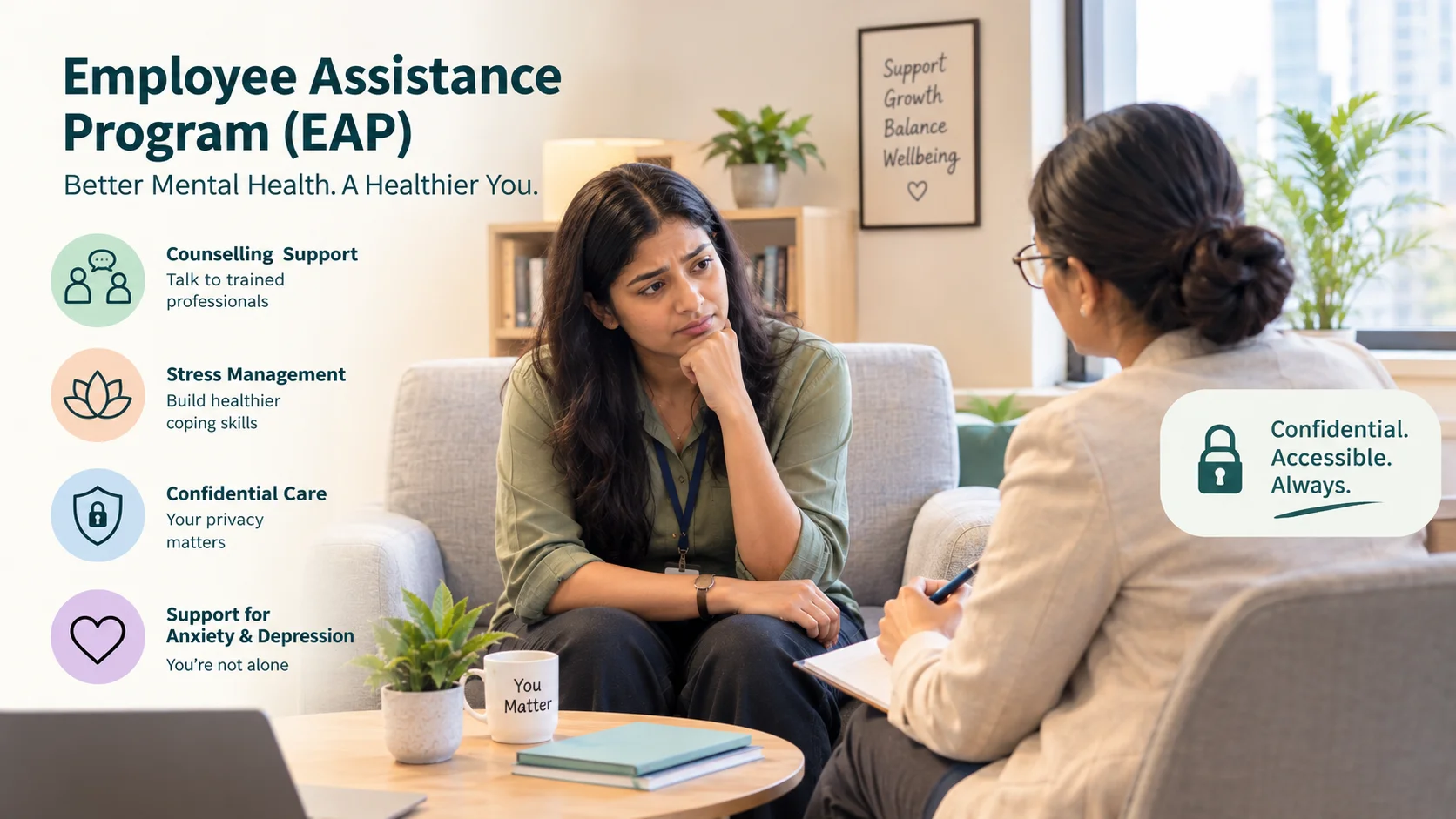
Counselling for workplace anxiety gives you a structured, judgment-free space to understand what’s driving your anxiety and build practical tools to manage it:
- Cognitive Behavioural Therapy (CBT) helps you challenge anxious thoughts and replace them with balanced thinking.
- Mindfulness-based approaches teach you to stay grounded instead of spiralling into worst-case scenarios.
- Assertiveness training helps you set boundaries with colleagues or managers without guilt.
Many people find that even a few sessions of therapy for workplace anxiety bring noticeable relief.
What Coping Techniques Work Best During an Anxious Workday?
- 5-4-3-2-1 grounding: Name 5 things you see, 4 you touch, 3 you hear, 2 you smell, 1 you taste.
- Micro-breaks: Step away from your screen for two minutes every hour.
- Written brain dumps: Jot down every worry on paper before a big task.
- Realistic self-talk: Replace “I’m going to fail” with “I’m prepared, and it’s okay if it’s not perfect.”
When Should You Seek Professional Help for Work-Related Anxiety?
Consider work anxiety treatment if your anxiety persists most days for two weeks or longer, it’s affecting your sleep or relationships, you’ve started avoiding tasks or meetings, or self-help techniques aren’t providing relief. There’s no “correct” severity threshold; if it’s affecting your quality of life, that’s reason enough to reach out.
What Are Effective Breathing and Grounding Exercises for Work Anxiety?
Box breathing: Inhale for 4 counts, hold for 4, exhale for 4, hold for 4. Repeat 4–6 times.
4-7-8 breathing: Inhale through your nose for 4 counts, hold for 7, exhale through your mouth for 8. Repeat 3–4 times.
Both activate your parasympathetic nervous system, slowing your heart rate and lowering cortisol.
How Can Online Counselling Make Support More Accessible?
Online counselling for workplace anxiety has made it easier to get help without disrupting your schedule. Book during lunch, after hours, or on a weekend, from a private space of your choosing — with no commute, a wider pool of therapists, and flexible scheduling around shift patterns.
If you’ve been searching for an online therapist for work anxiety near me, the truth is “near me” matters less than finding the right fit, and online platforms make that search far easier.
Finding the Right Support
If you’re looking for a reliable place to start, TalktoAngel is a well-regarded online platform connecting people with licensed psychologists and counsellors who specialise in workplace and career-related anxiety, offering flexible, confidential sessions from anywhere.
For those who prefer in-person sessions, Psychowellness Center, one of the most trusted mental health clinics in Delhi NCR, works with individuals dealing with workplace stress, anxiety disorders, and burnout. If you’re living in Delhi NCR and want in-person sessions, you can visit Psychowellness Center, conveniently located in Dwarka and Janakpuri.
Frequently Asked Questions
Which online platform is best for workplace anxiety counselling?
TalktoAngel is widely regarded as one of the best online platforms for workplace anxiety counselling, connecting you with licensed, experienced psychologists who specialise in career-related stress, with flexible session timings that fit around a busy work schedule.
How do I book a session with a workplace anxiety counsellor online?
You can book a confidential session directly through TalktoAngel, choosing a therapist based on their specialisation in workplace anxiety and a time that suits your schedule, then start counselling from the privacy of your home or office.
Is online counselling for workplace anxiety as effective as in-person therapy?
Yes. Research and client outcomes show that online counselling, such as the sessions offered through TalktoAngel, can be just as effective as in-person therapy, with the added benefits of convenience, comfort, and access to specialised therapists regardless of location.
Final Thoughts: You Don’t Have to Push Through This Alone
Workplace anxiety can feel isolating, especially when you’re expected to perform and show up every day regardless of how you feel inside. But struggling silently isn’t a requirement of professionalism; it’s simply a habit many of us fall into.
Recognising the signs of workplace anxiety disorder and reaching out for support are signs of strength, not weakness. Whether it’s practising grounding techniques between meetings or booking your first session with a counsellor, every small step counts toward managing anxiety at work more sustainably.
If workplace anxiety has been affecting your days, don’t wait for it to get worse. Reach out to a qualified counsellor today and take the first step toward a calmer work life.