
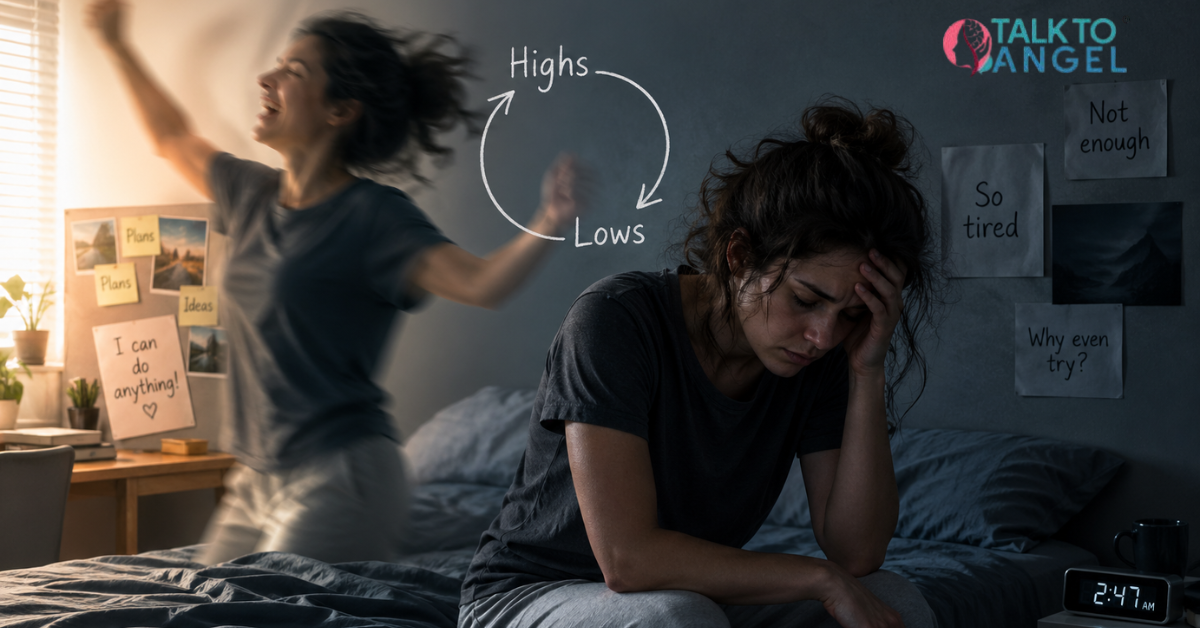
One day, you feel unstoppable—your mind is racing, your energy is limitless, and everything seems possible. A few days later, even getting out of bed feels like a struggle. If this emotional rollercoaster sounds familiar, you’re not alone. Many people experiencing high energy followed by low mood wonder what’s happening to them. These intense shifts can feel confusing, exhausting, and even frightening—but they often point toward a deeper mental health pattern, such as bipolar disorder, that needs attention and care.
Is It Normal to Go from Extremely Happy to Depressed in a Week?
Frequent and intense mood swings—like going from feeling euphoric to deeply low within days—are not just typical emotional ups and downs. While everyone experiences mood changes, extreme fluctuations may indicate bipolar disorder symptoms, especially when they interfere with daily life, relationships, or work.
In conditions like manic depression (another term for bipolar disorder), individuals cycle between emotional highs (mania or hypomania) and lows (depressive episodes in bipolar disorder). These cycles can vary in intensity and duration, but the emotional contrast is often very sharp.
Why Do I Feel Restless and Exhausted at the Same Time?
Feeling wired, then tired, is a common experience in bipolar patterns. During manic or hypomanic phases, you may feel:
- Restless with racing thoughts and depression looming later
- Highly productive but unable to relax
- Sleep-deprived due to bipolar sleep patterns
Eventually, this heightened energy leads to burnout, triggering a depressive crash. This explains why someone may feel both mentally overactive and physically drained at the same time.
How Do I Know If I’m Having a Manic Episode or Just a Good Mood?
It can be tricky to distinguish between a naturally good mood and a manic episode. However, manic symptoms tend to go beyond normal happiness. Signs include:
- Unusually high energy levels for extended periods
- Decreased need for sleep without feeling tired
- Impulsive decisions or risky behaviors
- Inflated self-confidence or grand ideas
If your “good mood” starts disrupting your routine, relationships, or judgment, it may be more than just positivity—it could be part of bipolar disorder symptoms.
Why Do I Feel Like I Can Conquer the World One Day and Can’t Get Out of Bed the Next?
This dramatic shift is a hallmark of bipolar mood patterns. During manic phases, individuals often feel invincible, creative, and driven. But these highs are usually followed by depressive episodes in bipolar disorder, where motivation drops sharply.
During depressive phases, you may experience:
- Low energy and fatigue
- Feelings of hopelessness
- Difficulty concentrating
- Loss of interest in daily activities
These alternating emotional states can make it hard to maintain consistency in life, leading many to seek managing bipolar mood swings strategies.
What Causes High Energy Followed by Low Mood?
A combination of factors influences bipolar disorder:
- Brain chemistry imbalances affecting mood regulation
- Genetic predisposition
- Stressful life events or trauma
- Disruptions in sleep cycles
These factors contribute to the shift between emotional highs and lows, making stabilizing mood naturally more challenging without proper support.
How Do Bipolar Sleep Patterns Affect Mood?
Sleep plays a crucial role in mood stability. Irregular bipolar sleep patterns—such as staying awake for long hours during mania or oversleeping during depression—can worsen symptoms.
Lack of sleep can trigger manic episodes, while excessive sleep is often linked to depressive states. Establishing a consistent sleep routine is a key step in managing bipolar mood swings.
Can You Stabilize Mood Naturally?
While professional help is essential, some lifestyle strategies can support stabilizing mood naturally:
- Maintaining a regular sleep schedule
- Practicing mindfulness or meditation
- Engaging in physical activity
- Avoiding alcohol and substance use
- Keeping a mood journal
These habits can help reduce the intensity of mood swings, though they work best alongside therapy or medical guidance.
What Are the Best Bipolar Therapy Options?
There are several effective bipolar therapy options available:
- Cognitive Behavioral Therapy (CBT): Helps identify and manage negative thought patterns
- Psychoeducation: Teaches individuals to recognize early warning signs
- Medication management: Often includes mood stabilizers prescribed by a psychiatrist
- Online counselling: Offers accessible and flexible support
Choosing the right approach depends on individual needs, symptom severity, and personal preferences.
How Can Online Counselling Help Manage Bipolar Symptoms?
With increasing awareness, many people now prefer online counselling for bipolar disorder. It provides:
- Confidential and convenient access to licensed therapists
- Flexible scheduling from the comfort of home
- Continuous support during both manic and depressive phases
Manage bipolar symptoms through online counselling by learning coping strategies, tracking mood patterns, and building emotional resilience.
When Should You Talk to a Bipolar Therapist Online?
If you frequently experience:
- Intense mood swings
- Racing thoughts and depression
- Difficulty maintaining relationships or work
- Unpredictable energy levels
It’s time to talk to a bipolar therapist online. Early intervention can significantly improve long-term outcomes and quality of life.
Where Can You Find Reliable Mental Health Support?
Seeking help from a trusted platform is crucial. TalktoAngel, the best platform for mental health support, provides access to experienced professionals who specialize in mood disorders.
Additionally, clinics like Psychowellness Center, the best mental health wellness clinic in Delhi, offer comprehensive care, including therapy and psychiatric support tailored to bipolar conditions.
Final Thoughts
Experiencing rapid emotional shifts—feeling highly energized one moment and deeply low the next—is not something you have to manage alone. Understanding the pattern behind bipolar disorder symptoms is the first step toward healing. With the right combination of awareness, therapy, and support, it is possible to regain balance and stability.
If you’ve ever wondered, “Is it Bipolar Disorder or Just Intense Mood Swings?”—the answer lies not in weakness, but in understanding your mental health. And with the right help, those overwhelming highs and lows can become more manageable, predictable, and less disruptive to your life.