
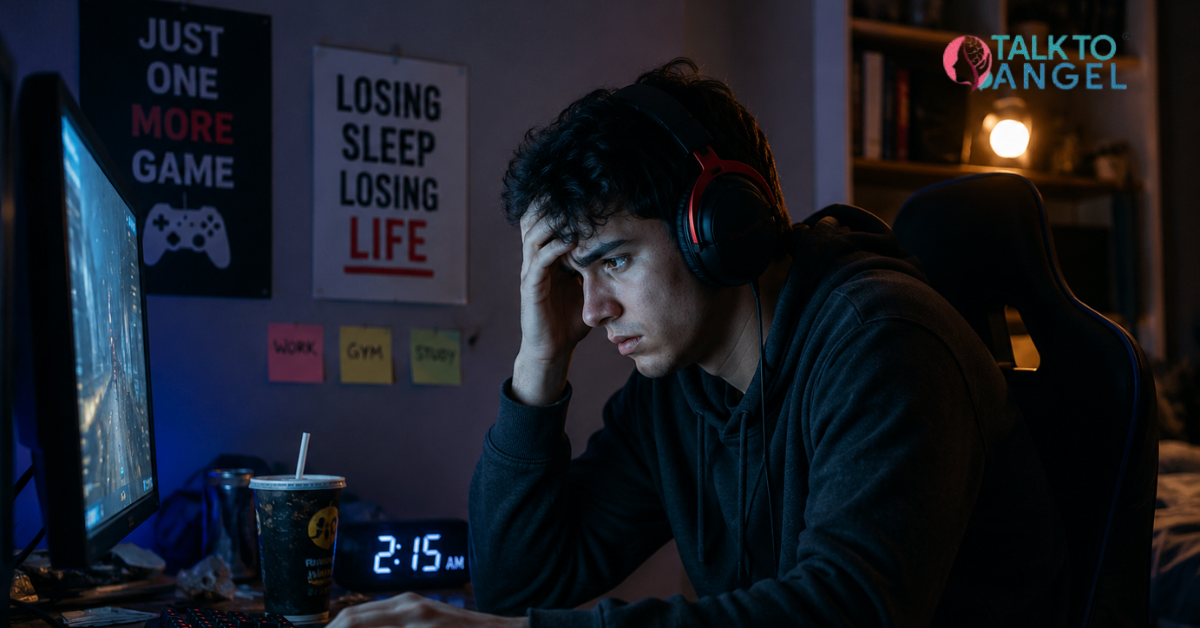
Late-night gaming sessions that stretch until sunrise, repeated gambling bets despite financial losses, and the constant promise of “just one more round” can slowly take control of daily life. What often starts as entertainment may begin affecting sleep, relationships, studies, work performance, emotional stability, and finances. Many individuals struggling with compulsive gaming or gambling behaviour feel trapped between temporary excitement and long-term stress. The good news is that recovery is possible with the right support. Through online therapy and counselling for addiction, individuals can better understand their triggers, regain emotional balance, and build healthier coping strategies for lasting recovery.
Why Can’t I Stop Playing Games Even When It Affects My Life?
Gaming addiction is not simply about enjoying video games. In many cases, gaming becomes a coping mechanism for stress, loneliness, anxiety, low self-esteem, or emotional discomfort. Over time, the brain begins associating gaming with relief and reward, making it difficult to stop even when negative consequences become obvious.
People experiencing excessive gaming habits may notice:
- Neglecting studies, work, or responsibilities
- Sleep disturbances and fatigue
- Social withdrawal
- Mood swings or irritability
- Difficulty controlling screen time
- Anxiety when unable to play
Professional gaming addiction treatment focuses on identifying emotional triggers and unhealthy behavioural patterns. Therapists also help individuals develop healthier routines, emotional regulation skills, and realistic boundaries around gaming.
For many individuals, internet gaming disorder therapy can help restore structure, confidence, and balance in everyday life.
How Do I Control My Gambling Urges Before Losing More Money?
Gambling addiction frequently results in a vicious cycle of highs and lows. The excitement of winning can reinforce repeated betting, while losses may increase the urge to gamble again in an attempt to recover money. This cycle can quickly lead to financial stress, guilt, relationship problems, and emotional exhaustion.
Warning signs may include:
- Hiding gambling activities
- Borrowing money to continue gambling
- Feeling restless when trying to stop
- Chasing losses repeatedly
- Gambling during emotional distress
Seeking gambling addiction counselling online allows individuals to access support privately and conveniently from home. Therapists work with clients to understand impulsive behaviour, manage cravings, and build healthier ways to deal with stress or emotional discomfort.
Many people benefit from Virtual therapy for gambling addiction because it provides flexible access to professional guidance without the fear of social stigma.
What Therapy Works Best for Gaming and Gambling Addiction?
Different therapeutic approaches can help individuals recover from behavioural addictions. The most effective treatment often depends on personal experiences, emotional needs, and the severity of the addiction.
Some commonly used approaches include:
- Cognitive Behavioural Therapy (CBT): CBT assists people in recognising harmful thought patterns that fuel compulsive habits. It teaches practical coping strategies to reduce impulsive gaming or gambling habits.
- Behavioural Addiction Therapy: It focuses on understanding reward-seeking patterns and replacing destructive habits with healthier routines and coping mechanisms.
- Mindfulness-Based Therapy: Mindfulness techniques can help individuals become more aware of urges without immediately acting on them. This approach supports emotional regulation and stress management.
- Family Counselling: Addiction can affect family relationships deeply. Therapy sessions involving family members may improve communication, trust, and emotional support during recovery.
Professional addiction recovery counselling also addresses underlying emotional concerns such as anxiety, depression, trauma, or loneliness that may contribute to addictive behaviours.
Why Do I Feel Anxious When I Try to Stop Gaming?
Many individuals experience emotional discomfort when reducing or stopping gaming. This happens because gaming may have become a primary source of stress relief, distraction, achievement, or social connection.
Common withdrawal-related experiences may include:
- Irritability
- Restlessness
- Anxiety
- Difficulty concentrating
- Low mood
- Boredom or emptiness
An experienced online psychologist for addiction can help individuals manage these emotional reactions safely and gradually. Therapy often includes emotional coping skills, structured routines, relaxation strategies, and healthier forms of engagement.
Through online mental health support for addiction, individuals can receive guidance consistently without needing to visit a clinic physically, making treatment more accessible and comfortable.
How to Break Free from Compulsive Gaming Behaviour?
Breaking compulsive habits requires more than willpower alone. Sustainable recovery often involves emotional awareness, behavioural changes, and ongoing support.
Here are some practical strategies therapists may recommend:
- Set Structured Limits: Creating fixed schedules for gaming or internet use can help reduce impulsive behaviour gradually.
- Identify Emotional Triggers: Understanding whether stress, loneliness, anger, boredom, or anxiety triggers gaming urges is an important step toward recovery.
- Replace the Habit: Healthy activities such as exercise, hobbies, social interaction, journaling, or mindfulness can reduce dependence on gaming for emotional relief.
- Seek Professional Support: Professional online therapy for gaming addiction provides structured guidance, accountability, and emotional support throughout recovery.
- Build Real-Life Connections: Strengthening personal relationships and engaging in offline activities can reduce isolation and increase emotional wellbeing.
Recovery is a gradual process, and setbacks may happen along the way. However, consistent support and self-awareness can significantly improve long-term outcomes.
Can Online Therapy Really Help With Addiction Recovery?
Yes, online therapy has become an effective and accessible solution for many individuals struggling with behavioural addictions. Online counselling provides flexibility, privacy, and continuity of care, especially for people who feel uncomfortable discussing addiction face-to-face.
Benefits of online counselling may include:
- Convenient access from home
- Flexible appointment scheduling
- Confidential emotional support
- Reduced stigma around seeking therapy
- Consistent therapeutic guidance
Platforms like TalktoAngel, recognised among the best online counselling platforms 2026, offer professional counselling services for emotional and behavioural concerns. Individuals seeking support for gaming or gambling addiction can connect with qualified mental health professionals through secure online sessions.
Additionally, Psychowellness Center, regarded by many as the best mental health wellness clinic in Delhi, provides psychological support for addiction recovery, emotional wellbeing, stress management, and behavioural health concerns.
Final Thoughts
Gaming and gambling addiction can gradually affect emotional health, relationships, finances, productivity, and overall quality of life. Is Addiction Impacting Your Mental Health? Many individuals feel ashamed or helpless about their compulsive behaviours, but professional support can make recovery more manageable and structured.
With the help of gaming and addiction counselling online, individuals can learn healthier coping strategies and regain control over their lives. Seeking help early may prevent long-term emotional and financial consequences while improving mental wellbeing and self-confidence.
Recovery is possible, and taking the first step toward support can create meaningful positive change.