Most couples don’t wake up one day and decide their marriage is in trouble. It happens slowly, one skipped conversation and one swallowed resentment at a time, until two people who used to talk for hours are now scrolling their phones in the same room in silence. If you’re here wondering whether what you’re going through counts as real marriage problems or just a rough patch, that question itself is usually worth paying attention to. This guide walks through the clearest signs you need marriage counselling, what’s actually happening beneath them, and how to take the next step.
How Do You Know When a Marriage Needs Counselling?
A marriage usually needs counselling when the same conflict keeps repeating without resolution, when one or both partners feel consistently unheard, or when the emotional or physical closeness that once came naturally has quietly disappeared. It’s less about a single dramatic event and more about a pattern you can’t seem to break on your own.
Couples therapists often point out that partners already sense something is off long before they book a session; they assume it will pass. It rarely does on its own, because unresolved patterns tend to repeat rather than resolve themselves.
What Are the 7 Warning Signs of a Troubled Marriage?
These are the signs of a troubled marriage that come up most often in counselling rooms and research alike.
1. Is Constant Arguing a Sign You Need a Marriage Counsellor?
Yes, especially if the arguments feel circular. Psychologist John Gottman’s decades of observational research identified four conflict patterns- criticism, contempt, defensiveness, and stonewalling– that reliably predict relationship breakdown when they become a couple’s default way of handling disagreement. If a disagreement about dishes somehow turns into a referendum on the whole relationship every time, that’s not really about the dishes anymore.
2. Why Do Couples Stop Talking to Each Other Over Time?
Communication problems in marriage usually start small: a complaint that goes unanswered, a joke that falls flat, a vent session that gets met with defensiveness instead of curiosity. Over months, partners learn it’s safer to say less. Silence starts to feel like peace, when it’s actually withdrawal.
- You give short, flat answers instead of real ones.
- You rehearse conversations in your head instead of having them.
- Updates about your day feel like a chore rather than a connection point.
3. Can a Marriage Lose Its Spark, and Can It Be Fixed?
Yes, and it’s more common than most couples admit. Loss of intimacy in marriage is rarely about attraction fading; they’re usually downstream of stress, resentment, poor sleep, parenting exhaustion, or unresolved conflict that never got repaired. Intimacy tends to return once the underlying tension is addressed, not the other way around.
4. Is Emotional Distance a Sign of a Failing Marriage?
Emotional distance is one of the quieter but more serious signs. Emotional disconnect in marriage can look like living parallel lives under one roof, managing logistics well while sharing almost nothing about your inner world. Attachment research suggests this often reflects a breakdown in how safe partners feel being vulnerable with each other, not a lack of love.
5. Have Friends or Family Mentioned Concerns About Your Marriage?
Outside perspective can be uncomfortable to hear, but it’s often accurate. If people close to you have gently (or not so gently) flagged tension, withdrawal, or unhappiness they’ve noticed, it’s worth sitting with that instead of dismissing it.
6. Do You Fantasise About Living Separately?
Occasionally imagining time alone is normal. Regularly picturing a life without your partner, or feeling relief rather than longing when they’re away, is a sign the relationship needs structured support rather than willpower alone.
7. Have You Stopped Repairing After Conflict?
Every couple fights. What separates stable marriages from struggling ones is whether they repair afterward, apologising, reconnecting, and re-establishing warmth. If fights just end and nobody circles back, hurt accumulates silently.
How Does Marriage Counselling Actually Help Couples?
Marriage counselling gives couples a structured, neutral space to interrupt destructive patterns and rebuild trust and connection with professional guidance. Two evidence-based approaches are widely used:
- The Gottman Method focuses on identifying harmful conflict patterns, building friendship and appreciation, and replacing criticism or stonewalling with healthier conflict resolution skills.
- Emotionally focused therapy (EFT) works with attachment styles in relationships, helping partners understand the fears and unmet needs driving their conflict cycles, so arguments stop being about the surface issue and start addressing what’s really going on underneath.
A skilled counsellor also teaches practical tools: active listening in marriage, naming your love languages, recognising each other’s communication patterns, and practising empathy in relationships so both partners feel seen rather than defended against.
What Happens During a Marriage Counselling Session?
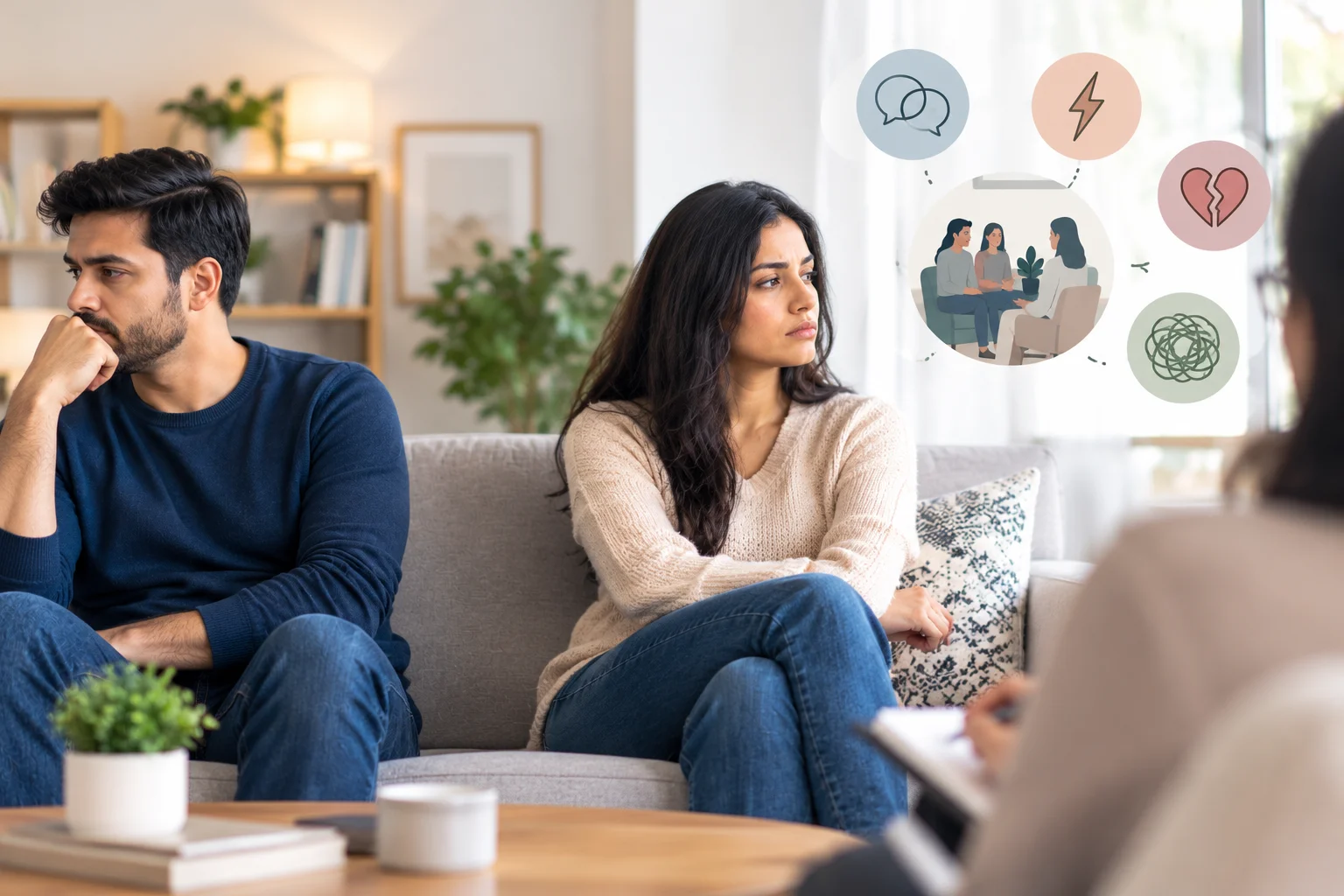
A typical session involves both partners discussing a current issue while the therapist observes the underlying relationship dynamics, not just the content of the argument but how you communicate, where conversations break down, and what each partner actually needs. Over several sessions, the therapist introduces specific exercises to fix communication issues in a marriage and rebuild emotional intimacy.
When Is It Too Late to See a Marriage Counsellor?
Rarely. Counselling can help even couples who are seriously considering separation; sometimes it clarifies that the relationship is worth continuing, and sometimes it helps both partners separate with less damage and more clarity. The main risk isn’t going “too late,”; it’s waiting so long that contempt has replaced affection entirely, which makes the work harder but still not impossible.
What If One Partner Refuses to Go to Counselling?
Individual counselling is still valuable. Working on your own patterns, communication, and emotional regulation often shifts the relationship dynamic enough that a reluctant partner becomes more open over time, or it gives you clarity on your own needs either way.
How Long Does It Take to Rebuild a Struggling Marriage?
There’s no fixed timeline. Couples dealing with communication issues alone may see real change in a few months of consistent sessions; marriages involving deeper trust ruptures or long-standing resentment typically need longer, sustained work. Marital satisfaction tends to improve gradually, not overnight, as new patterns replace old ones.
Can Online Marriage Counselling Be as Effective as In-Person?
Yes. Research on telehealth-delivered couples therapy has found outcomes comparable to in-person sessions for many couples, with the added benefit of flexibility for busy schedules, long-distance partners, or anyone who feels more comfortable opening up from home. Online marriage counselling has made it far easier for couples who previously avoided therapy due to logistics or stigma to actually start.
How Do You Choose the Right Marriage Counsellor?
Look for a licensed therapist trained in couples-specific approaches like the Gottman Method or EFT, rather than general individual counselling. It also helps to choose someone both partners feel comfortable with after an initial session, since the therapeutic relationship itself plays a big role in how effective the work is.
Taking the Next Step
None of these signs mean your marriage is doomed; they mean it’s asking for attention. Most couples who seek help wish they had started sooner, not later. If even a few of these patterns sound familiar, that’s reason enough to talk to someone trained to help you work through them.
You can book a marriage counsellor online at TalktoAngel and start with a session that fits your schedule, from wherever you are. A single conversation with the right therapist is often where the repair actually begins.