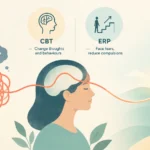

Antipsychotic medication can quiet hallucinations and delusions, but it rarely touches the isolation, low motivation, or shattered confidence that often come with schizophrenia. That’s where schizophrenia treatment through therapy steps in. Talk therapy doesn’t replace medication — it fills the gaps medication leaves behind, helping people rebuild daily functioning, relationships, and a sense of self. Here’s what that looks like in practice.
What Is Schizophrenia and Why Does It Need More Than Medication?
Schizophrenia is a chronic psychiatric condition marked by positive symptoms (hallucinations, delusions, disorganized thinking) and negative symptoms (flat affect, social withdrawal, low motivation). Antipsychotics target the brain chemistry behind positive symptoms reasonably well.
But a diagnosis doesn’t just disrupt perception — it disrupts identity, work, friendships, and routine. Medication alone can’t rebuild a person’s confidence to re-enter a classroom, hold a conversation without fear, or trust their own judgment again. That rebuilding work is squarely in the domain of therapy.
Why Can’t Medication Alone Treat All Schizophrenia Symptoms?
Research is fairly direct about this gap: only around 30% of patients report satisfaction with their treatment during the first 18 months on antipsychotics, and 20% to 30% experience some degree of treatment resistance. Even when medication works, its effect on negative and cognitive symptoms remains unclear, which is exactly why psychotherapy has become a standard add-on rather than an optional extra.
In practical terms, medication tends to leave three things largely unaddressed:
- Negative symptoms like withdrawal, apathy, and blunted emotion
- Co-occurring depression and self-esteem struggles
- The skills needed to return to work, school, or social life
How Does Therapy Complement Medication in Schizophrenia Treatment?
Think of medication as lowering the volume on distressing symptoms, and therapy as teaching someone how to live well at that new volume. Therapy adds schizophrenia symptom management tools — coping strategies for intrusive thoughts, communication skills for family conflict, and relapse-prevention planning.
This combined approach is also what most clinical guidelines recommend, rather than medication or therapy alone. The goal isn’t choosing one over the other; it’s layering both, so recovery covers symptoms, function, and quality of life together.
What Types of Therapy Are Most Effective for Schizophrenia?
A few approaches consistently show up in schizophrenia care:
- Cognitive Behavioral Therapy for psychosis (CBTp) — reframing distressing thoughts tied to hallucinations and delusions
- Family therapy and psychoeducation — reducing household tension and relapse risk
- Social skills training — rebuilding the practical skills for work and relationships
- Supportive and resilience-focused counselling — addressing depression, self-esteem, and motivation
No single therapy fits every case. A therapist typically blends these based on which symptoms are most disruptive day-to-day.
How Does Cognitive Behavioral Therapy Help Manage Hallucinations and Delusions?
CBT for schizophrenia symptoms doesn’t try to argue someone out of a hallucination. Instead, it works on the distress and behavior around it — teaching a person to notice triggers, question the certainty of a delusional belief, and respond differently when voices or intrusive thoughts appear.
The evidence here is genuinely mixed, and it’s worth being honest about that. A meta-analysis of 36 randomized controlled trials found CBTp has a small therapeutic effect on functioning at end-of-trial, though this benefit isn’t evident at follow-up, and the therapy showed no measurable improvement in quality of life. In other words, CBTp is a useful tool for day-to-day coping and functioning, not a cure for psychosis itself — and framing it that way to clients matters for realistic expectations.
Can Family Therapy Improve Outcomes for Schizophrenia Patients?
Family involvement has some of the strongest relapse-prevention data in schizophrenia care. A large meta-analysis of 90 randomized trials found that nearly all types of family interventions significantly reduced relapse at 12 months, with basic family psychoeducation producing the lowest relapse rates of any model tested. In that review, only about 10% of patients who received basic family psychoeducation relapsed after 12 months, compared with 37% of those receiving standard care alone.
Separately, a 12-month randomized trial found that a brief family psychoeducation program significantly reduced relapse risk, improved medication adherence, and reduced caregiver burden and depression. For families struggling with high tension or confusion about the illness, this is often the single highest-leverage intervention available.
How Does Therapy Address Negative Symptoms Like Withdrawal and Low Motivation?
Negative symptoms — flat emotion, social withdrawal, difficulty starting tasks — are often harder to live with than hallucinations, and medication barely touches them. Therapy approaches negative symptoms through:
- Behavioral activation: scheduling small, achievable activities to counter apathy
- Cognitive restructuring: challenging the belief that effort is pointless
- Goal-setting: rebuilding routine in manageable steps
This is also where building resilience matters most. Small, consistent wins — getting dressed, attending one social event, cooking a meal — rebuild a sense of agency that negative symptoms tend to erode.
What Role Does Social Skills Training Play in Recovery?
Social anxiety in schizophrenia is common, partly from the illness itself and partly from stigma and past rejection. Social skills training breaks interaction down into practiced, learnable pieces: starting a conversation, reading social cues, managing conflict without escalation.
For many people, this training is what actually determines whether they can hold a job or sustain friendships — not just symptom control, but the functional skills symptom relief doesn’t automatically restore.
How Can Therapy Help Prevent Schizophrenia Relapse?
Relapse prevention in therapy usually combines three elements: recognizing early warning signs (sleep changes, increased suspicion, withdrawal), building a crisis plan before it’s needed, and keeping communication open between the patient, family, and care team. Given that family psychoeducation alone can cut relapse rates by roughly two-thirds in some trials, as the data above shows, this isn’t a minor add-on — it’s often the difference between stability and repeated hospitalization.
When Should You Seek Professional Help for Schizophrenia Symptoms?
It’s time to consult a therapist for schizophrenia relief when symptoms interfere with daily functioning, when depression or self-esteem issues are compounding the original diagnosis, when family conflict is escalating, or when someone has been managing on medication alone without support for coping, routine, or relationships. Early, combined treatment — medication plus therapy — consistently produces better long-term outcomes than either alone.
Frequently Asked Questions
Can therapy alone treat schizophrenia without medication?
No. Therapy is a complement to antipsychotic medication, not a replacement — it addresses functioning and distress that medication doesn’t fully reach.
Does CBT cure hallucinations in schizophrenia?
No. CBTp helps manage distress and improve coping around hallucinations and delusions; it doesn’t eliminate psychotic symptoms outright.
How much does family therapy reduce relapse risk?
Some large trials show relapse rates as low as 10% with basic family psychoeducation, compared to roughly 37% with standard care alone.
Is social withdrawal in schizophrenia treatable?
Yes, through behavioral activation, social skills training, and resilience-focused counselling, though progress is usually gradual.
Getting the Right Support
Schizophrenia recovery rarely moves in a straight line, and medication alone was never meant to carry the whole journey. Combining it with the right therapy — CBT, family psychoeducation, social skills training, or resilience-building counselling — gives both patients and families practical tools medication simply can’t provide. If you or someone you love is navigating this, TalktoAngel connects you with licensed therapists experienced in schizophrenia care, so support is available alongside treatment, not instead of it.
References
- Laws, K. R., Darlington, N., Kondel, T. K., McKenna, P. J., & Jauhar, S. (2018). Cognitive Behavioural Therapy for schizophrenia – outcomes for functioning, distress and quality of life: a meta-analysis. BMC Psychology, 6(1), 32.
- Kart, A., Özdel, K., & Türkçapar, M. H. Cognitive Behavioral Therapy in Treatment of Schizophrenia.
- Psychiatric News / Psychiatry Online (2022). Family Interventions Benefit People With Schizophrenia — analysis of 90 RCTs, The Lancet Psychiatry.
- Rodolico, A., et al. Family psychoeducation to improve outcomes in caregivers and patients with schizophrenia: a randomized clinical trial. NIH/PMC.