Thinking about couple therapy but worried about what people will say? You’re not alone. Most Indian couples who consider therapy hesitate—not because they don’t need help, but because of what they’ve heard about it. Is it only for marriages on the brink of divorce? Will the therapist judge you? Is it against Indian values? These myths about couples therapy stop thousands of couples from getting support that could genuinely strengthen their relationship. This article breaks down the most common misconceptions, replaces them with facts, and shows you when and how therapy actually helps.
What Is Couple Therapy — And What It’s Not?
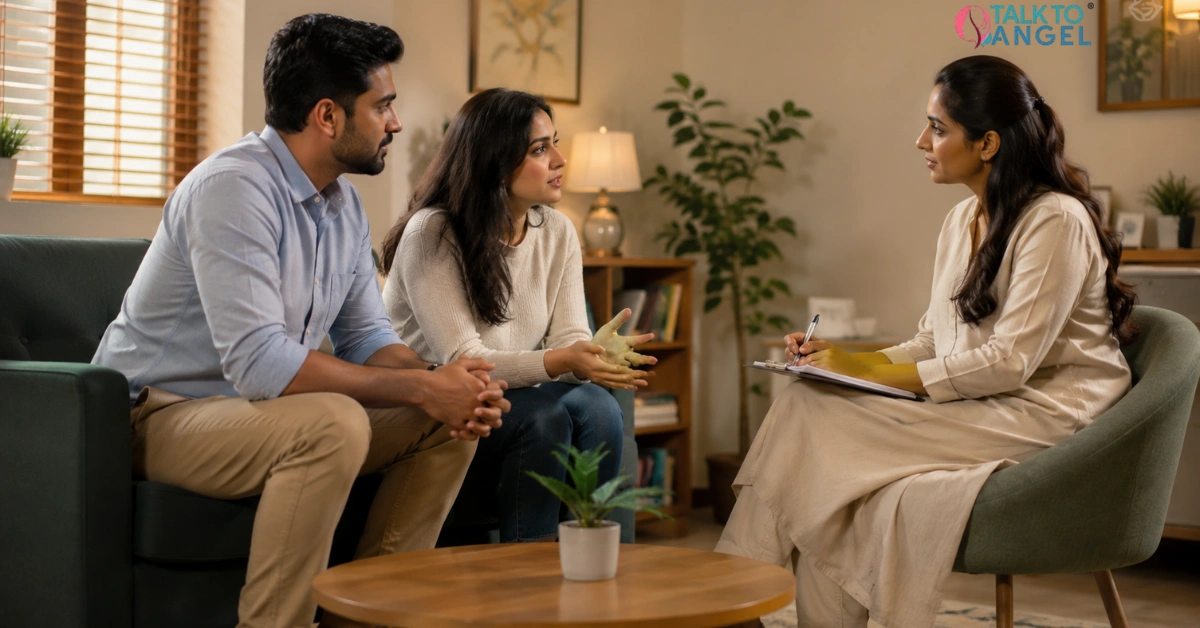
Couple therapy is a structured process where a trained mental health professional helps partners understand their relationship patterns, improve communication, and work through recurring conflict. It is not a courtroom where someone is declared “right” or “wrong.”
It’s also not a last resort reserved for couples who are already broken beyond repair. Many couples start therapy simply because they want to understand each other better or prevent small issues from becoming big ones.
Now let’s get into the myths that keep people from ever booking that first session.
Myth 1: Does Couple Therapy Mean Your Marriage Is Failing?
Why people believe it: In Indian households, seeking outside help is often seen as admitting the relationship has collapsed.
The reality: Therapy isn’t a sign of failure—it’s a sign of investment. Couples come in for everyday friction: parenting styles, financial disagreements, in-law dynamics, or drifting apart after years of routine.
When therapy helps: If the same argument keeps repeating without resolution, that’s a good time to start—not after things have already broken down.
Practical takeaway: Reframe therapy as relationship maintenance, like a regular health check-up, rather than emergency repair.
Myth 2: Is Therapy Only for Couples on the Verge of Divorce?
Why people believe it: Popular culture usually shows therapy as the final option before separation.
The reality: Most therapists say the opposite—couples get the most out of therapy when they come in early, before resentment builds up. It’s genuinely one of the best tools for conflict resolution in marriage at any stage.
When therapy helps: Newlyweds adjusting to shared life, couples navigating a major transition (a new baby, a job loss, relocation), or partners wanting to deepen emotional intimacy can all benefit.
Practical takeaway: Don’t wait for a crisis. Early sessions are usually shorter and more solution-focused than therapy started during a full-blown breakdown.
Myth 3: Will the Therapist Take Sides?
Why people believe it: People fear being “ganged up on” or that the therapist will side with whoever speaks more convincingly.
The reality: A trained couple therapist is not there to assign blame. Their role is to stay neutral, help both partners feel heard, and identify the relationship patterns driving conflict—not to decide who’s right.
When therapy helps: If one partner constantly feels unheard or misunderstood during arguments, a neutral third party can help both sides express themselves without the conversation turning defensive.
Practical takeaway: A good therapist will actively check that both partners feel equally supported. If a session ever feels one-sided, it’s fair to raise that directly with the therapist.
Myth 4: Is Couple Therapy Against Indian Culture and Family Values?
Why people believe it: Traditionally, relationship issues were handled within the family, not discussed with outsiders.
The reality: Attitudes are shifting. More urban and semi-urban Indian couples are recognising that therapy actually supports family values by helping couples build stronger, more stable homes for themselves and their children.
When therapy helps: Couples juggling joint family expectations alongside their own relationship needs often benefit from a space where they can talk honestly, without cultural pressure shaping every answer.
Practical takeaway: You don’t have to choose between your values and your mental health—therapy can work within your cultural context rather than against it.
Myth 5: Does Therapy Mean Something Is “Wrong” With You?
Why people believe it: Mental health stigma in India often frames therapy as something only for “serious” problems.
The reality: Needing support with communication or couple therapy for trust issues doesn’t mean either partner is flawed—it means you’re addressing normal relationship challenges with the right tools.
When therapy helps: If you’ve tried talking things out repeatedly without progress, that’s not a personal failure—it’s a sign you could use outside support.
Practical takeaway: Think of therapy as skill-building, not diagnosis. You’re learning tools most people were never taught.
Myth 6: Is Couple Therapy Too Expensive for the Average Indian Couple?
Why people believe it: Therapy is sometimes seen as a luxury service for the wealthy.
The reality: Costs vary widely, and many platforms now offer couple therapy for communication problems and other concerns at accessible price points, including online sessions that cut travel and time costs.
When therapy helps: Even a handful of sessions focused on one issue—like recurring arguments about money or household responsibilities—can create noticeable change without a long-term commitment.
Practical takeaway: Compare per-session pricing across a few platforms before assuming it’s out of reach.
Myth 7: Can Therapy Work If Only One Partner Agrees to Go?
Why people believe it: People assume therapy only works when both partners are equally enthusiastic from day one.
The reality: It’s common for one partner to be hesitant initially. Individual sessions, or therapy attended by just one partner, can still improve the relationship by shifting how that person communicates and responds to conflict.
When therapy helps: If your partner isn’t ready, starting on your own can still create positive change—and seeing that shift often encourages the hesitant partner to join later.
Practical takeaway: Don’t let a reluctant partner stop you from seeking support individually first.
Myth 8: Is Online Couple Therapy Less Effective Than In-Person Sessions?
Why people believe it: There’s an assumption that a screen creates distance and reduces the therapy’s impact.
The reality: Research and clinical experience increasingly show online couple therapy can be just as effective as in-person sessions, especially for couples with demanding schedules or those in different cities.
When therapy helps: Long-distance relationships, working professionals with limited time, or couples who feel more comfortable talking from home often do better with online formats.
Practical takeaway: Choose based on convenience and comfort, not outdated assumptions about screen-based therapy being “lesser.”
What Really Happens in a Couple Therapy Session?
A typical session usually includes:
- An initial discussion of what brought you to therapy
- Both partners sharing their perspective, guided by the therapist
- Identifying recurring relationship patterns and attachment styles in relationships
- Practical exercises to try at home
- A shared plan for the next session
Sessions are structured but conversational—less clinical, more like a guided conversation with someone trained to help you both listen better.
How Effective Is Couple Therapy for Indian Couples, Really?
Effectiveness depends on consistency and willingness to engage honestly. Couples who attend regularly and practice the tools discussed—rather than treating sessions as a one-time fix—tend to see the most meaningful shifts in how they handle disagreements and express affection.
Who Can Benefit from Couple Therapy Besides Married Couples?
Couple therapy isn’t limited to married partners. It can help:
- Dating couples evaluating long-term compatibility
- Engaged couples preparing for marriage
- Live-in partners navigating shared responsibilities
- Long-distance couples managing communication gaps
- Same-sex couples seeking a supportive, judgment-free space
Signs You Need Couple Therapy
- Frequent arguments that don’t get resolved
- Feeling emotionally distant from your partner
- Difficulty rebuilding trust after a betrayal
- Struggling to communicate without conflict escalating
- Major life changes putting strain on the relationship
If any of these sound familiar, it’s a reasonable prompt to explore couples therapy for frequent arguments or trust-related concerns before they deepen.
How Can You Convince a Hesitant Partner to Try Therapy?
- Frame it as a shared investment, not a punishment
- Suggest a single trial session, not a long-term commitment
- Share an article or resource to open the conversation
- Offer to attend individually first, if they’re not ready
- Focus on a specific, shared goal, like reducing arguments about one topic
Final Thoughts: Don’t Let Myths Keep You From Getting Help
Couples therapy isn’t a sign of failure, weakness, or cultural betrayal—it’s a practical tool for building a relationship that actually works for both partners. Whether you’re dealing with trust issues, communication breakdowns, or simply want to feel closer to your partner, professional support can make a real difference.
If you and your partner are ready to talk to a professional, it’s worth exploring platforms that connect you with top-rated couple therapists in India, whether you prefer online convenience or in-person sessions. The first step is usually the hardest—but it’s also the one that matters most.