
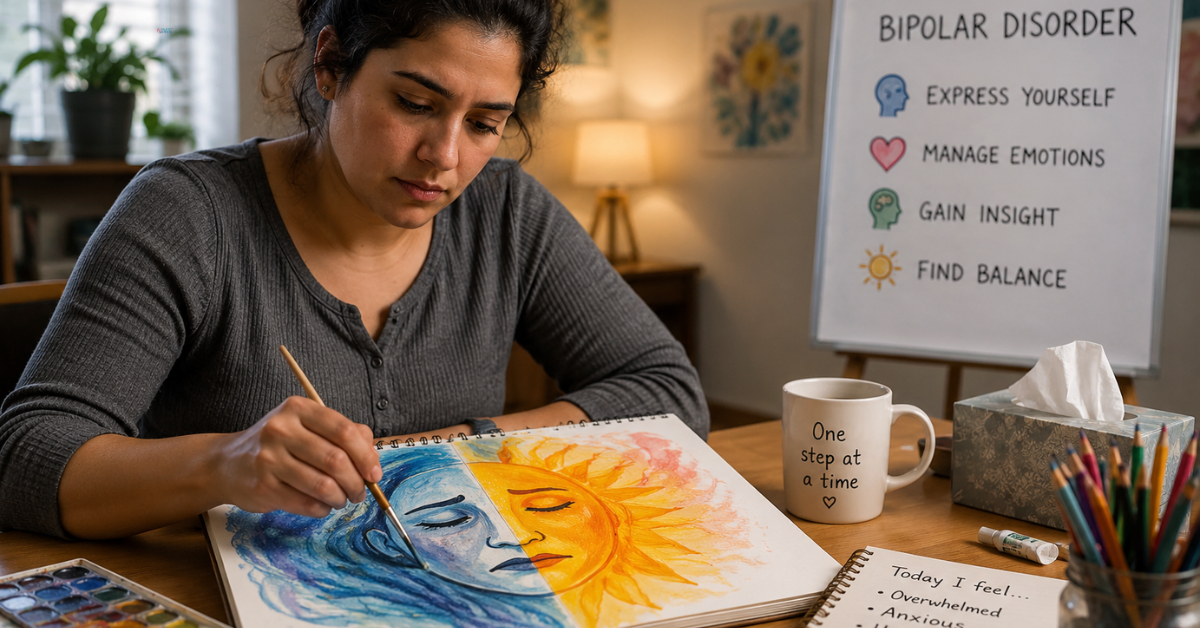
Living with bipolar disorder can feel like being on an emotional roller coaster. One moment, you may feel energized and optimistic, while the next, you might struggle with sadness, irritability, or emotional exhaustion. These shifts can affect relationships, work performance, and overall well-being. While medication and psychotherapy remain important components of bipolar disorder treatment, many adults are exploring complementary approaches that help them express and understand their emotions more effectively. One such approach is art therapy for bipolar disorder, which uses creative activities to promote emotional awareness, self-expression, and healing. By turning emotions into visual forms, individuals can better understand their experiences and develop healthier coping strategies.
What Is Art Therapy and How Does It Help People with Bipolar Disorder?
Art therapy is a therapeutic approach that combines creative expression with professional psychological guidance. Participants engage in activities such as drawing, painting, sculpting, collage-making, or other forms of artistic creation to explore their thoughts and feelings.
Unlike traditional art classes, the goal is not artistic skill or producing a masterpiece. Instead, the focus is on self-expression, emotional processing, and personal insight. For adults with bipolar disorder, art therapy provides a safe outlet for expressing emotions that may otherwise feel overwhelming or difficult to communicate through words.
This form of art-based mental health treatment can help individuals recognize emotional patterns, identify triggers, and gain a greater sense of control over their emotional responses.
Can Art Therapy Reduce Emotional Highs and Lows in Bipolar Disorder?
One common question is: Can art therapy reduce emotional highs and lows in bipolar disorder?
While art therapy is not a cure for bipolar disorder, it can be an effective supportive tool. Creative activities encourage mindfulness and emotional awareness, helping individuals slow down and focus on the present moment. During periods of emotional intensity, artistic expresshttps://www.talktoangel.com/area-of-expertise/bipolar-disorderion can provide a constructive outlet for thoughts and feelings.
Creating art allows people to externalize emotions rather than suppress them. This process often helps reduce emotional tension and improve self-regulation. Over time, individuals may become more aware of their mood changes and better equipped to respond to them in healthy ways.
As part of a comprehensive bipolar disorder treatment plan, art therapy can contribute to improved emotional stability and self-understanding.
Why Do My Mood Swings of Bipolar Disorder Affect My Relationships So Much?
Many adults wonder, Why do my mood swings of bipolar disorder affect my relationships so much?
Mood fluctuations can influence communication, decision-making, and emotional reactions. During manic or hypomanic episodes, individuals may act impulsively, become overly confident, or struggle to recognize how their behavior affects others. During depressive episodes, they may withdraw socially, experience low motivation, or find it difficult to engage with loved ones.
Art therapy helps individuals explore these experiences in a non-judgmental environment. Through creative expression, they can gain insight into how their emotions influence their interactions and relationships. Visual representations of feelings often reveal patterns that may not be immediately obvious through conversation alone.
This increased self-awareness can strengthen communication skills, improve emotional understanding, and support healthier relationships over time.
How Does Managing Emotions with Art Therapy Improve Daily Life?
Managing emotions with art therapy can have benefits that extend beyond therapy sessions. Adults with bipolar disorder often experience challenges related to stress, self-esteem, and emotional regulation. Art therapy provides a structured and creative way to address these concerns.
Some potential benefits include:
- Enhanced emotional awareness
- Reduced stress and anxiety
- Improved coping skills
- Greater self-confidence
- Better communication of difficult emotions
- Increased mindfulness and relaxation
By regularly engaging in creative activities, individuals may develop healthier ways to process emotions and respond to life’s challenges. This makes managing bipolar disorder through creative expression a valuable complement to other therapeutic approaches.
How Does Art Therapy Support Long-Term Bipolar Disorder Management?
Another important question is: How does art therapy support long-term bipolar disorder management?
Long-term management of bipolar disorder involves developing sustainable strategies for emotional wellness. Art therapy encourages ongoing self-reflection and emotional monitoring, both of which are important for maintaining stability.
Creative projects can serve as visual records of emotional experiences, helping individuals recognize changes in mood over time. Reviewing artwork created during different emotional states may provide valuable insights into personal triggers, coping patterns, and progress.
Furthermore, art therapy promotes resilience by encouraging problem-solving, flexibility, and self-expression. These skills can support individuals as they navigate the challenges associated with bipolar disorder.
When combined with medication, psychotherapy, lifestyle adjustments, and social support, art-based mental health treatment can become a meaningful part of long-term emotional care.
Who Can Benefit Most from Art Therapy for Bipolar Disorder?
Art therapy can benefit adults at various stages of their mental health journey. It may be particularly helpful for individuals who:
- Have difficulty expressing emotions verbally
- Experience frequent mood fluctuations
- Want additional coping strategies alongside traditional treatment
- Enjoy creative activities and self-expression
- Seek greater emotional awareness and self-understanding
No artistic experience is required. The therapeutic value comes from the creative process itself rather than the final result.
Where Can You Find Professional Support for Bipolar Disorder?
Managing bipolar disorder often requires a combination of professional support, self-care practices, and healthy coping techniques. TalktoAngel, the best platform for mental health support, connects individuals with qualified mental health professionals who understand the complexities of bipolar disorder and emotional wellness.
If you are looking to connect with the best therapists online, professional guidance can help you explore therapeutic options, including creative approaches such as art therapy, while developing a personalized treatment plan that supports your long-term mental health goals.
Conclusion
Living with bipolar disorder can be challenging, but effective support and coping strategies can make a meaningful difference. If you often wonder, “Why do I Feel Energetic Then Depressed?“, understanding the nature of bipolar disorder is an important first step toward managing these emotional shifts. Art therapy for bipolar disorder offers a creative and empowering way to process emotions, build self-awareness, and strengthen emotional resilience. Through art therapy, you can manage bipolar disorder and emotions; individuals can gain valuable insights into their experiences and develop healthier ways to navigate emotional ups and downs. As part of a comprehensive bipolar disorder treatment plan, art therapy can contribute to improved emotional well-being and a greater sense of balance in everyday life.