

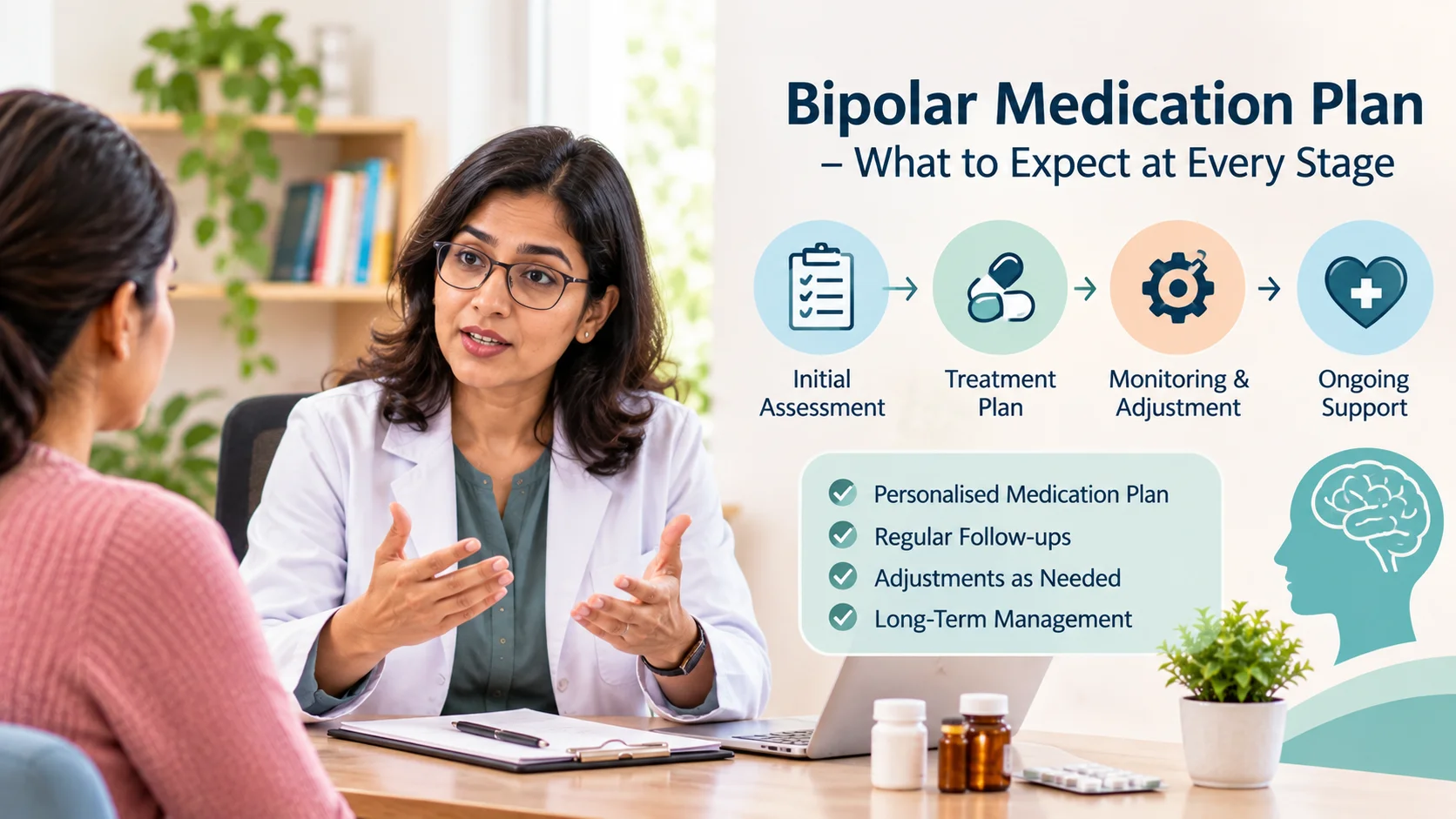
Standing in front of a pharmacy counter with three new prescriptions and a dozen unanswered questions is one of the most overwhelming parts of a bipolar diagnosis. Why this medication and not another? How long before it actually works? Will the side effects ever settle down? If you’ve ever searched how to find the right bipolar medication while feeling lost among mood stabilisers, antipsychotics, and antidepressants, you’re not alone. The good news is that bipolar disorder treatment doesn’t have to feel like guesswork — when you talk to a psychiatrist about bipolar disorder, every decision is built on evidence, observation, and your own lived experience.
What Makes Bipolar Medication So Confusing in the First Place?
Bipolar disorder isn’t a single, uniform condition — it shows up differently from one person to the next, which is exactly why there’s no universal prescription.
A few reasons the process feels confusing:
- Multiple drug classes (mood stabilisers, antipsychotics, antidepressants) are often used together, not alone.
- Response time varies — some medications need weeks before benefits appear.
- Symptoms shift between manic, depressive, and mixed episodes, so the plan has to shift too.
- Side effects differ from person to person, even on the same dose.
This is where evidence-based psychiatric care matters most. A specialist doesn’t prescribe by trial and error alone — they follow research-backed protocols while tailoring them to your specific symptom pattern, history, and lifestyle.
How Does a Specialist Decide Which Bipolar Medication Is Right for You?
A psychiatrist builds your plan the way an engineer builds a bridge — methodically, with multiple data points, not a single guess.
What factors influence the decision?
- Episode type — whether you experience more manic, hypomanic, or depressive episodes.
- Bipolar subtype — Bipolar 1, Bipolar 2, or cyclothymia each respond differently to certain drug classes.
- Co-occurring conditions — anxiety, substance use, or thyroid issues can change what’s safe to prescribe.
- Family history — if a close relative responded well to a specific mood stabiliser, that’s useful data.
- Current life stage — pregnancy, age, and other medications all narrow the safe options.
Many patients searching for mood stabilizers for bipolar disorder expect a single “right” drug, but in reality it’s this combination of factors — not the medication name alone — that determines the outcome.
This is also why an online bipolar disorder treatment consultation can be just as thorough as an in-person one — the assessment relies on detailed history-taking and symptom tracking, both of which work well over video.
What Are the Main Types of Bipolar Medications Available?
Understanding the broad categories makes the conversation with your psychiatrist far less intimidating.
Mood stabilisers are usually the foundation of treatment. Lithium remains one of the most researched and effective options for reducing both manic and depressive episodes, along with anticonvulsants like valproate and lamotrigine.
Atypical antipsychotics are frequently added, especially during acute manic or mixed episodes, and some are also approved for bipolar depression specifically.
Antidepressants are used cautiously and almost always alongside a mood stabiliser, since using them alone can sometimes trigger a manic swing in people with bipolar disorder.
A specialist weighs these options against your symptom severity, past response to medication, and risk of side effects before settling on a starting combination.
How Long Does It Take to See Results from Bipolar Medication?
This is one of the most common — and most important — questions patients ask.
- Acute mania may start improving within 1–2 weeks on the right medication.
- Bipolar depression often takes 4–8 weeks to show meaningful change.
- Long-term mood stability can take several months of consistent dosing and monitoring to fully establish.
Patience is genuinely part of the treatment, and a psychiatrist will usually schedule closer follow-ups in the early weeks specifically to track progress and catch problems early — which is exactly the information people are after when they ask how long it takes for bipolar medication to work.
Why Does Bipolar Medication Often Need to Be Adjusted?
If your first prescription doesn’t feel perfect right away, that’s not a failure — it’s actually the normal next step in bipolar disorder treatment.
Common reasons for adjustment include:
- Partial response — symptoms improve but don’t fully resolve.
- Tolerability issues — weight changes, sedation, or tremors that affect daily life.
- Blood level monitoring — medications like lithium require regular blood tests to stay within a safe, effective range.
- Life changes — stress, sleep disruption, or new health conditions can shift how your body responds.
Rather than viewing dose changes as setbacks, think of them as fine-tuning — a sign that your treatment is being actively managed rather than left on autopilot. Recognising the signs your bipolar medication isn’t working — persistent mood swings, worsening sleep, or symptoms creeping back despite taking doses as prescribed — is what prompts these timely adjustments in the first place.
What Happens During a Bipolar Medication Review?
A medication review is less like a quick prescription renewal and more like a structured check-in.
What does the psychiatrist actually assess?
- Mood patterns since the last visit (using tools like mood charts or symptom scales)
- Sleep quality and daily functioning
- Any side effects, however minor they seem
- Blood test results, where relevant
- Adherence — whether doses have been missed and why
Being honest here, even about skipped doses or self-adjusted timing, helps your psychiatrist make genuinely accurate decisions rather than ones based on incomplete information.
How Do Specialists Manage Side Effects Without Stopping Treatment?
Stopping medication abruptly because of side effects is one of the most common (and riskiest) mistakes people make on their own. A specialist has several better options first.
- Adjusting the dose slightly instead of discontinuing the drug entirely.
- Changing the timing — for instance, moving a sedating medication to night-time.
- Switching within the same drug class to one with a different side-effect profile.
- Adding supportive measures, like dietary guidance for weight-related effects or monitoring for metabolic changes.
The goal is always to preserve mood stability while making day-to-day life as manageable as possible — not to force you to simply “push through” discomfort. Learning how to talk to your psychiatrist about medication side effects openly, rather than quietly stopping a dose, is often the single biggest factor in staying on a treatment plan long enough for it to actually work.
Is Medication Alone Enough, or Does Therapy Matter Too?
Medication manages the biological side of bipolar disorder, but it doesn’t teach coping skills, repair relationships strained by past episodes, or help you spot early warning signs.
This is why most specialists recommend pairing medication with approaches like:
- Psychoeducation, so you and your family understand the condition clearly
- Cognitive Behavioural Therapy (CBT), for managing depressive thinking patterns
- Interpersonal and Social Rhythm Therapy (IPSRT), which focuses on stabilising daily routines and sleep
Combining medication with therapy consistently shows better long-term outcomes than medication alone, particularly for preventing relapse — which is why most specialists frame coping with bipolar disorder through therapy and medication as a single, connected plan rather than two separate tracks.
How Is Treatment Different for Bipolar 1 vs Bipolar 2?
- Bipolar 1 involves full manic episodes, often severe enough to require hospitalisation; treatment frequently starts with a mood stabiliser plus an antipsychotic to manage acute mania quickly.
- Bipolar 2 involves hypomania (a milder form) alongside more prominent depressive episodes; treatment often leans more heavily on managing depression safely, since antidepressants need careful pairing with a mood stabiliser.
Knowing your specific subtype helps explain why your plan might look different from someone else’s, even if your diagnosis sounds similar on paper — and it’s exactly what shapes the difference between bipolar 1 and bipolar 2 treatment that specialists tailor your prescriptions around.
What Should You Expect at Your First Psychiatric Consultation?
Walking in prepared can make the entire process smoother and far less stressful.
Bring along:
- A list of current and past medications, including doses
- A rough timeline of mood episodes, if you can recall them
- Notes on sleep patterns and any recent major life changes
- Questions you want answered — there are no wrong ones
Your psychiatrist will likely ask detailed questions about your history before recommending anything, because a rushed diagnosis almost always leads to a rushed, less effective treatment plan.
Bringing It All Together
Bipolar medication doesn’t have to feel like a confusing maze of trial and error. With a specialist guiding the process — assessing your symptoms, adjusting doses thoughtfully, and managing side effects proactively — you get a treatment plan built specifically around your life, not a generic template. If you’ve been struggling to make sense of your options, the most effective next step is simply to talk to a psychiatrist about bipolar disorder who can walk you through it clearly.
TalktoAngel, a trusted platform for mental health support, connects you with licensed psychiatrists for a confidential online bipolar disorder treatment consultation — so you can get expert, evidence-based psychiatric care from wherever you are. Whether you’re looking for an online psychiatrist consultation for bipolar disorder or simply want a second opinion on your current medication plan, the right support is only a conversation away.
Frequently Asked Questions
Can bipolar disorder be cured with medication alone?
No — medication manages symptoms and reduces the frequency and severity of episodes, but bipolar disorder is a lifelong condition. Most people need ongoing treatment, often combined with therapy and lifestyle support, rather than a one-time cure.
Is it safe to stop bipolar medication once you start feeling better?
Stopping suddenly, even when you feel well, is one of the most common triggers for relapse. Feeling stable is usually a sign the medication is working, not a sign it’s safe to discontinue — any changes should be made gradually and only under a psychiatrist’s guidance.
Can you drink alcohol while taking bipolar medication?
Alcohol can interact with mood stabilisers and antipsychotics, intensify side effects like drowsiness, and destabilise mood on its own. Most psychiatrists recommend avoiding or strictly limiting alcohol while on bipolar medication.
What happens if you miss a dose of bipolar medication?
Missing an occasional dose isn’t usually dangerous, but frequent missed doses can destabilise mood and reduce the medication’s effectiveness over time. If you miss doses often, it’s worth discussing simpler dosing schedules or reminders with your psychiatrist rather than stopping treatment.
Is bipolar medication safe to take during pregnancy?
Some bipolar medications carry risks during pregnancy, while others are considered safer options. This is a decision that needs to be made jointly with a psychiatrist and obstetrician well before or early in pregnancy, never changed unilaterally.
Can lifestyle changes reduce how much medication you need?
Consistent sleep, stress management, and avoiding substance use can support medication effectiveness and sometimes allow for lower doses over time. However, lifestyle changes work alongside medication, not as a replacement for it.
Can teenagers or young adults be prescribed bipolar medication?
Yes, bipolar disorder can be diagnosed in adolescence, and several medications are approved for younger patients under close psychiatric supervision, with extra attention to growth, development, and dosing adjustments as they age.