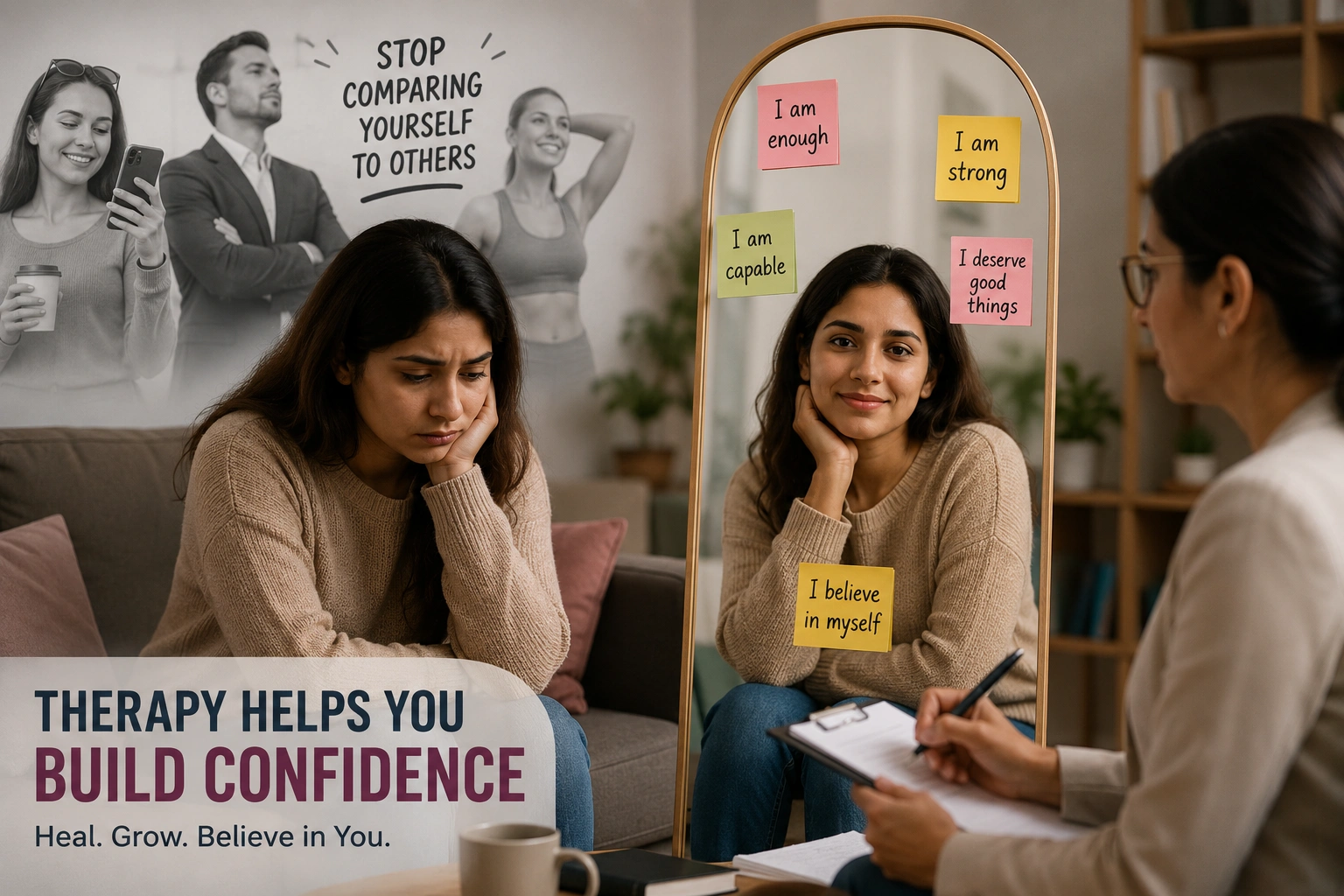
Scrolling through a friend’s vacation photos or a coworker’s promotion post, and suddenly your own life feels smaller? You’re not alone. Constant comparison is one of the most common struggles people bring into online therapy sessions, and it quietly chips away at self-worth over time. The good news is that with the right support, you can break this cycle and build real, lasting confidence. Here’s how therapy can help.
Why Do You Constantly Compare Yourself to Others?
Comparison is natural — psychologists call it “social comparison theory.” We evaluate ourselves against others because we don’t always have an objective way to measure our own progress.
For some people, though, this becomes constant rather than occasional. Common causes include:
- Low self-esteem that makes you doubt your value
- Being frequently compared to siblings or peers growing up
- Perfectionism and impossibly high standards
- Uncertainty about your own goals or identity
- Anxiety about being “left behind” in life or career
How Does Constant Comparison Affect Your Self-Esteem and Confidence?
When comparison becomes a daily habit, it reshapes how you see yourself. Over time, it can lead to:
- Chronic self-doubt about decisions you’d normally feel sure of
- Reduced motivation, since nothing ever feels “enough”
- Increased anxiety, especially in social or work settings
- Strained relationships, as jealousy creeps in
- A distorted sense of self-worth tied to external validation
Comparison promises to help you improve, but it usually reinforces feelings of inadequacy instead.
Why Do You Feel Like Everyone Else Is Better Than You?
You’re comparing your full, complicated inner experience to someone else’s polished outside. This feeling often stems from:
- Cognitive distortions, like all-or-nothing thinking
- Imposter syndrome, feeling like a fraud despite real competence
- Past criticism or rejection that shaped a negative self-image
- Unrealistic standards absorbed from media or family
A therapist helps you identify which pattern is driving your thoughts, so you can treat the cause, not just the symptom.
How Can You Stop Comparing Yourself to Other People?
A few practical steps to start today:
- Limit exposure to accounts or people that leave you feeling worse
- Practice gratitude journaling to refocus on your own progress
- Challenge negative thoughts — is this comparison fact or assumption?
- Set personal benchmarks instead of someone else’s timeline
- Celebrate small wins consistently, not just big milestones
These strategies work best alongside professional support that addresses the deeper emotional patterns behind the habit.
How Does Social Media Make You Compare Yourself to Others?
Social media showcases highlight reels, not everyday reality — yet our brains often forget this. Research links heavy use with increased comparison, anxiety, and lower self-esteem, especially among younger users, due to:
- Constant access to others’ achievements and appearances
- Algorithms favoring idealized, aspirational content
- Pressure to present a “perfect” version of yourself
If your mood dips after scrolling, that’s worth paying attention to — and something therapy can help you unpack.
What Are the Signs That Comparison Is Affecting Your Mental Health?
Watch for:
- Persistent feelings of inadequacy
- Avoiding social situations out of fear of “not measuring up”
- Trouble celebrating your own achievements
- Irritability or sadness after comparing yourself to others
- Using comparison as your main measure of self-worth
If these resonate, it may be time to consider talking to a psychologist about low self-esteem rather than managing it alone.
How Can Online Therapy Sessions Help You Build Lasting Self-Confidence?
Therapy offers structured, evidence-based tools to break the comparison cycle at its root:
- CBT techniques help you recognize distorted thinking and replace it with a balanced perspective
- Rebuilding self-worth around your own values and strengths, not external validation
- Coping strategies like mindfulness, self-compassion, and healthy social media boundaries
- Addressing root causes, such as childhood criticism or unresolved experiences
An affordable online therapy session makes this support accessible without the barriers of cost, travel, or scheduling — so you can get help on your own terms.
Why Choose TalktoAngel for Support?
TalktoAngel, the best platform for mental health in India, connects you with licensed, experienced psychologists who specialize in self-esteem, anxiety, and confidence-building. With flexible online therapy sessions, you get personalized guidance without disrupting your routine.
What sets TalktoAngel apart:
- Verified, qualified psychologists with real clinical experience
- Sessions via video, audio, or chat — whatever feels comfortable
- Flexible scheduling that fits around work, family, or study
- A private, judgment-free space to talk openly about self-esteem struggles
- Ongoing support to track your progress over time, not just a one-off conversation
Whether you’re dealing with occasional self-doubt or a deeper pattern of comparing yourself to everyone around you, getting matched with the right psychologist makes the process feel far less overwhelming.
Frequently Asked Questions
How do I know if I need therapy for low self-esteem?
If comparison, self-doubt, or negative self-talk affect your daily mood, work, or relationships, it’s a good sign to seek support. TalktoAngel’s psychologists can help you assess and address this early.
How much does an online therapy session cost on TalktoAngel?
TalktoAngel offers affordable online therapy sessions with transparent pricing and flexible packages, making consistent, professional support accessible to more people.
How many therapy sessions are needed to build confidence?
This varies by individual, but many people notice meaningful shifts in self-perception within 6–8 sessions of consistent therapy. Your TalktoAngel psychologist will tailor a plan to your needs.
Final Thoughts
Comparing yourself to others is a deeply human habit, but it doesn’t have to control how you feel about yourself. With the right guidance, you can quiet that inner critic and start measuring your life by your own standards. If cost is holding you back from seeking support, learning Struggling to Afford Therapy? How Online Therapy Solves the Cost Problem can help you explore more accessible options for getting the care you need.
If constant comparison is affecting your confidence or mood, don’t wait. Talk to a psychologist about low self-esteem on TalktoAngel today and take the first step toward a more confident you.