
Feeling overwhelmed, anxious, or simply “not yourself” lately? You’re not alone. Millions of people quietly struggle with mental health disorders that need therapy, often without realising it. Understanding the 10 most common mental health problems is the first step toward getting help. In this guide, we’ll break down these conditions in simple terms and explain the benefits of counselling for mental health, so you know exactly what support looks like and how to access it.
What Are the 10 Most Common Mental Health Problems Today?
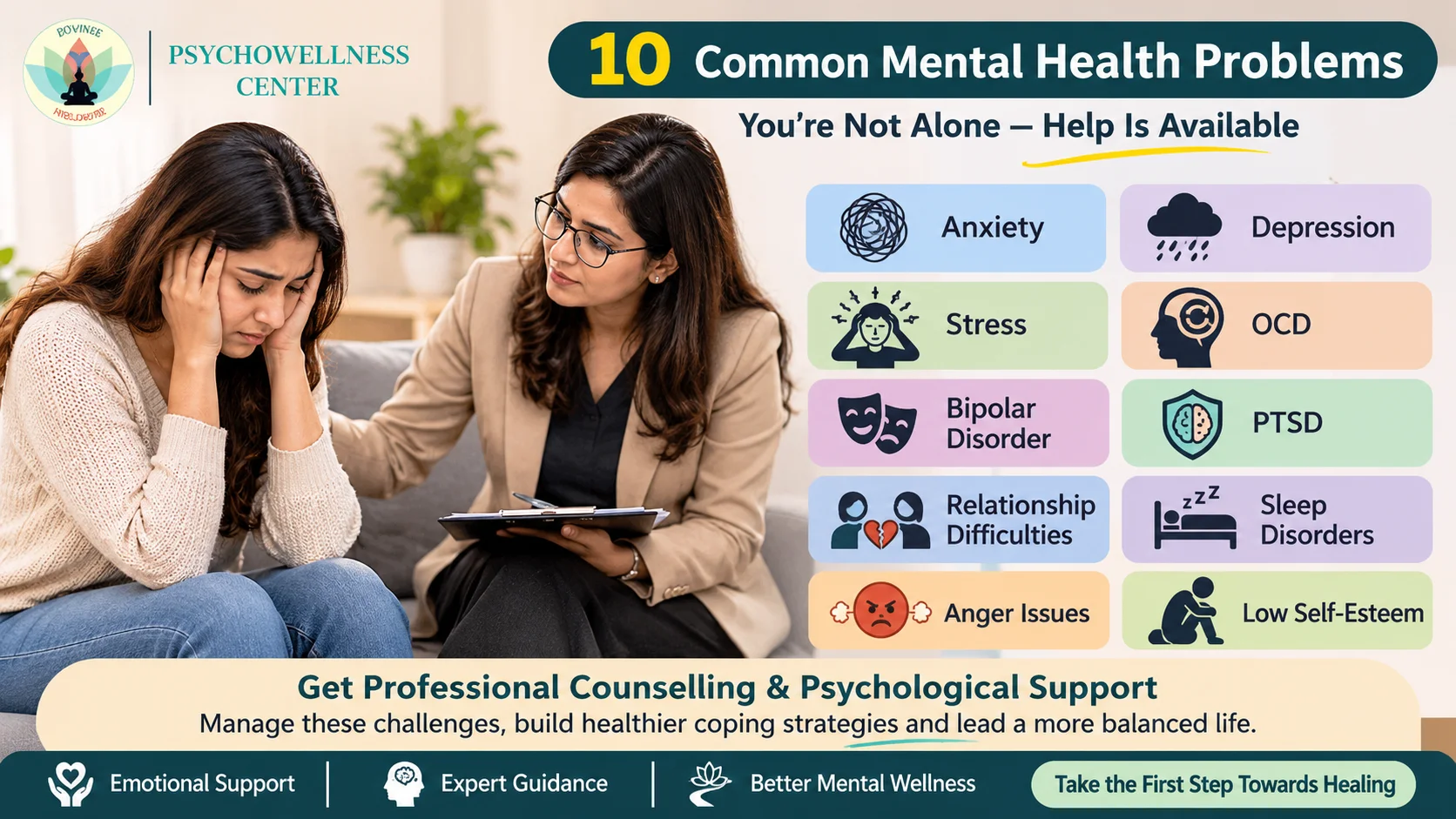
Mental health conditions don’t look the same for everyone, but certain patterns show up again and again in clinical practice. Here are the ten issues counsellors see most often.
1. Anxiety Disorders
Generalized anxiety disorder, social anxiety, and panic disorder fall under this umbrella. People experience racing thoughts, restlessness, a pounding heart, and a persistent sense that something bad is about to happen — even when there’s no clear threat. Many search for how to find the right therapist for anxiety once these symptoms start interfering with daily life.
2. Depression
Major depressive disorder and persistent depressive disorder (dysthymia) drain motivation, interest, and energy. It’s more than sadness; it’s a heavy fog that can make getting out of bed feel like climbing a mountain. Recognising the signs of depression that need professional help early can make treatment far more effective.
3. Stress-Related Disorders
Chronic stress and burnout build up slowly, often from work pressure, caregiving, or financial strain. Left unaddressed, they can lead to irritability, exhaustion, and physical symptoms like headaches or stomach issues. Learning practical coping strategies for chronic stress and burnout early on can prevent the slide into full-blown exhaustion.
4. Obsessive-Compulsive Disorder (OCD)
Obsessive-Compulsive Disorder (OCD) involves intrusive, unwanted thoughts (obsessions) paired with repetitive behaviours (compulsions) meant to ease the anxiety those thoughts create. It’s exhausting, and it rarely resolves without structured treatment.
5. Post-Traumatic Stress Disorder (PTSD)
Post-Traumatic Stress Disorder (PTSD) can follow an accident, abuse, loss, or any deeply distressing event. Flashbacks, nightmares, hypervigilance, and emotional numbness are common, and they can surface months or even years after the trauma.
6. Bipolar Disorder
This condition causes intense mood swings — from manic highs full of energy and impulsivity to depressive lows marked by exhaustion and hopelessness. Mood stabilisation usually requires both psychiatric care and ongoing therapy.
7. Eating Disorders
Anorexia, bulimia, and binge eating disorder are serious mental health disorders that need therapy, not just dietary advice. They’re often rooted in control, body image, and underlying emotional pain.
8. Sleep Disorders Linked to Mental Health
Insomnia frequently travels alongside anxiety and depression. Poor sleep worsens mood regulation, and poor mood worsens sleep — it’s a cycle that’s hard to break without professional support. If you’ve been Googling why you can’t sleep even when you’re exhausted, an underlying mental health issue is often the real culprit.
9. Relationship and Marital Conflicts
Chronic conflict, communication breakdowns, infidelity, or emotional distance in a marriage can seriously affect mental well-being. These issues are among the most common reasons people seek counselling as a couple or individually.
10. Grief and Loss-Related Distress
Losing a loved one, a job, a relationship, or even a sense of identity can trigger prolonged grief that mimics depression. Unprocessed grief often resurfaces later in unexpected ways.
How Do You Know If You Have a Mental Health Problem?
It’s not always obvious. Watch for these signals that go beyond a bad day or a rough week:
- Persistent low mood or anxiety lasting more than two weeks
- Withdrawing from friends, family, or activities you used to enjoy
- Noticeable changes in appetite, sleep, or energy
- Difficulty concentrating or making decisions
- Feeling overwhelmed by everyday tasks
- Physical symptoms with no clear medical cause (fatigue, tension, stomach issues)
- Using substances, overworking, or other habits to numb difficult feelings
If several of these sound familiar, these are classic signs of mental health problems in daily life, and it may be time to talk to a professional rather than wait it out.
How Does Counselling Help With Mental Health Problems?
Counselling isn’t just “venting to a stranger” — it’s a structured, evidence-based process that creates real change. Here’s how it works.
It Gives You Tools, Not Just Talk
A trained therapist uses approaches like Cognitive Behavioural Therapy (CBT), Dialectical Behaviour Therapy (DBT), or mindfulness-based techniques to help you understand and reshape unhelpful thought patterns. These aren’t vague suggestions — they’re practical strategies you can use the next time anxiety or a low mood hits.
It Offers a Safe, Judgment-Free Space
Many people carry their struggles alone because they fear being misunderstood. Counselling provides a confidential space where you can speak honestly without worrying about burdening family or friends.
It Identifies Root Causes
Symptoms are often just the surface. A skilled counsellor helps you trace anxiety, anger, or sadness back to their actual source — whether that’s childhood experiences, trauma, relationship patterns, or ongoing stress — so you’re treating the cause, not just managing the symptom. This is especially useful for people wondering when to see a therapist for overthinking that never seems to quiet down.
It Builds Long-Term Resilience
The benefits of counselling for mental health extend well beyond the sessions themselves. You learn emotional regulation, healthier communication, and coping skills that continue protecting your well-being long after therapy ends.
It Supports Couples and Families Too
Counselling isn’t limited to individuals. Marital conflicts, parenting disagreements, and family tension respond well to structured sessions that improve communication and rebuild trust.
When Should You Seek Professional Help for Mental Health?
There’s no “right” level of suffering required before you deserve support. That said, these are strong signals it’s time to reach out:
- Your symptoms are interfering with work, school, or relationships
- You’ve tried self-help strategies, and nothing seems to stick
- You’re having thoughts of self-harm or hopelessness
- Loved ones have expressed concern about changes in your behaviour
- You simply feel stuck and want a professional perspective
Early intervention almost always leads to faster, smoother recovery, so there’s no benefit in waiting for things to get worse.
Taking the First Step Toward Better Mental Health
Mental health struggles are far more common than most people realise, and recognising the signs is the first real step toward healing. Whether you’re dealing with anxiety, depression, relationship strain, or unresolved grief, you don’t have to figure it out alone. You can book a counselling session online with a licensed therapist and start working through what’s weighing on you — at a pace and format that fits your life. If you’re ready to consult a psychologist online, TalktoAngel — recognised as an online counselling platform in India — connects you with experienced, verified mental health professionals who can help you move from surviving to genuinely thriving.