

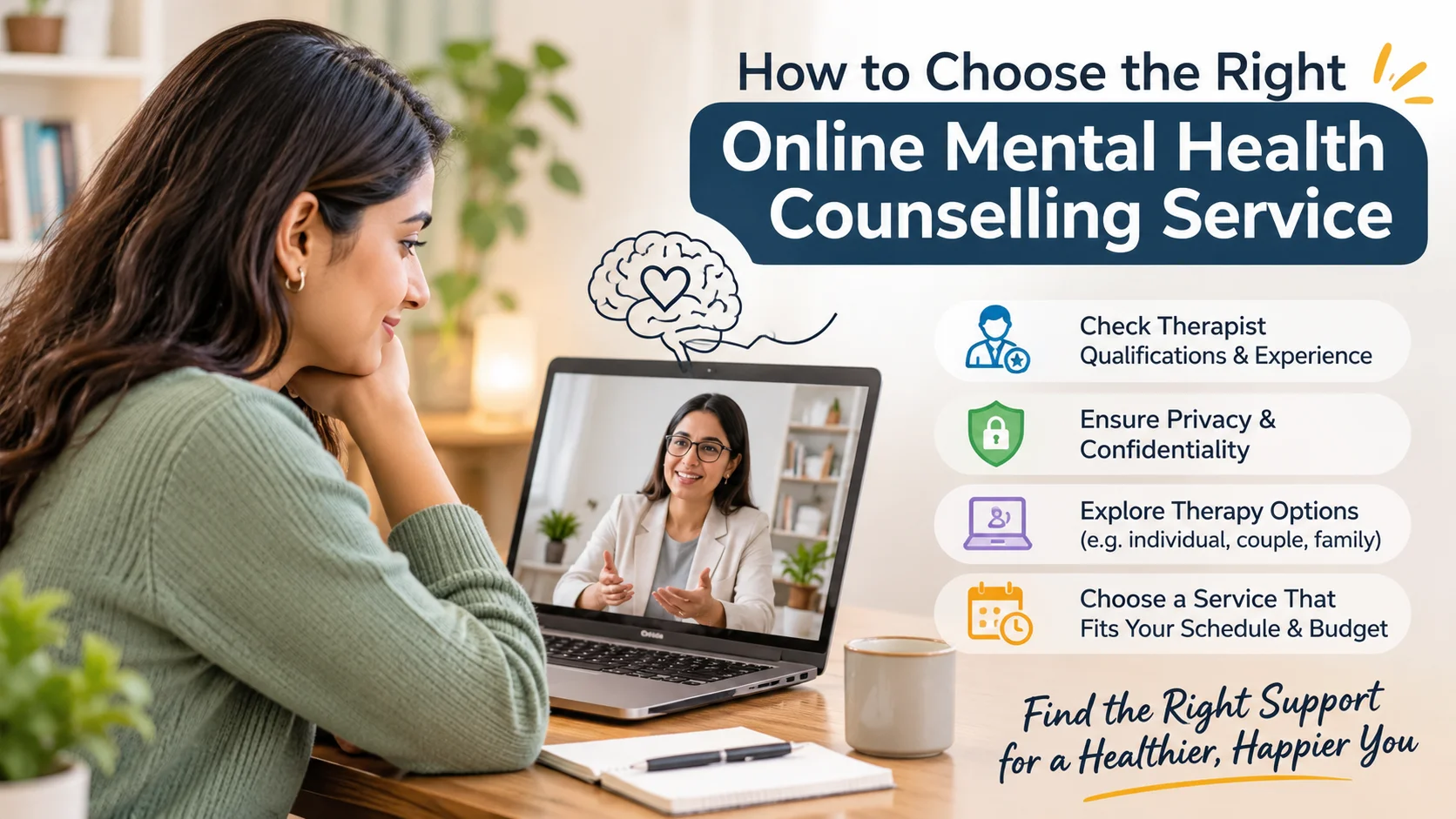
Searching for support shouldn’t feel like another source of stress. Yet with dozens of apps, platforms, and therapist directories promising the “best” care, choosing an online mental health counselling service can feel overwhelming. Should you pick based on price, specialization, or convenience? What if the therapist isn’t a good fit?
This guide breaks down exactly what to look for in an online mental health counselling service — from credentials and session formats to privacy and red flags — so you can make a confident, informed choice instead of a rushed one.
Why Are More People Turning to Online Mental Health Counselling?
Online therapy has moved from a niche option to a mainstream choice, and the reasons are practical rather than trendy.
- No travel time: sessions happen from home, office, or even a parked car.
- Wider therapist choice: you’re not limited to psychologists within driving distance.
- Comfort and privacy: many people open up more easily in a familiar space.
- Flexible formats: video, audio, or chat-based sessions fit different comfort levels.
For working professionals, students, new parents, and people in smaller towns with few local specialists, online therapy for couples and individuals has effectively closed a long-standing access gap in mental healthcare.
How Do You Know If Online Therapy Is Right for You?
Online counselling works well for most common concerns — anxiety, stress, low mood, relationship conflict, grief, and burnout. It’s a strong fit if you:
- Have a stable internet connection and a private space for sessions.
- Prefer flexibility over fixed weekly clinic visits.
- Feel more comfortable expressing yourself through text or video than face-to-face.
- Are managing mild to moderate symptoms rather than a psychiatric emergency.
If you’re experiencing a crisis, active self-harm thoughts, or a condition that needs in-person psychiatric monitoring, online counselling should complement — not replace — emergency or in-person care. A good platform will tell you this honestly rather than enrolling you anyway.
How Do You Compare Different Online Counselling Platforms?
Not all platforms are built the same, so it helps to evaluate them side by side on a few core factors.
Are the Therapists Actually Licensed?
This is non-negotiable. Reputable online counselling services with licensed psychologists will clearly list each therapist’s qualifications, registration number, and area of specialization — not just a friendly bio and a stock photo.
Does the Platform Match You With the Right Specialist?
Look for platforms that let you filter by concern — anxiety, depression, relationship issues, trauma, parenting, or workplace stress — rather than assigning you to whoever is free next.
How Transparent Is the Pricing?
Clear per-session or package pricing, with no hidden renewal traps, is a sign of a trustworthy service. Vague “contact us for pricing” pages are worth questioning.
Can You Actually Book a Session Easily?
Online counselling platforms with flexible scheduling let you book, reschedule, or switch therapists without friction. If the booking process itself feels confusing, imagine how support requests will go later.
What Types of Online Therapy Sessions Are Available (Video, Audio, Chat)?
Most platforms offer a mix of formats, and the “best” one depends on your personality and comfort level.
- Video sessions: closest to in-person therapy; good for building rapport and reading non-verbal cues.
- Audio-only calls: useful if you’re camera-shy or want to talk while walking or driving.
- Chat/text-based counselling: helpful for people who process thoughts better in writing, or who need support between scheduled sessions.
Some people start with chat to ease in, then move to video once they feel ready. A good service lets you switch formats without restarting your entire care plan.
Is Your Personal Information Safe on Online Counselling Platforms?
Confidentiality is the foundation of therapy, and this matters even more online, where data moves through servers and apps.
Before signing up, check whether the platform:
- Uses encrypted, secure video and chat infrastructure.
- Has a clear, readable privacy policy (not three pages of legal jargon).
- States who can access your session notes and for how long they’re stored.
- Allows you to request data deletion if you stop using the service.
If a platform is vague about any of this, treat it as a warning sign rather than a minor detail.
How Do You Find a Therapist Who Specializes in Your Concerns?
Generic “talk to a counsellor” matching often leads to mismatched expectations. Instead:
- Define your main concern first — anxiety, grief, marital conflict, or burnout need different approaches.
- Check therapist profiles for specialization, not just general experience.
- Ask about their therapeutic approach — CBT, psychodynamic, or solution-focused therapy, for example.
- Request a brief introductory call if the platform offers one, to gauge comfort before committing.
A therapist who specializes in couples work, for instance, will approach a relationship issue very differently from one trained mainly in individual anxiety treatment.
What Are the Red Flags to Watch Out for in Online Counselling?
Knowing the red flags to avoid when choosing online therapy can save you time, money, and unnecessary frustration.
- No verifiable credentials listed for therapists.
- Pressure tactics, such as “limited time” discounts pushing you to subscribe immediately.
- One-size-fits-all programs that don’t adjust to your specific concern.
- No clear cancellation or refund policy.
- Overpromising results, like guaranteed outcomes in a fixed number of sessions — therapy doesn’t work on a fixed script.
- Poor communication before you’ve even paid, such as unanswered queries or unclear scheduling.
If something feels off during the sign-up process, it’s reasonable to assume it won’t improve after you’ve paid.
How Do You Choose Between Individual, Couples, or Family Online Counselling?
The right format depends on who is affected by the issue you’re addressing.
- Individual counselling suits personal struggles like anxiety, self-esteem, or career stress.
- Couples counselling fits recurring conflict, trust issues, or communication breakdowns between partners.
- Family counselling works best when the issue involves multiple relationships, such as parenting disagreements or a teenager’s behavioural changes.
Many platforms offering online therapy for couples and individuals let you access different formats under one account, which is useful if your needs shift — for example, starting with individual sessions before bringing a partner in.
What Makes an Online Counselling Service Trustworthy and Reliable?
A trustworthy service tends to share a few consistent traits:
- Licensed, verifiable therapists with listed specializations.
- Transparent pricing and cancellation terms.
- Clear data privacy practices.
- Honest communication about what online therapy can and can’t do.
- Easy rescheduling and therapist-switching if the first match isn’t right.
Reliability isn’t just about a polished website — it’s about whether the platform still feels consistent three sessions in, not just during the sales pitch.
Final Thoughts: Choosing Support That Actually Fits You
Choosing an online counselling service is less about finding the “most popular” app and more about finding one that matches your specific concern, comfort level, and schedule. Take the time to check credentials, read the privacy policy, and notice how the platform communicates before you commit — these small checks often predict the quality of care that follows.
TalktoAngel connects you with licensed, experienced psychologists across specializations, with flexible video, audio, and chat session options designed around your schedule, not the other way around. If you’re ready to take the next step, you can schedule a session with an online psychologist today and start with a platform built on transparency and genuine care.