

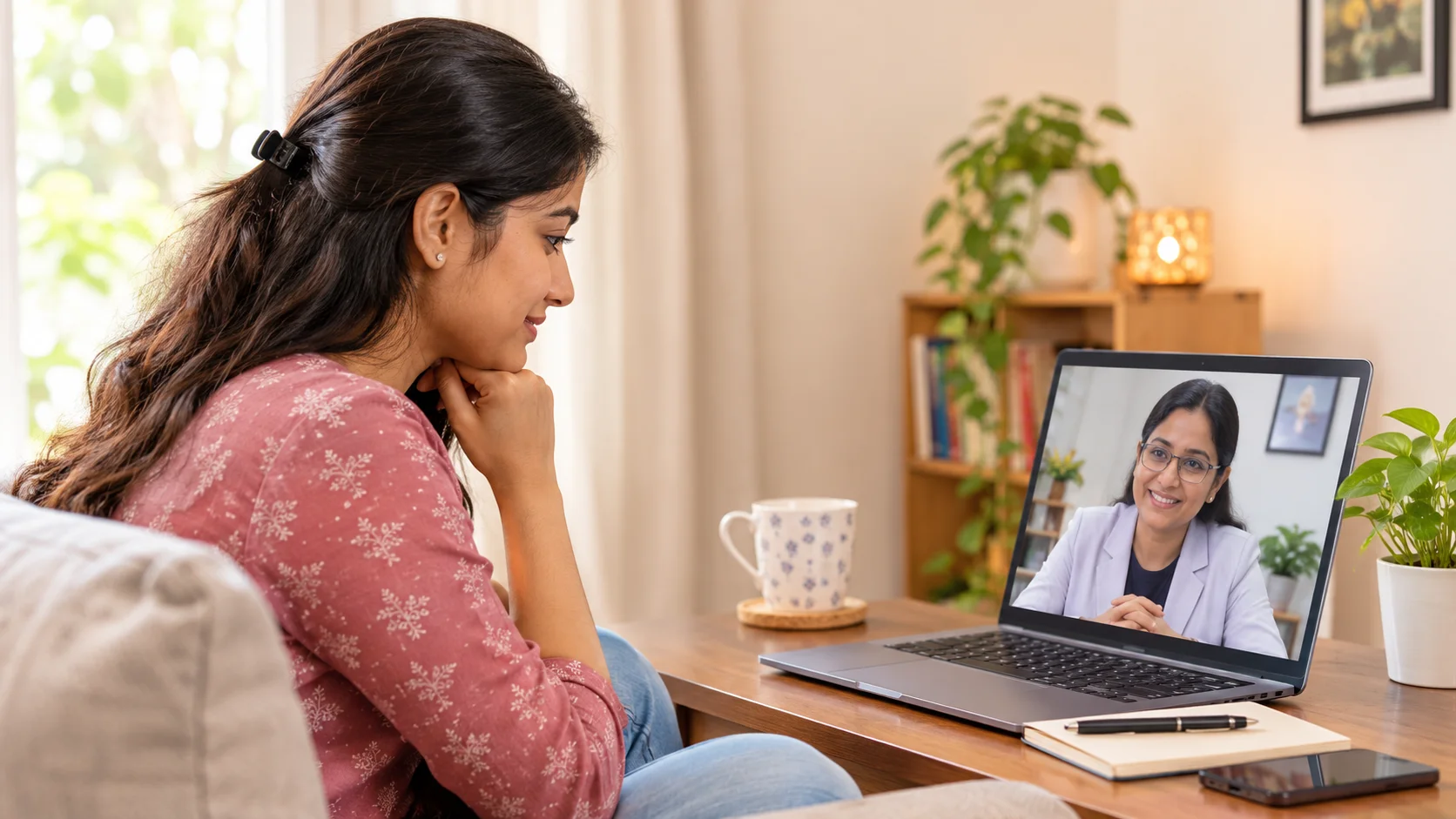
You’ve finally decided to try therapy, and now a new kind of anxiety has shown up: what if the therapist isn’t any good, what if your information leaks, what if you open up to a stranger who turns out to be unqualified? These worries are common, and they’re solvable. This guide walks you through exactly how to find a good online therapist in India, what credentials actually matter, and how to manage the nerves that come before session one — so you can find a trustworthy online therapist in India with confidence instead of guesswork.
Why Do So Many People Feel Anxious About Starting Therapy?
Starting therapy means being evaluated, even if no one says it that way. You’re handing a stranger your worst thoughts and trusting them not to judge you.
A few things make this harder in India specifically:
- Stigma is still real. Many people worry about being labelled “mentally unwell” by family or colleagues.
- Past disappointments. A friend’s bad experience with an unqualified “counsellor” can make anyone wary.
- Not knowing what to expect. Uncertainty about format, cost, and confidentiality fuels avoidance.
- Fear of vulnerability. Talking about trauma, relationships, or anxiety disorder symptoms out loud, to anyone, is hard the first time.
- Fear of judgment. Many people quietly search for how to overcome fear of starting therapy without telling anyone they’re even considering it.
None of this means something is wrong with you — it means your brain is treating something unfamiliar as a risk. The fix isn’t waiting for the fear to pass; it’s reducing the actual risk by choosing carefully.
How Do You Know if an Online Therapist Is Trustworthy?
A trustworthy therapist is verifiable, transparent, and consistent — not just well-reviewed. If you’re trying to find a verified online counsellor in India, check these four things before booking.
1. Can you verify their licence independently?
Don’t rely on a website badge alone. If you want to know how to check therapist credentials in India, start here: clinical psychologists must hold an RCI-recognised MPhil in Clinical Psychology and be listed on the Rehabilitation Council of India’s (RCI) Central Rehabilitation Register. A legitimate practitioner will share their registration number without hesitation.
2. Do they explain their approach before you commit?
Good therapists tell you upfront what modality they use — cognitive behavioral therapy (CBT), psychodynamic work, DBT — and why it fits your concern, rather than being vague about “just talking it out.”
3. Is their platform compliant with telehealth rules?
Reputable online mental health counselling platforms in India operate within the Telemedicine Practice Guidelines (2020) and, for psychiatry, the Telepsychiatry Operational Guidelines issued by NIMHANS and the Indian Psychiatric Society. The best online counselling platforms in India are upfront about which of these frameworks they follow, instead of leaving you to assume.
4. Do past or current clients describe consistent, respectful care?
Look past star ratings. Read what reviews actually describe — did sessions start on time, did the therapist follow up, did the person feel heard?
What Credentials Should You Look for in an Online Therapist?
Titles in India’s mental health space aren’t standardised the way “doctor” is, so it helps to know who does what.
- Licensed clinical psychologist: Holds an RCI-recognised MPhil in Clinical Psychology and is listed on the RCI Central Rehabilitation Register — the credential to ask for by name.
- Psychiatrist: An MBBS plus MD/DNB/DPM in Psychiatry, registered with a State Medical Council. Needed when medication is involved.
- Counsellor: Typically holds a master’s degree in psychology or counselling; RCI registration isn’t mandatory here, so ask about their specific training instead.
A simple rule: ask for the full name, registration number, and qualification, then verify it on the relevant council’s website yourself.
Is Online Therapy as Safe and Confidential as In-Person Sessions?
Yes, when the platform is set up properly — is online therapy confidential in India is one of the most common questions people type before booking, and the short answer is that the legal and ethical obligations don’t change just because the session happens over video.
A safe setup looks like:
- Encrypted video and data storage, not a random video-calling app.
- A written confidentiality policy, disclosed upfront, naming the specific situations (risk of harm, legal requirement) where confidentiality can be broken.
- A private space on your end. Headphones and a closed door matter more than people expect.
- A clear emergency protocol — ask what happens if you’re in crisis between sessions.
India’s broader telehealth framework — including the Mental Healthcare Act, 2017 and the Digital Personal Data Protection Act, 2023 — exists to make remote care accountable, not just dependent on goodwill.
What Red Flags Should You Watch Out For When Choosing a Therapist?
Walk away, or at least ask more questions, if you notice:
- Vague or unverifiable credentials — “certified counsellor” with no institution or registration number named.
- Guarantees of a cure or a fixed timeline, such as promising your anxiety will be “gone in 4 sessions.”
- Pressure to pay for long packages upfront before a single session.
- Dismissiveness about your questions, especially about their training.
- Reluctance to discuss confidentiality or data handling when asked directly.
A good therapist expects these questions. Irritation at being asked is itself useful information.
How Do You Overcome the Fear of Opening Up to a Stranger?
If you’ve been searching for how to overcome fear of therapy, the honest answer is that this fear usually fades with structure, not willpower.
- Start smaller than you think you need to. You don’t have to share your biggest story in session one.
- Ask for the process, not just the outcome. “What will the first three sessions look like?” gives your anxious brain something concrete to hold onto.
- Remember the asymmetry. What feels enormous to you is familiar territory to your therapist — that’s exactly what makes it safe to say.
- Give it more than one session before judging. Session one is mostly information-gathering on both sides; rapport builds from there.
- Lean on structured approaches. Evidence-based therapy approaches like CBT are explainable step by step, which can feel less exposing than open-ended talk therapy at first.
If something still feels off after a few sessions, it’s fine to switch. Fit matters, and no single therapist is right for everyone.
How Do You Talk to Family About Starting Therapy?
You don’t owe anyone a detailed explanation. Figuring out how to talk to family about mental health is its own skill, separate from therapy itself, but if you do want to bring family in:
- Lead with the practical, if that’s easier: “I’ve started talking to a counsellor about stress” lands differently than opening with a diagnosis.
- Set the boundary you need upfront, such as not discussing session content afterward.
- Expect mixed reactions, especially from older relatives. Roughly 83% of people with a mental disorder in India don’t receive basic treatment, so family stigma is common — not a sign you’re doing something wrong.
- Share resources instead of arguing, if someone pushes back.
Finding Support You Can Trust
Feeling anxious before your first session doesn’t mean therapy is wrong for you — it usually means you’re about to do something unfamiliar and important. The fix isn’t to wait it out; it’s to pick carefully: verify credentials, ask direct questions about confidentiality and approach, and notice how you’re treated before you’ve even paid for anything.
TalktoAngel, a trusted online platform for mental health support, connects you with licensed clinical psychologists and psychiatrists who use evidence-based therapy approaches like CBT and are upfront about their qualifications from the first conversation. If you’ve been putting off that first step, book an introductory session and see how it feels.
Frequently Asked Questions
How can I check if an online therapist in India is actually licensed?
Ask for their full name, registration number, and qualification (for example, MPhil Clinical Psychology or MD Psychiatry), then verify it on the RCI register or the relevant State Medical Council site.
Is it normal to feel nervous before my first therapy session?
Yes. Most people feel some anxiety before opening up to someone new. It typically eases once you experience the pace of an actual session.
What’s the difference between a psychologist, counsellor, and psychiatrist in India?
A clinical psychologist holds an RCI-recognised MPhil and can diagnose and provide therapy; a psychiatrist is a medical doctor who can prescribe medication; a counsellor typically holds a master’s degree and offers talk-based support, often without RCI registration.
Is online therapy confidential in India?
Yes, provided the platform uses encrypted communication and follows telehealth and data-protection rules such as the Mental Healthcare Act, 2017 — with the same limited exceptions (like imminent risk of harm) as in-person therapy.
What should I do if I don’t feel comfortable with my therapist?
It’s reasonable to switch after a session or two. A good platform makes it easy to request a different therapist without judgment.
References
- Rehabilitation Council of India – Central Rehabilitation Register, registration process
- Pinnacle Blooms Network – RCI and RPWD compliance requirements for therapy services
- PMC / Indian Journal of Psychological Medicine – Telemedicine Practice Guidelines and Telepsychiatry Operational Guidelines, India: A Commentary