
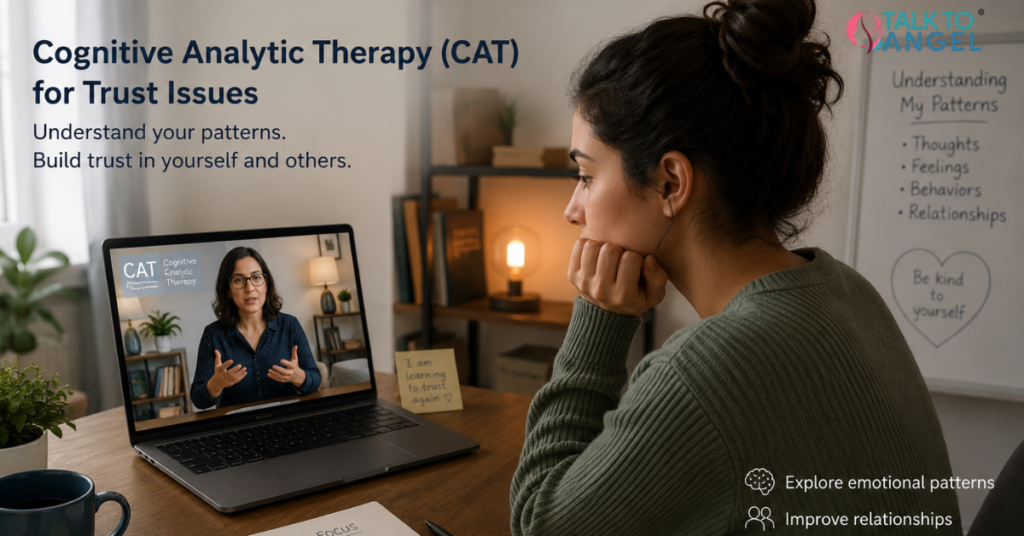
Difficulty Trusting People? Online Cognitive Analytic Therapy Offers Support
Trust is one of the most important foundations of healthy relationships, yet for many people, it feels difficult, uncomfortable, or even unsafe. You may want close relationships but still find yourself doubting others, overthinking conversations, expecting betrayal, or emotionally pulling away when people get too close. Difficulty trusting others can affect friendships, romantic relationships, family bonds, and even workplace interactions. Over time, these emotional struggles may leave you feeling isolated, anxious, and emotionally exhausted.
This is where Cognitive Analytic Therapy (CAT) can provide meaningful support. CAT focuses on understanding emotional patterns, relationship difficulties, and the experiences that shape the way we connect with others. Through online CAT therapy, individuals can explore the roots of trust issues while learning healthier ways to build emotional security and stronger relationships.
Why Do I Find It So Hard to Trust People Even When They Are Kind?
Many people with trust issues genuinely want connection but struggle to feel emotionally safe with others. Even when someone behaves kindly, supportive thoughts may quickly turn into fear, doubt, or suspicion. You may constantly question people’s intentions, expect disappointment, or feel emotionally guarded.
Difficulty trusting others often develops gradually through repeated emotional experiences. Childhood criticism, inconsistent parenting, emotional neglect, betrayal, bullying, toxic relationships, or abandonment can shape how the brain responds to closeness and vulnerability. If trust was repeatedly broken in the past, your mind may begin to treat emotional connection as risky.
People experiencing fear of trusting others may notice patterns such as:
- Overthinking conversations and interactions
- Assuming others will eventually hurt or reject them
- Difficulty opening up emotionally
- Constant need for reassurance
- Avoiding emotional closeness
- Feeling anxious in relationships
- Becoming defensive during conflict
- Struggling with jealousy or insecurity
These emotional reactions are not simply personality flaws. They are often learned emotional survival responses developed over time.
Is Fear of Trusting Others Connected to Past Emotional Trauma?
Yes, fear of trusting others is often connected to unresolved emotional experiences and past trauma. Emotional trauma does not always come from one major event. Sometimes repeated emotional invalidation, criticism, rejection, neglect, or unstable relationships can deeply affect a person’s sense of security with others.
For example, a child who grows up in an unpredictable environment may learn to stay emotionally alert all the time. Similarly, someone who experienced betrayal in past relationships may come to expect future relationships to end the same way.
Over time, these emotional patterns become automatic. Even safe relationships may trigger fear, anxiety, or emotional withdrawal because the mind is trying to protect itself from being hurt again.
This is why therapy for attachment problems can be valuable. Attachment difficulties often affect how individuals experience closeness, emotional dependence, and trust in relationships. Cognitive Analytic Therapy helps individuals recognise these patterns rather than feel controlled by them.
How Does Cognitive Analytic Therapy Help With Trust Issues?
Cognitive Analytic Therapy for trust issues focuses on understanding the emotional and relational patterns that influence behaviour. Rather than only focusing on symptoms, Cognitive Analytic Therapy explores how past experiences shape present relationships.
During therapy, individuals work with a therapist to identify recurring emotional cycles, coping strategies, and interpersonal behaviours that may be affecting their relationships. For example, someone may fear rejection, become emotionally distant to protect themselves, and then feel lonely when relationships weaken. Cognitive Analytic Therapy helps individuals recognise these cycles and gradually replace them with healthier emotional responses.
Some ways Cognitive Analytic Therapy (CAT) helps include:
Identifying Relationship Patterns
Cognitive Analytic Therapy helps individuals understand repeated emotional patterns that appear across different relationships.
- Improving Emotional Awareness
People often react emotionally without understanding why. Cognitive Analytic Therapy encourages greater self-awareness and emotional understanding. - Building Healthier Communication: Cognitive Analytic Therapy can help people improve their communication, emotional expression, and conflict resolution abilities.
- Understanding Attachment Difficulties: Therapy for attachment problems helps individuals explore fears of abandonment, rejection, or emotional closeness.
- Reducing Fear and Anxiety in Relationships: By understanding emotional triggers, people can begin responding to relationships with greater confidence and emotional stability.
- Helping People Build Trust in Relationships: Therapy supports individuals in developing healthier boundaries, emotional openness, and balanced expectations.
Can Online CAT Therapy Be Effective for Trust Issues?
Yes, Online CAT therapy can be highly effective for people struggling with relationship anxiety, emotional insecurity, and trust-related concerns. Online therapy provides accessibility, anonymity, and flexibility, allowing many people to get help safely from home.
Trust issues can make opening up emotionally feel intimidating. Online Cognitive Analytic Therapy sometimes helps individuals feel safer during the early stages of treatment because they are in a familiar environment.
Many people choose to trust issues therapy online because it allows them to:
- Access therapy from any location
- Schedule sessions more flexibly
- Receive support privately from home
- Continue therapy consistently despite busy schedules
- Feel more comfortable discussing emotional concerns
With regular sessions and a supportive therapeutic relationship, online therapy can help individuals gain emotional clarity and gradually feel more secure in relationships.
What Are the Signs That You May Need Interpersonal Relationship Support?
Many people normalise trust struggles for years without realising how deeply these patterns affect their emotional wellbeing. Seeking interpersonal relationship support may help if you frequently experience:
- Fear of emotional closeness
- Difficulty depending on others
- Constant suspicion or overthinking
- Emotional withdrawal during conflict
- Fear of betrayal or abandonment
- Difficulty maintaining relationships
- Intense insecurity in romantic relationships
- Trouble expressing emotions honestly
Ignoring these emotional patterns may increase loneliness, anxiety, stress, and relationship dissatisfaction over time. Cognitive Analytic Therapy can help individuals better understand themselves while developing healthier emotional connections.
How Can You Start Building Trust in Relationships Again?
Learning to build trust in relationships is often a gradual process. Trust does not usually return instantly, especially after emotional pain or betrayal. However, emotional healing becomes possible when individuals begin understanding the origins of their fears instead of blaming themselves.
Some helpful steps may include:
- Recognising unhealthy relationship patterns
- Practising honest communication
- Developing emotional boundaries
- Learning emotional regulation skills
- Challenging assumptions about rejection
- Seeking therapy for deeper emotional understanding
Professional support can make this process feel less overwhelming. Through structured therapeutic guidance, individuals can learn healthier ways of relating to others while improving emotional confidence.
Where Can You Find Affordable Online Therapy for Trust Issues?
Many individuals delay therapy because they worry about accessibility or cost. However, it is now easier to find an affordable therapist online through trusted mental health platforms.
TalktoAngel offers online counselling and emotional wellness support for individuals experiencing relationship difficulties, emotional distress, anxiety, and trust-related concerns. With access to qualified mental health professionals, individuals can receive support from the comfort of their home.
As one of the emerging names among the best mental health platforms 2026, TalktoAngel provides accessible online therapy options that focus on emotional wellbeing, relationship health, and personal growth.
Final Thoughts
Struggling with trust does not mean you are incapable of healthy relationships. Often, these emotional reactions are connected to past experiences, emotional wounds, and learned patterns developed over time. Understanding these patterns is an important step toward emotional healing.
Cognitive Analytic Therapy (CAT) offers a supportive and structured approach for individuals dealing with fear of trusting others, attachment difficulties, and relationship anxiety. Through greater emotional awareness and healthier coping strategies, people can begin creating stronger, safer, and more meaningful relationships.
With the growing accessibility of Online CAT therapy, professional emotional support is now more convenient and approachable for individuals looking to improve relationship trust and emotional wellbeing.