
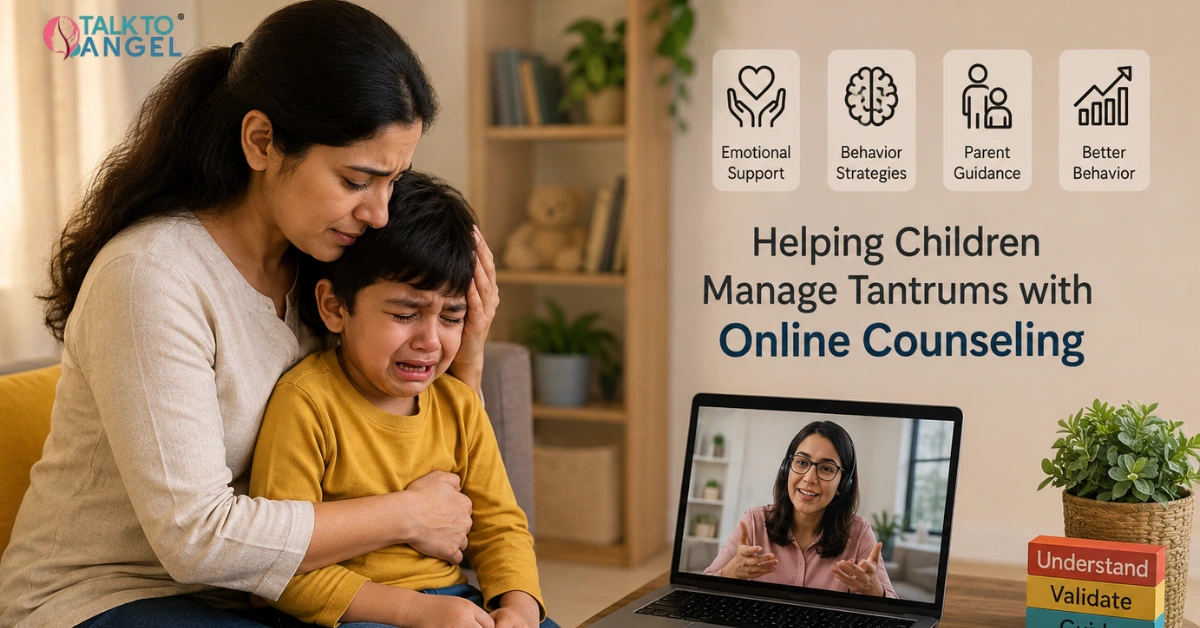
Every parent knows that moment: your child is screaming on the floor of the grocery store, and every eye in the aisle seems to be on you. Temper tantrums in children are normal, but when they happen often or feel impossible to manage, it can leave parents exhausted and unsure what to do next. The good news is support doesn’t have to mean waiting weeks for an in-person appointment. Online counseling for child tantrums now makes expert guidance available from your living room, at a time that fits your family’s schedule.
Why Does My Child Have Frequent Tantrums?
Tantrums aren’t bad behavior as many parents assume. They’re usually a sign that a child’s emotional brain has taken over before their thinking brain can catch up.
Common triggers include:
- Hunger, tiredness, or overstimulation — a full sensory system has nowhere left to go
- Difficulty expressing needs — especially in toddlers with limited vocabulary
- Testing boundaries — a normal part of learning what’s allowed
- Big transitions — moving from playtime to bedtime, or leaving somewhere fun
- Underlying stress at home — a new sibling, a move, or parental conflict
Recognizing the trigger doesn’t excuse the outburst, but it helps you respond with patience instead of frustration.
Is This Just a Phase or a Sign of Something More?
For most children, frequent tantrums peak between ages 2 and 4 and gradually fade as language and self-control develop. If tantrums are intense, prolonged, or happening well past age 5–6, it may point to an underlying issue with emotional regulation in children that benefits from professional input.
How Can I Calm My Child During a Tantrum?
In the middle of a meltdown, your goal isn’t to reason — it’s to help your child feel safe again. Here’s what actually works:
- Stay calm yourself. Children mirror adult energy; a steady voice signals safety.
- Get down to their eye level. This feels less confrontational than towering over them.
- Name the feeling. Try, “You’re really frustrated right now.” Labeling emotions helps a child feel understood.
- Offer a simple choice. “Do you want to sit on the couch or in your room?” restores a sense of control.
- Wait it out. Lecturing mid-tantrum rarely works — the emotional brain isn’t listening yet.
Once your child has calmed down, that’s the moment to talk about what happened and what could be different next time.
What Should Parents Avoid Doing During a Child’s Tantrum?
Well-meaning reactions can sometimes make things worse. Watch out for these common mistakes:
- Yelling back — this escalates rather than de-escalates
- Giving in immediately — this can teach a child that tantrums get results
- Public shaming — damages trust without teaching any real skill
- Ignoring safety — hitting, throwing, or self-harm still need calm intervention, not just patience
The aim is firm, warm boundaries — not punishment, and not permissiveness either.
How Can I Teach My Child to Manage Anger and Frustration?
Long-term change comes from teaching skills between tantrums, not just managing the moment itself. This is where consistent strategies for managing child tantrums make a real difference.
- Practice “calm down” routines during peaceful moments, like deep breathing or counting to five
- Use a feelings chart so younger children can point to how they feel
- Praise small wins, like using words instead of a meltdown
- Keep a predictable routine — tired or rushed children have far less patience
- Model your own regulation — narrate your calm-down process out loud
These small, repeated habits build the emotional skills that prevent outbursts before they start.
Can Online Counseling Help a Child With Frequent Tantrums?
Yes — and for many families, it’s more practical than traditional therapy. Online counseling connects you with a licensed child psychologist without the stress of travel, waiting rooms, or rearranging your week. Addressing frequent tantrums early also matters for the long run — unresolved emotional patterns from childhood can carry into adulthood, as explained in How Childhood Trauma Leads to Adult Anger?
A counselor can help with:
- Identifying the specific triggers behind your child’s behavior problems
- Teaching age-appropriate coping tools for emotional outbursts in children
- Guiding parents through consistent, effective responses at home
- Addressing any underlying anxiety, sensory issues, or developmental concerns
- Providing a judgment-free space for parents to ask questions honestly
Sessions run through secure video calls, and many platforms also offer messaging support between appointments — useful during a hard week.
Can Parents Learn Better Tantrum-Management Strategies Through Counseling?
Absolutely. A large part of child counseling is actually parent coaching. A psychologist works directly with parents to build parenting help for tantrum strategies tailored to your child’s temperament, rather than generic advice that may not fit your family.
When Do Child Tantrums Become a Cause for Concern?
Occasional meltdowns are part of childhood. But it may be time to seek professional support if you notice:
- Tantrums lasting more than 15–20 minutes regularly
- Frequent aggression toward self, others, or property
- Tantrums continuing well beyond the preschool years
- Your child struggling to calm down even with support
- Tantrums affecting school, friendships, or family relationships
If any of these sound familiar, it’s worth booking a consultation rather than waiting to see if things improve on their own.
Frequently Asked Questions About Child Tantrums and Online Counseling
Is online counseling effective for managing child tantrums?
Yes. Online counseling allows a licensed child psychologist to assess triggers, teach emotional regulation techniques, and guide parents through consistent strategies through secure video sessions. Platforms like TalktoAngel make this support accessible without long waits or travel.
At what age should I be concerned about my child’s tantrums?
Tantrums are common between ages 2 and 4, but if they continue intensely past age 5–6, involve aggression, or disrupt daily life, it’s time to consult a professional. TalktoAngel’s child psychologists can help determine whether it’s a typical phase or something needing targeted support.
How do I book a child psychologist consultation online?
Book directly through TalktoAngel, India’s trusted online mental health platform. Choose a specialist experienced in child behavior, select a convenient time slot, and connect via video call — no referrals or in-person visits required.
Can online counseling help parents, not just children?
Yes. Most sessions on TalktoAngel include parenting help for tantrums, where the psychologist coaches parents on calm, consistent responses tailored to their child’s specific triggers rather than one-size-fits-all advice.
Book a Child Psychologist Consultation Online
You don’t have to manage this alone, and you don’t have to guess your way through it either. If your child’s tantrums are becoming harder to handle, speaking with a qualified professional can bring clarity, practical tools, and real relief — for both you and your child.
TalktoAngel, the best online mental health platform in India, connects parents with experienced child psychologists who specialize in behavior and emotional regulation. Whether you need a one-time consultation or ongoing support, help is just a video call away.
Book your online consultation with a child psychologist today and take the first step toward a calmer home.