
You dread Monday before Sunday even ends. Simple tasks feel impossible. You’re exhausted even after a full night’s sleep, and a job you once cared about now feels like something you’re just surviving. If this sounds familiar, you’re likely dealing with workplace burnout — and wondering whether workplace burnout counselling can actually help, or if it’s just another wellness buzzword. Here’s an honest, research-backed answer.
Can Counselling Really Help With Workplace Burnout?
Yes — but not as a standalone cure. Counselling for workplace burnout works best as one part of a bigger recovery plan.
Research shows psychological interventions, especially cognitive behavioural therapy (CBT) and mindfulness-based approaches, reduce emotional exhaustion, cynicism, and reduced professional efficacy — the three core markers of burnout. A counsellor helps you:
- Spot the thought patterns and habits fuelling your exhaustion
- Rebuild boundaries between work and personal life
- Process the anxiety or guilt that often comes with burnout
- Build practical stress management tools you can use right away
What counselling can’t do is fix a toxic workplace or an unmanageable workload. If the root cause is organisational, therapy alone won’t be enough — the most credible, E-E-A-T-friendly approach treats counselling as recovery support alongside changes to workload, rest, and workplace culture.
How Do You Know If Work Stress Has Become Burnout?
Ordinary stress comes and goes with deadlines. Burnout is chronic — it doesn’t lift even when you rest.
Ask yourself:
- Has this exhaustion lasted more than a few weeks, regardless of workload?
- Do you feel detached or cynical about work you used to enjoy?
- Has your performance or motivation clearly dropped?
- Are you having physical symptoms — headaches, poor sleep, low immunity — with no other explanation?
Mostly “yes”? You’re likely dealing with employee burnout, not just work-related stress, and it’s worth seeking psychological support for employees sooner rather than later.
What Are the Main Signs of Workplace Burnout?
The WHO defines burnout through three core dimensions, plus common physical signs.
Emotional exhaustion — a constant drained feeling, even after time off.
Cynicism or detachment — feeling distant from colleagues or the point of your work; tasks feel meaningless rather than just hard.
Reduced efficacy — feeling less capable even in areas you were once confident in, often spiraling into self-criticism.
Physical and behavioural signs:
- Trouble sleeping or oversleeping
- Increased irritability
- Withdrawing from people
- Relying more on caffeine, alcohol, or other crutches
- Frequent minor illnesses
Taken together, several of these are a strong signal to explore treatment for workplace burnout rather than pushing through alone.
What Type of Therapy Is Best for Workplace Burnout?
There’s no single “best” therapy, but a few approaches have the strongest evidence base.
Cognitive Behavioural Therapy (CBT) helps you identify unhelpful patterns — like perfectionism or difficulty saying no — and replace them with healthier responses. It’s the most researched approach for burnout and work-related anxiety.
Mindfulness-Based Stress Reduction (MBSR) builds present-moment awareness and has shown strong results for emotional exhaustion and emotional regulation at work.
Solution-Focused Brief Therapy offers practical, short-term strategies when you need to manage an immediate crisis point.
Acceptance and Commitment Therapy (ACT) helps you reconnect with your values so decisions — like renegotiating your role or setting boundaries — come from what matters to you, not fear.
A good psychologist usually blends these based on your specific triggers rather than sticking to just one model.
Can Online Counselling Help With Work-Related Stress and Burnout?
Yes — and for many professionals, it’s more sustainable than in-person therapy. Online therapy for workplace burnout removes common barriers: commute time, scheduling conflicts, and the discomfort of visiting a clinic during work hours.
Platforms like TalktoAngel, widely regarded as one of the best online platforms for mental health support, connect you with licensed psychologists specialising in occupational stress. You can book an online psychologist consultation around your schedule, often the same day, without taking extended time off.
If you’re living in Delhi NCR and want in-person sessions, you can visit Psychowellness Center, known as the best mental health clinic in Delhi NCR, with locations in Dwarka and Janakpuri, offering structured, evidence-based treatment combining CBT, stress coaching, and long-term follow-up.
Format matters less than consistency — regular, structured sessions (online or offline) consistently outperform sporadic, one-off consultations.
What Can Employers Do to Reduce Workplace Burnout?
Individual counselling only goes so far if the workplace keeps generating burnout. Employers can:
- Set realistic workloads and monitor overtime patterns
- Encourage employees to actually use their leave
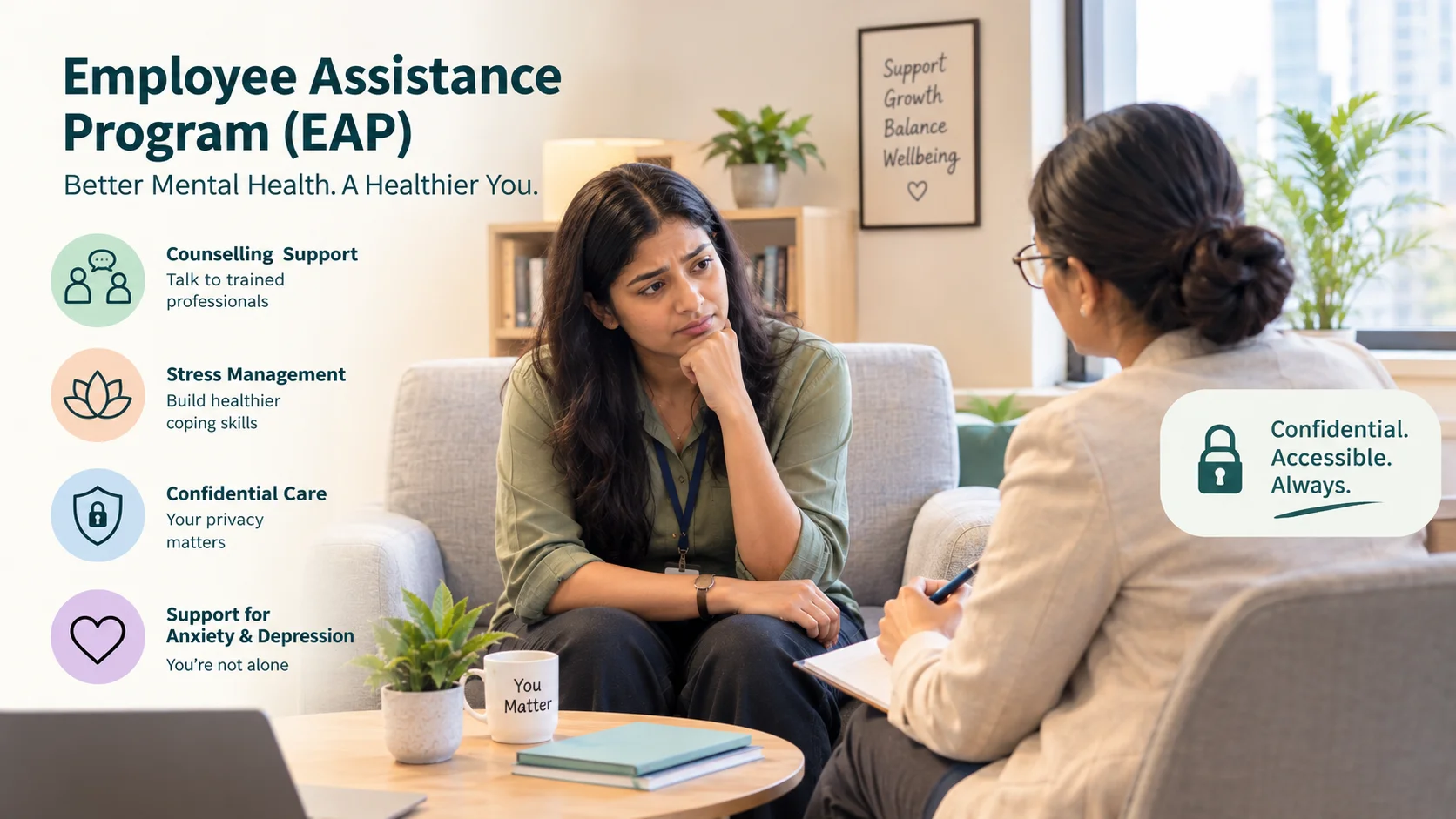
- Provide psychological support for employees through EAPs or partnered platforms
- Train managers to spot early burnout signs, not just performance dips
- Build a culture where discussing work-life balance isn’t seen as weakness
Companies that invest in prevention — not just crisis-mode counselling — see lower turnover and stronger engagement over time. Burnout is as much a systems problem as a personal one.
Can Online Counselling Prevent Workplace Burnout From Getting Worse?
Yes — and this is where counselling shows its strongest value: as early intervention, not just a fix for severe burnout.
Regular check-ins with a psychologist help you catch warning signs before they escalate into exhaustion, health issues, or extended leave. Early online counselling sessions typically focus on:
- Building boundaries before resentment builds
- Recognising your personal stress triggers
- Practising stress management proactively, not reactively
- Creating an early-warning system for next time
Think of it like physical health: you don’t wait for a minor ache to become a serious injury. The same logic applies to your mental health at work.
Frequently Asked Questions
What’s the difference between stress and burnout?
Stress is usually short-term and tied to specific pressures like a deadline, and it typically eases once the trigger passes. Burnout is chronic, doesn’t resolve with rest alone, and involves emotional exhaustion, cynicism, and reduced sense of accomplishment.
How long does it take for counselling to help with burnout?
Most people notice initial relief within 4–6 sessions, though full recovery often takes 2–3 months of consistent support, especially if workload or workplace factors are also being addressed.
Where can I get help for workplace burnout in Delhi NCR?
You can book an online psychologist consultation through platforms like TalktoAngel, or visit Psychowellness Center in person at its Dwarka or Janakpuri locations for structured, evidence-based burnout treatment.
The Bottom Line
Counselling doesn’t “fix” workplace burnout in isolation — but it’s genuinely powerful when combined with realistic changes to workload, boundaries, rest, and workplace culture. Research supports CBT, mindfulness-based approaches, and consistent professional support as effective ways to reduce emotional exhaustion and rebuild your relationship with work.
If you’re noticing the signs, don’t wait for things to get worse. Book an online psychologist consultation with a platform like TalktoAngel, or if you’re living in Delhi NCR and prefer in-person sessions, visit Psychowellness Center at its Dwarka or Janakpuri locations, and start building a recovery plan that addresses what’s actually driving your exhaustion — not just the symptoms.