

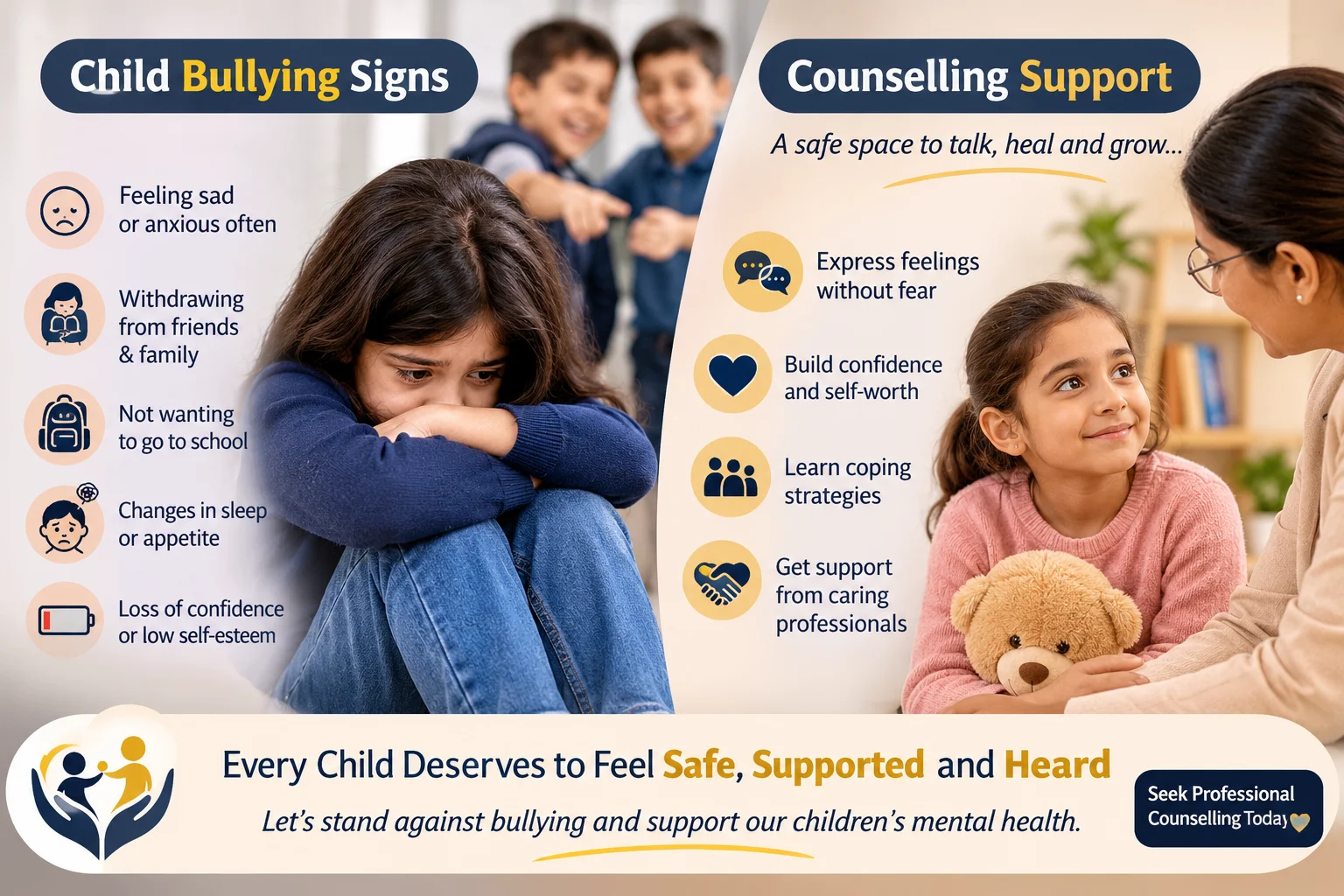
Has your once-chatty child suddenly gone quiet at dinner, or started dodging school and flinching at their phone buzzing? It’s easy to write it off as “just a phase,” but it’s often the first clue of something deeper. Child anxiety due to bullying rarely announces itself loudly — it shows up in small, sustained changes in mood and behavior. This blog walks through the real signs of bullying in children, why children’s withdrawn behavior happens, and how bullying counselling for children can help them feel safe and like themselves again.
Why Is My Child Suddenly Withdrawn or Quiet?
A sudden personality shift is one of the clearest red flags parents overlook. Kids who are being bullied often pull away from conversations, friends, and activities they once loved — not because they’ve lost interest, but because they’re overwhelmed.
Common triggers behind this child’s withdrawn behavior include:
- Fear of being teased again if they talk about school
- Shame about not being able to “handle it” themselves
- Worry that telling a parent will make things worse
- Emotional exhaustion from constantly being on guard
If your child has gone from animated to monosyllabic over a few weeks, it’s worth gently opening the door to a conversation rather than waiting for them to bring it up first. Learning why does my child suddenly avoid friends is often the first step toward understanding what’s really going on beneath the silence.
What Are the Warning Signs That Your Child Is Being Bullied?
Children rarely say, “I’m being bullied.” Instead, they show it. Watch for these signs of bullying in children:
- Physical complaints — frequent headaches, stomachaches, or trouble sleeping with no medical cause
- Unexplained injuries or damaged belongings
- Sudden drop in grades or loss of interest in schoolwork
- Avoiding school, the bus, or specific social situations
- Changes in eating habits, either skipping meals or stress-eating
- Fewer friends or a sudden end to a close friendship
- Lower self-esteem, self-critical talk, or feeling “not good enough”
No single sign confirms bullying, but a cluster of these changes appearing together is a strong signal to look closer. Parents researching the early warning signs of childhood anxiety disorder will notice significant overlap with these bullying indicators, which is why professional evaluation often helps clarify what’s driving the change.
How Does Bullying Affect a Child’s Mental Health?
Bullying isn’t a passing social hiccup — it directly shapes how a child’s brain and body respond to stress. Repeated exposure to bullying keeps a child’s nervous system in a near-constant state of alert, which fuels anxiety in children, with symptoms like racing thoughts, irritability, restlessness, and difficulty concentrating.
Over time, this chronic stress can also affect:
- Sleep quality — nightmares, trouble falling asleep, bedwetting in younger children
- Self-worth — internalising the bullying as a reflection of their value
- Trust — difficulty forming new friendships even after the bullying stops
- Physical health — weakened immunity, frequent “sick days” that are stress-related
The earlier these patterns are addressed, the easier it is to prevent them from hardening into long-term struggles. This is also where parents start searching for the psychological effects of bullying on child development, recognising that unmanaged stress in childhood can shape how a person copes with adversity for years to come.
Why Does My Child Refuse to Go to School?
School refusal is one of the most telling child behavior change after bullying. For a bullied child, school isn’t just a place of learning — it’s the site of their distress. Mornings may come with meltdowns, stomachaches, or desperate excuses to stay home.
This isn’t defiance; it’s avoidance rooted in fear. Punishing a child for refusing school often backfires, deepening shame and secrecy. Instead, calmly ask open-ended questions: “What’s the hardest part of your day right now?” This approach invites honesty without pressure, and it’s a practical first step in how to support a child dealing with school-related anxiety.
How Can I Tell the Difference Between Shyness and Bullying Trauma?
Many parents wonder if their child is simply introverted or genuinely struggling. A few distinctions can help:
- Shy children are usually comfortable once they’re in a familiar setting; bullied children stay anxious even around people they know well.
- Shyness tends to be a stable trait over time; a bullying-related shift happens suddenly and gets progressively worse.
- Shy kids rarely show physical symptoms like stomachaches before school; bullied children often do.
- Shy children still want to go to places they enjoy; bullied children start avoiding spaces they used to love.
If the change feels abrupt and is paired with physical or emotional distress, it’s likely more than ordinary shyness. Understanding the difference between social anxiety and bullying trauma in kids can help parents respond with the right kind of support instead of assuming it will simply pass with time.
Can Bullying Cause Long-Term Anxiety or Depression in Children?
Yes — research consistently links chronic childhood bullying to a higher risk of long-term anxiety, depression, and even difficulties in adult relationships if left unaddressed. The impact isn’t limited to the bullying period itself; unresolved bullying trauma can resurface in the teenage and adult years as social anxiety, perfectionism, or difficulty trusting others.
This is exactly why early, professional support matters. Bullying counselling for children interrupts this trajectory before it becomes a lasting pattern, and it directly addresses how childhood bullying affects mental health in adulthood when left untreated.
How Does Counselling Help a Bullied or Anxious Child Heal?
Child-focused counselling creates a safe, non-judgmental space where kids can process what happened without fear of blame. A trained child psychologist typically works across a few key areas:
- Building resilience in bullied kids through confidence-building exercises and coping skills
- Emotional regulation in children — teaching techniques to manage fear, anger, and sadness in healthy ways
- Helping the child reframe negative self-beliefs (“I’m weak” becomes “I went through something hard, and I’m getting stronger”)
- Role-playing assertive responses for future social situations
- Involving parents to strengthen parent-child communication at home
Therapists often use play therapy, art-based techniques, or cognitive behavioral approaches depending on the child’s age, making the process feel supportive rather than clinical. Families often find this is exactly how child therapy helps kids build confidence after bullying, giving them tools they’ll carry well beyond the counselling room.
How Does Cyberbullying Impact a Child’s Emotional Well-Being?
Bullying no longer stops at the school gate. Cyberbullying follows children home through messages, comments, and group chats, making it even harder to switch off and feel safe. Because it’s constant and often anonymous, it can intensify feelings of helplessness and isolation.
Signs to watch for include:
- Anxiety or distress after using their phone or laptop
- Secretive behavior around devices
- Reluctance to attend online classes or group chats
- Sudden deactivation of social media accounts
Counselling helps children develop healthy digital boundaries alongside emotional coping strategies, so the online world feels manageable again. Many parents specifically look for how to help a child cope with cyberbullying and online harassment, since the strategies differ slightly from those used for in-person bullying.
What Does a Child Counselling Session for Bullying Look Like?
Parents are often unsure what to expect, which can make seeking help feel intimidating. In reality, sessions are designed to feel natural and age-appropriate:
- Building trust — the first few sessions focus on comfort, not confrontation
- Understanding the child’s experience — through conversation, drawing, or play, depending on age
- Skill-building — breathing techniques, assertiveness practice, and confidence exercises
- Parent check-ins — guidance for parents to reinforce progress at home
- Tracking progress — gradual reduction in anxiety symptoms and improved school engagement
Many families also look for affordable child counselling services that offer flexible, online formats, making consistent support realistic even with busy schedules. This is also a common entry point for parents asking what to expect in the first therapy session for a bullied child, since knowing the process in advance eases a lot of first-time anxiety for both the child and the parent.
Helping Your Child Feel Safe Again
If your child has become withdrawn, anxious, or suddenly resistant to school, trust that instinct — it’s usually trying to tell you something important. Bullying can shake a child’s sense of safety, but with the right support, that sense of safety can be rebuilt. Early conversations, patience, and professional guidance make all the difference between a passing wound and a lasting one. Whether you’re looking for online child counselling for bullying and anxiety or simply want to understand when to seek professional help for a bullied child, the right support can turn this around faster than you’d expect.
If you’re noticing these signs in your child, don’t wait for things to escalate. TalktoAngel connects families with experienced child psychologists who specialise in bullying, anxiety, and building resilience in bullied kids — through safe, confidential, and affordable child counselling services. Reach out to TalktoAngel today and give your child the support they need to feel like themselves again.