

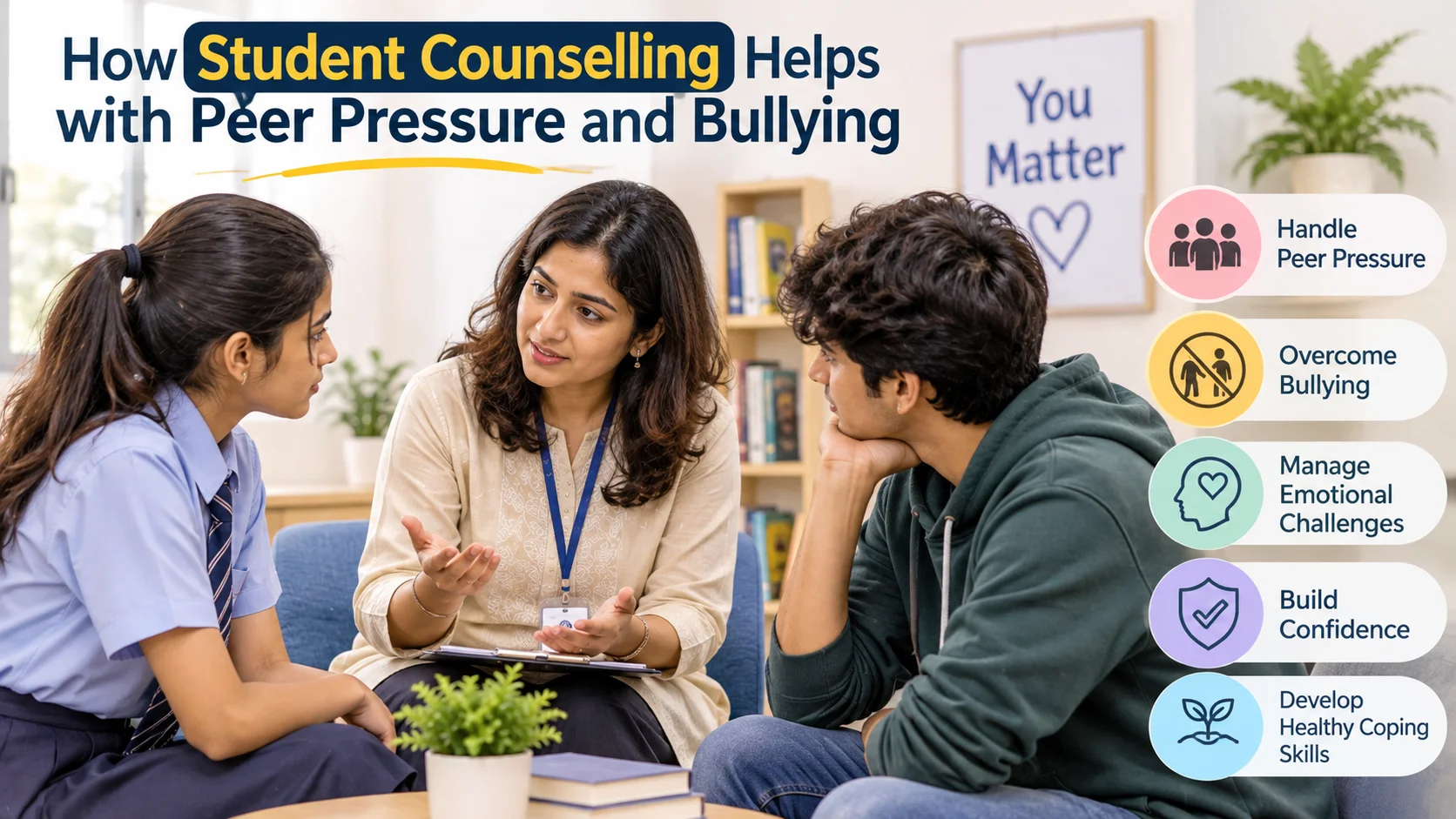
Walking into school every day shouldn’t feel like walking into a battlefield. Yet for millions of students, dealing with peer pressure and bullying is a daily reality that quietly chips away at their confidence, grades, and sense of safety. The good news is that students don’t have to navigate this alone. Student counselling for peer pressure and bullying gives young people practical tools, a safe space to process their feelings, and an adult who actually listens. In this article, we’ll break down exactly how counselling helps, how to help a child dealing with peer pressure, and what parents, teachers, and students can do next.
What Is Peer Pressure and How Does It Affect Students?
Peer pressure is the influence classmates or friend groups exert on a student’s choices, whether that’s how they dress, what they post online, or whether they try a substance to “fit in.” It isn’t always negative, but unchecked, it can push students toward decisions that conflict with their values.
Common effects include:
- Anxiety about being excluded or judged
- Risky behaviour just to gain social approval
- A fading sense of personal identity
- Academic decline from distraction or stress
Peer pressure management counselling starts with helping a student recognise when they’re being influenced and giving them the confidence to make independent choices.
Why Are Teenagers Especially Vulnerable?
Adolescence is a period of intense identity formation. Teens are biologically wired to seek belonging, which makes counselling for teenage students so valuable — it meets them exactly where this vulnerability is highest, before poor patterns set in. This is also why online counselling for anxiety in students has grown so popular; it offers a private, judgment-free space for teens who aren’t ready to talk face-to-face.
How Does Bullying Impact a Student’s Mental Health?
Bullying, whether physical, verbal, relational, or online, is one of the most damaging experiences a student can face. It’s linked to depression, social withdrawal, sleep problems, and in severe cases, suicidal thoughts.
Students who are bullied often internalise the experience, believing something is wrong with them rather than recognising the behaviour as the bully’s problem. This is where counselling for bullying in students becomes essential — it helps separate self-worth from the bullying experience and starts the healing process. For students who’ve withdrawn from in-person support, online counselling for bullied teenagers can be an easier first step toward opening up.
What Are the Signs of Bullying in Teenagers Parents Should Watch For?
Parents and teachers should watch for:
- Sudden reluctance to attend school
- Unexplained injuries, lost belongings, or damaged items
- Drop in grades or loss of interest in activities they once enjoyed
- Changes in eating or sleeping habits
- Increased secrecy around phone or social media use
- Low self-esteem or frequent self-critical comments
Spotting these signs of bullying in teenagers early makes a significant difference in how quickly a student recovers. If you notice several of these at once, it’s worth learning how to talk to your child about bullying before the situation escalates further.
How Does Counselling Help Students Cope with Peer Pressure?
A trained counsellor doesn’t just tell a student to “say no.” They work through real scenarios the student is facing and build a personalised toolkit, which usually includes:
- Assertiveness training — practising clear, confident ways to decline pressure without losing friendships
- Values clarification — helping students identify what matters to them so choices feel grounded rather than reactive
- Role-playing exercises — rehearsing tricky social situations in a low-stakes setting
- Self-esteem building — reducing the need for external validation that makes peer pressure so powerful in the first place
This is the foundation of effective student mental health support and reliable coping skills for peer pressure in school: equipping students with skills they can use long after the counselling session ends. For students whose self-worth has taken a hit, therapy for low self-esteem in students often runs alongside these sessions to rebuild confidence from the inside out.
What Role Do Counsellors Play in Bullying Prevention?
Counsellors aren’t just there to react after bullying happens — they actively work to prevent it. Their role typically spans three levels:
Individual Support
One-on-one sessions help both the student being bullied and, where appropriate, the student doing the bullying understand the root causes of the behaviour, whether that’s insecurity, past trauma, or learned aggression.
Group and Classroom Interventions
Counsellors often run workshops on empathy, respect, and digital citizenship, helping shift the overall culture of a classroom or campus before incidents even occur.
Policy and Reporting Systems
Many counsellors collaborate with school administration to create clear, student-friendly reporting channels, so students know exactly how and where to seek help without fear of retaliation.
How Can Campus Wellness Programs Build Confidence in Bullied Students?
Structured programs go beyond individual sessions. TalktoAngel’s Campus wellness program is designed to give schools access to licensed counsellors who work directly with students, teachers, and parents to address bullying and peer pressure holistically.
These programs typically include:
- Confidential one-on-one counselling sessions
- Peer support groups where students share experiences safely
- Resilience-building workshops focused on coping strategies
- Teacher training to identify and respond to bullying effectively
- Parent webinars on recognising warning signs at home
The combination of individual care and systemic support is what makes school mental health programs and mental health support for high school students genuinely effective, rather than just a checkbox exercise. Many of these programs also focus on how to build self-confidence in teenagers, since confident students are far less likely to become repeat targets.
What Techniques Do Counsellors Use to Address Bullying?
Counsellors draw from several evidence-based approaches depending on the student’s needs:
- Cognitive Behavioural Therapy (CBT) to challenge negative self-talk caused by bullying
- Trauma-informed care for students who have experienced repeated or severe bullying
- Social skills training to help students rebuild trust in peer relationships
- Mindfulness techniques to manage the anxiety that often follows bullying incidents
- Restorative practices that, where safe and appropriate, help repair relationships between those involved
Each technique is chosen carefully, since the goal is always the student’s emotional safety first. When bullying overlaps with ongoing emotional difficulties, a child psychologist for bullying and anxiety can assess whether additional, specialised support is needed.
What Is the Connection Between Peer Pressure and Anxiety?
Peer pressure and anxiety often feed into each other. The fear of social rejection can trigger anticipatory anxiety before a student even enters a pressured situation, and giving in to pressure against one’s values can create guilt and shame afterward.
Counselling interventions typically target this cycle directly by:
- Teaching grounding techniques to use in the moment
- Reframing rejection as survivable rather than catastrophic
- Strengthening a support network outside the pressuring peer group
Over time, this reduces both the anxiety and the power the peer group holds over the student’s decisions.
What Are the Long-Term Benefits of Student Counselling?
The impact of building resilience in students through counselling extends well beyond the school years. Students who receive consistent support tend to show:
- Stronger emotional regulation in adulthood
- Healthier relationship patterns, since they’ve learned to set boundaries early
- Improved academic and career outcomes due to better focus and self-confidence
- A greater willingness to seek help for mental health concerns later in life
In short, counselling doesn’t just solve the immediate problem — it shapes how a student handles conflict and pressure for the rest of their life.
Final Thoughts: Helping Students Build Lasting Resilience
Peer pressure and bullying aren’t problems students should have to push through alone, and they aren’t signs of weakness when a student struggles with them. With the right support, students can develop the confidence, coping skills, and self-worth needed to navigate school life and beyond.
If you’re a parent, educator, or student looking for professional guidance, TalktoAngel connects you with licensed counsellors experienced in adolescent mental health, peer pressure management, and bullying recovery. Reach out today to explore how campus wellness programs and one-on-one counselling can make a real difference.