

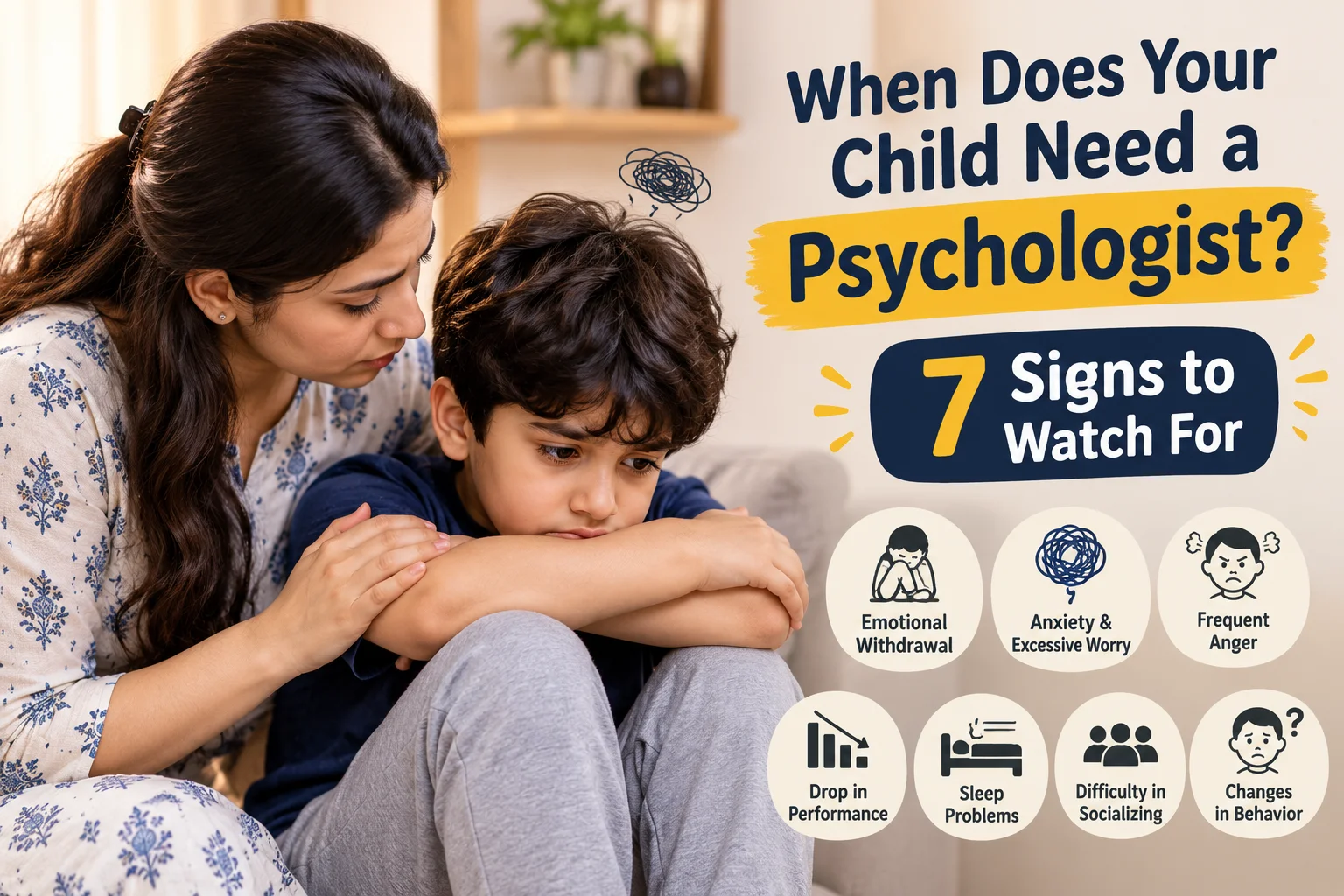
Every parent has watched their child go through a rough patch and wondered: is this normal, or is something deeper going on? Childhood brings tantrums, mood swings, and the occasional bad week at school—so it’s not always easy to tell when a child needs a psychologist. This guide walks you through the real signs your child needs a psychologist, how child behavioral problems differ from everyday growing pains, how to tell if your child needs therapy, and what to do if you’re worried. You don’t need to have all the answers today — just the willingness to pay attention.
What Does a Child Psychologist Actually Do?
A child psychologist specializes in how children think, feel, and behave at different stages of growth. They understand child development stages and use that lens to figure out whether a behavior fits a child’s age or signals something that needs support.
Child psychologists use age-appropriate methods rather than simply talking things through, including:
- Play therapy, where younger children express feelings through toys, art, or storytelling instead of words
- Cognitive behavioral therapy for kids, which helps older children identify unhelpful thought patterns and build coping skills
- Parent guidance sessions, so caregivers learn how to respond consistently at home
- Structured assessments for concerns like ADHD in children or autism spectrum signs
Unlike a one-off pep talk, this is a process. A psychologist builds a relationship with your child over several sessions, which is often what makes lasting change possible — and it’s part of why the role of a child psychologist in emotional development goes well beyond a single conversation.
How Do You Know If Your Child’s Behavior Is Normal or a Warning Sign?
Kids are moody, forgetful, clingy, and occasionally dramatic — that’s just childhood. The difference between a phase and a problem usually comes down to three things: intensity, duration, and impact.
Ask yourself:
- Has this behavior lasted more than a few weeks, not just a few bad days?
- Is it getting worse instead of better?
- Is it affecting school, friendships, sleep, or family life?
If you’re answering “yes” to most of these, it’s worth looking closer. Learning how to tell if your child’s behavior is normal or a red flag comes down to trusting your instincts here — you know your child better than any checklist does.
Sign #1: Is Your Child Withdrawing From Friends and Family?
A child who once loved playdates but now avoids them, or who starts eating meals alone in their room, may be signaling emotional distress. Social withdrawal is one of the quieter signs of behavioral problems, often overlooked because a “quiet” child doesn’t seem disruptive.
Watch for a child who:
- Stops talking about friends they used to mention often
- Refuses invitations they would normally be excited about
- Seems to prefer isolation even during family time
This pattern can point to anxiety, low self-esteem, or childhood trauma, and it’s often easier to miss than a tantrum. If your child seems to be pulling away for weeks rather than days, it may be one of the quieter signs of social withdrawal in children worth raising with a professional.
Sign #2: Are Mood Swings Becoming More Frequent or Intense?
All children have off days. But if your child’s emotional reactions seem disproportionate to the situation — sobbing over small frustrations or exploding in anger regularly — this may reflect difficulty with emotional regulation in children.
Some red flags include:
- Mood shifts that happen multiple times a day, most days
- Reactions that feel “too big” for the trigger
- Difficulty calming down even with comfort or distraction
Emotional regulation is a skill children build gradually. When it seems stuck or regressing, a psychologist can help identify what’s underneath it, often by teaching how to help a child manage big emotions in a way that fits their age and temperament.
Sign #3: Is Your Child Struggling at School Suddenly?
A sudden drop in grades, refusal to go to school, or frequent complaints of stomachaches before class can all point to child emotional problems rather than a purely academic issue. Teachers often notice this shift before parents do, since classroom behavior and focus change early.
Signs to take seriously:
- A previously engaged student losing interest in schoolwork
- New difficulty concentrating or sitting still
- Avoidance behaviors like faking sickness on school days
This cluster of symptoms can sometimes point toward attention difficulties, including ADHD in children, which benefits from proper evaluation rather than guesswork. A sudden academic slide is also one of the most common signs of anxiety in children at school, especially when it comes with physical complaints like stomachaches or headaches on school mornings.
Sign #4: Are Sleep or Appetite Changes Affecting Your Child?
Sleep and eating patterns are often the first places stress shows up in children, long before they can explain what’s wrong. Nightmares, resistance to bedtime, appetite loss, or overeating for comfort are all worth noting.
Consider whether your child has:
- New difficulty falling or staying asleep
- Frequent nightmares or fear of sleeping alone
- A noticeable change in how much or how little they eat
These shifts don’t always mean something serious, but when they persist for weeks, they’re a signal your child’s body is responding to something emotional — one of the physical signs of stress and anxiety in children that’s easy to dismiss as “just a phase.”
Sign #5: Does Your Child Show Excessive Fear or Anxiety?
Some worry is a normal part of growing up. But when fear becomes constant, irrational, or physically disruptive — racing heart, stomachaches, refusal to leave a parent’s side — it may be more than a passing phase.
Separation anxiety beyond the toddler years, intense fear of specific situations, or ongoing panic-like symptoms are reasons to consult a professional. Left unaddressed, anxiety in children tends to generalize, spreading from one trigger to many areas of life — which is why early intervention for anxiety in children tends to work better than waiting for it to resolve on its own.
Sign #6: Has Your Child Experienced a Difficult Life Event or Trauma?
A divorce, death in the family, bullying, an accident, or any frightening event can leave a lasting imprint, even if your child seems “fine” on the surface. Trauma in children doesn’t always look like obvious distress — it can show up as regression, clinginess, anger, or complete avoidance of the topic.
If your child has recently gone through a difficult event, proactive support — rather than waiting for a crisis — often leads to a smoother recovery. Many parents search for how to help a child cope with trauma or loss, and the honest answer is that professional guidance makes the process far less overwhelming for the whole family.
Sign #7: Is Your Child Showing Aggressive or Self-Harming Behavior?
This is the sign parents find hardest to witness, and the one that calls for the quickest response. Hitting, biting, destroying property, or any self-harming behavior is the body’s way of expressing pain it can’t yet put into words.
If you notice this, it’s important to:
- Stay calm and avoid reacting with punishment alone
- Document when and where the behavior happens
- Reach out to a child psychologist promptly rather than waiting to see if it passes
Aggression and self-harm are urgent signals, not simply “bad behavior” to be disciplined away. If you’re unsure where to turn, when to seek therapy for a child’s behavioral issues is exactly this moment — don’t wait to see if it resolves on its own.
How Is a Child Psychologist Different From a Child Psychiatrist or School Counsellor?
These three roles often get confused, but they serve different purposes:
- Child psychologist: Focuses on therapy, assessment, and behavioral strategies. Cannot prescribe medication.
- Child psychiatrist: A medical doctor who can diagnose and prescribe medication for conditions like ADHD or severe anxiety.
- School counsellor: Supports academic and social adjustment within the school setting, usually with limited scope for deeper clinical work.
Many families start with a child psychologist for therapy and only involve a psychiatrist if medication becomes part of the conversation.
How Do You Talk to Your Child About Seeing a Psychologist?
How you frame this matters. Avoid making it sound like punishment or something is “wrong” with them. Instead, try:
- Describing the psychologist as someone who helps kids understand big feelings
- Keeping the tone matter-of-fact, the way you’d talk about seeing a doctor for a check-up
- Letting your child ask questions and express hesitation without judgment
Children often take their emotional cues from parents — if you present therapy calmly, they’re more likely to approach it with curiosity instead of fear.
How Do You Find the Right Child Psychologist for Your Family?
Look for a psychologist with specific training in child development and experience with your child’s particular concern, whether that’s anxiety, trauma, or behavioral issues. A good fit matters as much as credentials — your child should feel safe, not evaluated.
You can also consult a child psychologist online, which removes the stress of travel and lets children open up from a familiar space at home. Many families searching for the best online child psychologist for kids find this format works especially well for younger or more anxious children who feel more at ease in their own surroundings.
Final Thoughts: Trust Your Instincts, and Act Early
You don’t need every sign on this list to justify reaching out — even one or two persistent patterns are reason enough to seek guidance. Early support tends to be lighter and shorter than support sought after a crisis, so there’s real value in acting on your instincts now rather than waiting.
If you’re noticing these signs in your child, TalktoAngel, a trusted online platform for mental health support, connects families with experienced child psychologists for confidential, convenient online child counselling in India and beyond. Reach out today to give your child the support they deserve.
child psychologist, signs your child needs a psychologist, child behavioral problems, child emotional problems, child therapy, child mental health, child psychology, emotional regulation in children, anxiety in children, childhood trauma, separation anxiety, ADHD in children, autism spectrum signs, play therapy, cognitive behavioral therapy for kids, child development, online child counselling, parenting tips, mental health for kids, TalktoAngel