
Why Do You React Without Thinking? 5 Ways Mindfulness Therapy Can Help
Have you ever said something in anger and regretted it moments later? Or made a quick decision that created more problems than it solved? Impulsive reactions are common, especially when we feel stressed, overwhelmed, or emotionally triggered. In today’s fast-paced world, many people struggle with acting before thinking, which can affect relationships, work performance, and emotional well-being. The good news is that these reactions can be managed. Through Mindfulness Therapy for Impulsive Reactions, individuals can learn to pause, become aware of their emotions, and respond thoughtfully rather than react automatically. Let’s explore how mindfulness can help improve emotional control and create healthier responses to life’s challenges.
What Causes People to React Without Thinking?
Impulsive reactions often occur when emotions take over before logical thinking has a chance to intervene. Stress, anxiety, frustration, fear, and even excitement can trigger automatic responses. When the brain perceives a threat or emotional discomfort, it may push us toward immediate action rather than thoughtful reflection.
This pattern can lead to arguments, poor decision-making, emotional outbursts, and regret. Fortunately, Managing Impulsive Behavior becomes easier when individuals develop greater awareness of their thoughts and emotions through mindfulness practices.
How Does Mindfulness Therapy Help You Become More Self-Aware?
One of the most effective benefits of mindfulness therapy for impulsive reactions is increased self-awareness. Mindfulness teaches individuals to observe their thoughts, feelings, and bodily sensations without judgment.
Instead of immediately reacting to an emotional trigger, people learn to recognize what they are experiencing in the present moment. This awareness creates a valuable pause between a trigger and a response, allowing for more thoughtful decision-making.
As self-awareness improves, individuals find it easier to control impulsive reactions and choose responses that align with their long-term goals and values.
How Can Mindfulness Improve Emotional Control?
Strong emotions often drive impulsive actions. Whether it is anger, sadness, frustration, or anxiety, emotional overwhelm can make it difficult to think clearly.
Mindfulness therapy for emotional control helps individuals develop the ability to sit with emotions rather than being controlled by them. Through mindful breathing, body awareness, and meditation techniques, people learn that emotions are temporary experiences rather than commands that must be acted upon immediately.
With regular practice, individuals become more capable of responding calmly during challenging situations, reducing emotional reactivity and improving overall emotional regulation.
Why Is Pausing Before Reacting So Important?
One of the core principles behind stopping impulsive reactions with mindfulness therapy is learning the power of the pause.
Mindfulness encourages individuals to slow down and observe what is happening internally before taking action. Even a few seconds of conscious breathing can help interrupt automatic reaction patterns.
When people pause before responding, they gain the opportunity to consider the consequences of their actions, communicate more effectively, and make choices that support healthier relationships and better outcomes.
This simple yet powerful skill can significantly reduce conflict and improve decision-making in everyday life.
How Does Mindfulness Reduce Stress-Driven Reactions?
Many impulsive behaviors are triggered by stress. When stress levels rise, the brain tends to prioritize immediate responses rather than thoughtful reasoning.
This is where Stress Management Through Mindfulness becomes particularly valuable. Mindfulness practices activate the body’s relaxation response, helping to lower stress levels and create a sense of calm.
Regular mindfulness exercises such as meditation, deep breathing, and mindful observation help individuals manage daily stress more effectively. As stress decreases, emotional balance improves, making it easier to respond thoughtfully rather than impulsively.
People who practice mindfulness consistently often report greater patience, resilience, and emotional stability in stressful situations.
How Can Mindfulness Help Build Better Decision-Making Skills?
Impulsive reactions frequently lead to decisions that may not align with a person’s goals or values. Mindfulness helps strengthen the ability to think clearly before acting.
By developing present-moment awareness, individuals become more capable of evaluating situations objectively. They can consider multiple perspectives, assess potential outcomes, and make choices based on reason rather than emotion.
This aspect of Managing Impulsive Behavior can positively impact personal relationships, workplace performance, financial decisions, and overall mental well-being.
As mindfulness becomes a daily habit, thoughtful decision-making gradually replaces automatic reactions.
What Are the 5 Ways Mindfulness Therapy Stops Impulsive Reactions?
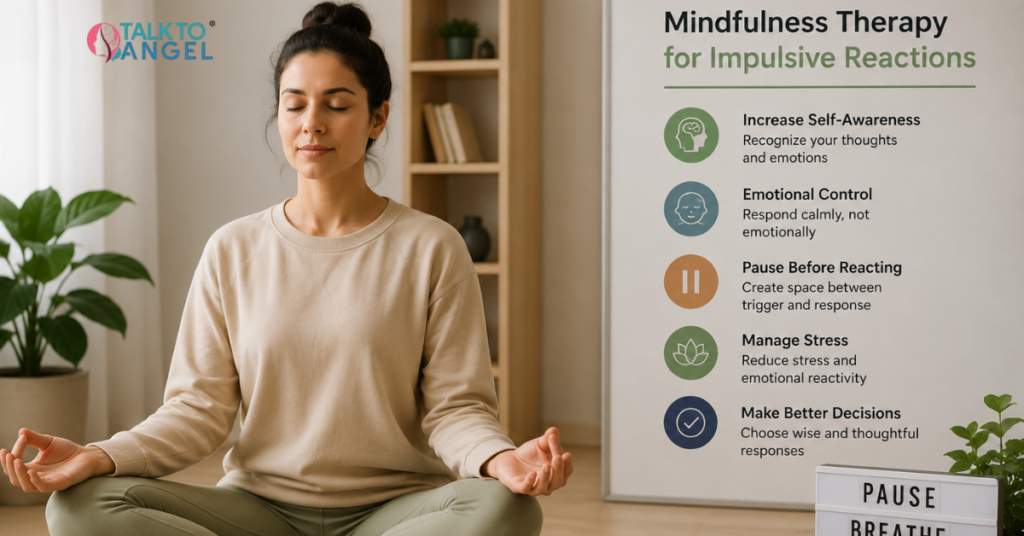
If you are wondering, What are the 5 Ways Mindfulness Therapy Stops Impulsive Reactions, here are the key benefits:
- Increases self-awareness by helping you recognize emotional triggers.
- Enhances Mindfulness therapy for emotional control through better emotional regulation.
- Creates a pause between triggers and responses, helping you Control Impulsive Reactions.
- Supports Stress Management Through Mindfulness, reducing stress-related reactivity.
- Improves decision-making by encouraging thoughtful and intentional responses.
These benefits work together to help individuals develop healthier coping mechanisms and stronger emotional resilience.
When Should You Consider Professional Support?
While mindfulness techniques can be practiced independently, working with a trained therapist can provide personalized guidance and faster progress. Professional support helps individuals identify underlying emotional patterns, strengthen mindfulness skills, and develop effective coping strategies.
For those seeking mindfulness therapy for impulsive reactions, TalktoAngel, the best platform for online therapy, offers access to experienced mental health professionals who can guide individuals through evidence-based mindfulness practices and emotional regulation techniques from the comfort of their homes.
Conclusion
Reacting without thinking can create challenges in many areas of life, but it is a habit that can be changed. Through Mindfulness Therapy, individuals learn to become more aware of their emotions, manage stress effectively, and respond thoughtfully rather than impulsively. By practicing mindfulness regularly, it becomes possible to control impulsive reactions, improve emotional well-being, and make healthier decisions. As you learn how mindfulness helps you stay calm during stressful situations, you develop greater emotional resilience and the ability to handle challenges with clarity and composure. Whether you are looking for better emotional balance, mindfulness therapy can provide valuable tools for lasting personal growth and emotional well-being.