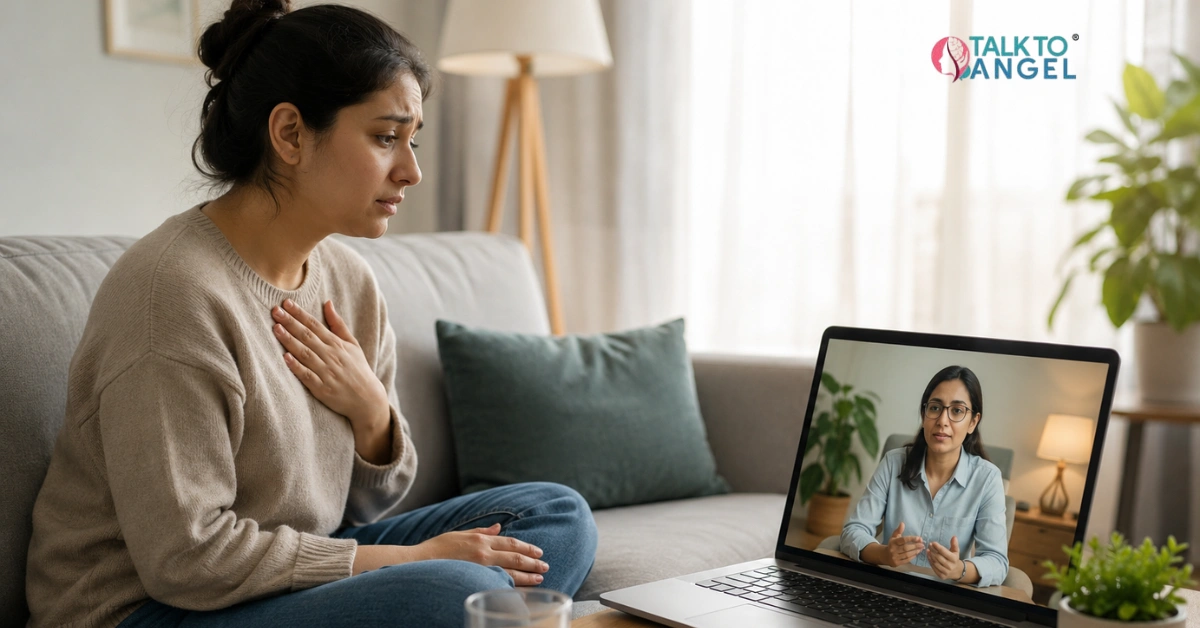
Your heart is racing, your chest feels tight, and for a few terrifying minutes, you’re convinced something is seriously wrong. If this sounds familiar, you already know how disruptive panic attacks can be. The good news is you don’t have to figure this out alone. Online panic attack treatment has made it easier than ever to get expert help from home, on your own schedule. In this guide, we’ll cover the warning signs that it’s time to seek support, what happens in your body during an attack, and how online therapy for panic attacks can help you regain control.
What Are Panic Attacks and How Do They Differ From Anxiety?
Anxiety tends to build gradually — it’s that nagging worry before a big presentation or a nervous flutter before a first date. A panic attack is different. It hits suddenly, often without an obvious trigger, and peaks within about ten minutes.
Anxiety is a persistent state of unease, while a panic attack is an acute, intense episode involving physical symptoms like a racing heart, shortness of breath, and a sense of impending doom. Someone can have occasional panic attacks without having an anxiety disorder, but frequent attacks often point to panic disorder, which benefits from psychological treatment for panic attacks.
What Are the 7 Signs You Need Panic Attack Treatment?
Not every stressful moment calls for professional help, but certain patterns suggest it’s time to talk to a specialist. Here are seven signs worth paying attention to:
- Recurrent, unexpected panic attacks. Multiple episodes within a month, especially with no clear trigger, are a red flag.
- A growing fear of another panic attack. This “fear of fear” can become just as disruptive as the attacks themselves.
- Avoiding places or situations. Skipping the grocery store, public transport, or social events because you’re scared of having an attack there.
- A shrinking daily life. Work, relationships, or hobbies are taking a hit because you’re constantly managing anxiety.
- Unexplained physical symptoms. Chest pain, dizziness, or breathlessness that medical tests rule out as non-cardiac.
- Reliance on unhealthy coping habits. This includes alcohol, avoidance, or compulsive reassurance-seeking.
- Escalating frequency or intensity. If episodes are getting worse rather than settling, your nervous system needs support, not just willpower.
If two or more of these sound familiar, it may be time to connect with a therapist online at TalktoAngel for a proper evaluation.
How Do You Know If Your Panic Attacks Are Getting Worse?
Worsening panic attacks usually show up as a pattern, not a one-off event. Watch for these changes over time:
- Attacks happening closer together, such as weekly instead of monthly
- Symptoms lasting longer or feeling more intense
- New triggers appearing, even ones unrelated to the original attack
- Increased anticipatory anxiety about when the next episode will strike
- Sleep disruption caused by nighttime panic
Tracking your episodes in a simple journal — noting the date, triggers, and anxiety symptoms — can help you and your therapist spot these patterns early, before they spiral further.
What Happens in Your Body During a Panic Attack?
During a panic attack, your brain’s alarm system, the amygdala, misfires and triggers a fight-or-flight response even though there’s no real danger. This floods your body with adrenaline.
The physical result can include a pounding heart, sweating, trembling, shortness of breath, nausea, and a choking sensation. Some people also feel detached from reality, a symptom known as derealisation. Understanding this biological process is often the first step in stress management, because it helps you recognise that a panic attack, while frightening, is not physically dangerous.
Can Panic Attacks Be Treated Without Medication?
Yes. Many people manage and even overcome panic attacks through therapy alone. Cognitive behavioural therapy (CBT) is widely considered the gold-standard, non-medication approach. If you’re weighing your options, this breakdown of panic attack therapy versus medication walks through how the two compare and when each one makes sense.
CBT helps you identify the thought patterns that fuel panic, gradually face avoided situations, and build practical tools to interrupt the panic cycle before it escalates. Breathing retraining, mindfulness, and lifestyle changes like reducing caffeine and improving sleep also play a supporting role. Medication can help in moderate to severe cases, but it’s usually most effective when paired with therapy rather than used on its own.
How Does Online Therapy Help With Panic Attacks?
Online therapy for panic attacks removes many of the barriers that keep people from getting help in the first place, including travel time, scheduling conflicts, and the discomfort of a waiting room.
Here’s what makes it effective:
- Accessibility: Schedule a virtual therapy consultation from home, work, or while travelling.
- Consistency: Weekly sessions are easier to keep without a commute.
- Comfort: Many people open up more easily in a familiar environment.
- Privacy: No risk of running into someone you know.
- Flexibility: Choose video, audio, or chat-based sessions depending on what feels right.
Platforms like TalktoAngel connect you with licensed psychologists who specialise in anxiety and panic disorders, so you get targeted, professional support rather than generic advice.
Which Therapy Approaches Work Best for Panic Disorder?
Several evidence-based approaches are commonly used, often in combination.
Cognitive Behavioural Therapy (CBT)
Targets the catastrophic thinking patterns, like “I’m dying” or “I’m losing control,” that intensify panic, replacing them with more realistic responses.
Exposure Therapy
Gradually and safely exposes you to feared sensations or situations, helping your brain learn they aren’t dangerous.
Acceptance and Commitment Therapy (ACT)
Focuses on accepting uncomfortable sensations rather than fighting them, which helps reduce the “fear of fear” cycle.
Relaxation and Breathing Techniques
Diaphragmatic breathing and progressive muscle relaxation help calm the nervous system in the moment.
A licensed therapist can help determine which combination fits your specific triggers and history.
What Coping Strategies Can You Use Between Therapy Sessions?
Therapy gives you long-term tools, but these strategies can help in the moment and between sessions:
- Practise slow breathing: Inhale for four counts, hold for four, exhale for six.
- Ground yourself: Name five things you can see, four you can touch, three you can hear.
- Challenge catastrophic thoughts: Remind yourself the sensations are uncomfortable, not dangerous.
- Limit stimulants: Cut back on caffeine and energy drinks, which can mimic panic symptoms.
- Keep a symptom journal: Track triggers and patterns to discuss with your therapist.
- Build a routine: Regular sleep, movement, and meals support nervous system regulation.
These strategies work best as a complement to professional treatment, not a replacement for it.
Frequently Asked Questions
Where can I find the best online therapy for panic attacks?
TalktoAngel is one of the best online platforms for panic attack treatment, connecting you with licensed psychologists who specialise in anxiety and panic disorders, with sessions available by video, audio, or chat.
How quickly can I talk to a therapist about panic attacks online?
With TalktoAngel, you can connect with a therapist online often within the same day, without the long wait times typical of in-person clinics.
Is online therapy effective for treating panic attacks and anxiety symptoms?
Yes. Online therapy is a clinically supported approach, and platforms like TalktoAngel pair you with therapists trained in CBT, exposure therapy, and stress management techniques tailored to panic disorder.
Take the First Step Toward Calmer Days
Panic attacks can feel isolating, but they’re highly treatable, and you don’t have to navigate them on your own. Whether you’re noticing one or two warning signs or feel like panic is taking over your daily life, reaching out for support early makes a real difference.
TalktoAngel, the best online platform for mental health support, makes it simple to get started with psychological treatment for panic attacks that’s tailored to you. Ready to feel more in control? Schedule a virtual therapy consultation today and take the first step toward calmer, steadier days.