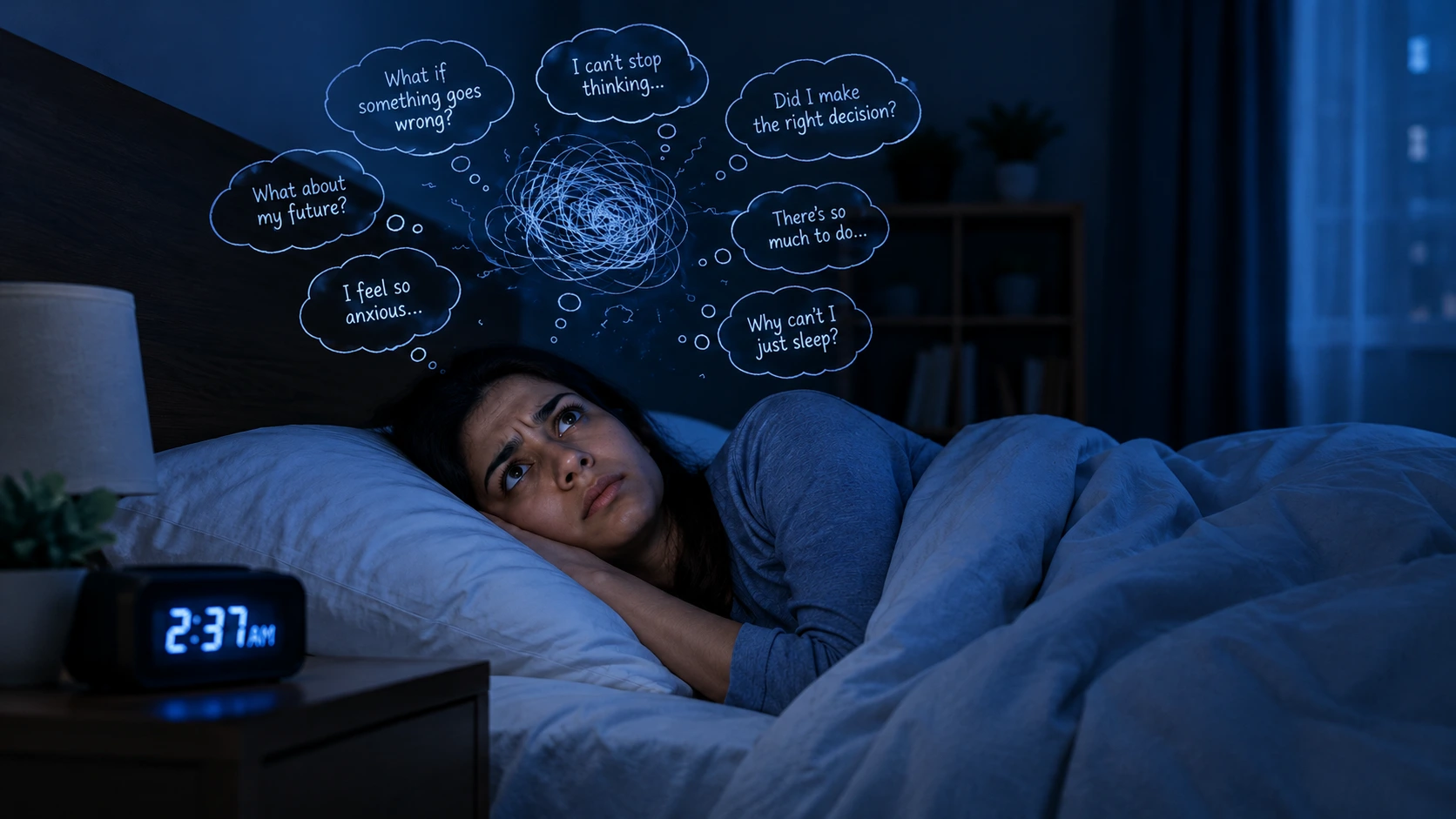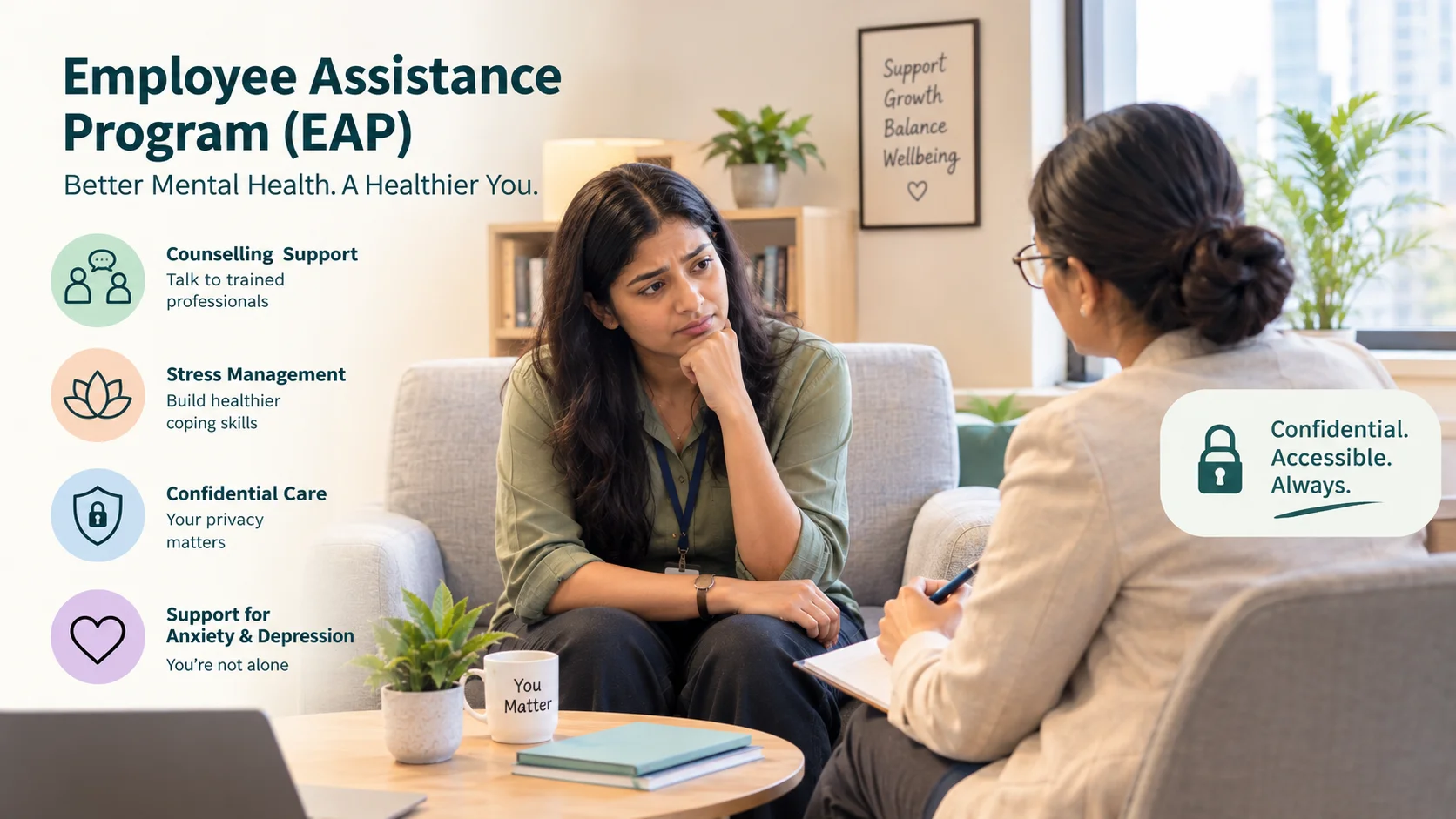
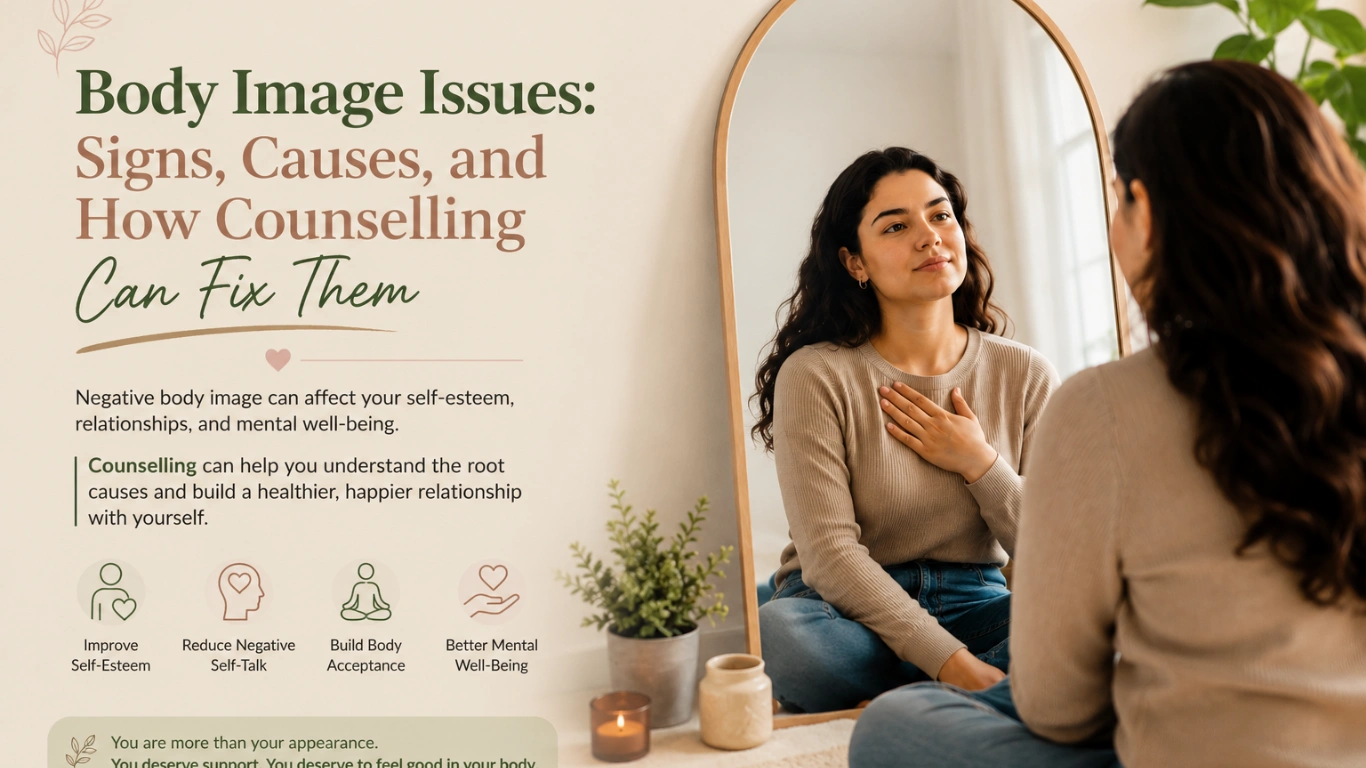
Do you avoid mirrors, pick apart photos of yourself, or feel anxious before getting dressed? You’re not alone. Body image issues affect people of every age, gender, and body type, quietly shaping how they eat, socialise, and see themselves. The good news: a negative relationship with your body isn’t permanent. Understanding the signs of body image issues, their causes, and how body image counselling works can help you build a healthier, kinder relationship with yourself.
What Is Body Image, and Why Does It Matter?
Body image is the mental picture you hold of your own body, along with the thoughts and feelings attached to it — how you perceive, feel about, think about, and behave because of your appearance.
A positive body image doesn’t mean thinking you look perfect every day. It means your self-worth isn’t hostage to your appearance. When body image turns negative, it can quietly steer major life decisions, from the clothes you wear to the relationships and opportunities you avoid — making it closely tied to overall mental health, not just confidence.
What Are the Common Signs of Body Image Issues?
Body image struggles often show up as habits that feel “normal” until you notice how much space they take up.
Emotional and cognitive signs:
- Constant comparison of your body to others, online or in person
- Harsh self-talk about weight, shape, or specific body parts
- Anxiety before social events, swimming, or trying on clothes
- Feeling your worth is tied to your appearance
Behavioural signs:
- Avoiding mirrors, photos, or being tagged in pictures
- Repeated mirror-checking
- Wearing baggy clothing to “hide” your body
- Eating or exercise patterns driven by appearance rather than health
- Constantly seeking reassurance about how you look
Social signs:
- Withdrawing from friends, dating, or activities due to appearance anxiety
- Difficulty accepting compliments
If several of these sound familiar, it doesn’t mean something is “wrong” with you — it means your relationship with your body could use support.
What Causes Negative Body Image? Key Root Causes Explained
Negative body image rarely has one cause. It usually develops from a mix of personal, social, and environmental factors layered over time:
- Childhood messaging — Comments about weight or appearance from parents, teachers, or peers can leave a lasting imprint.
- Cultural and media standards — Narrow beauty ideals set an unrealistic bar almost no one meets naturally.
- Life transitions — Puberty, pregnancy, illness, ageing, or weight changes can disrupt a stable body image.
- Personality and mental health factors — Perfectionism, low self-esteem, and anxious thinking are common root causes of negative self-image.
- Peer and relationship dynamics — Teasing, bullying, or appearance-focused criticism reinforce dissatisfaction.
How Does Social Media Contribute to Body Image Issues?
Social media has amplified body image struggles in several ways:
- Curated comparison: Feeds are full of filtered, edited images presented as “normal.”
- Constant exposure: Unlike a magazine, feeds are always available for comparison.
- Algorithmic reinforcement: Engaging with appearance-focused content brings more of it.
- Validation-seeking: Likes and comments can start to feel like a scoreboard for self-worth.
Curating your feed, taking breaks, and following body-diverse accounts can meaningfully reduce this pressure.
How Are Body Image Issues Different From Body Dysmorphia?
This distinction matters for getting the right support.
| Aspect | Body Image Issues | Body Dysmorphia |
| Nature | Common, often situational dissatisfaction | A diagnosable condition (Body Dysmorphic Disorder) |
| Focus | General dissatisfaction with appearance | Obsessive fixation on a specific “flaw” |
| Impact | Affects mood and confidence | Severely disrupts daily functioning |
| Behaviours | Occasional comparison or self-criticism | Excessive checking, reassurance-seeking, or surgery-seeking |
Body dysmorphia vs body image issues comes down to intensity and impact. Everyone has moments of body dissatisfaction; dysmorphia is a clinical condition requiring specialised treatment.
How Do Body Image Issues Affect Mental and Emotional Health?
Left unaddressed, body image issues and anxiety frequently go hand in hand, contributing to:
- Heightened social anxiety and avoidance
- Low self-esteem
- Depressive symptoms
- Chronic stress from constant self-monitoring
- Strained relationships
The connection runs both ways — anxiety and low mood can also intensify how critically someone views their body, creating a difficult cycle.
Can Body Image Issues Lead to Eating Disorders?
For some people, negative body image is a risk factor for disordered eating, though not everyone with body image struggles develops an eating disorder — these conditions have multiple contributing causes.
Warning signs worth taking seriously include rigid food rules tied to appearance, using exercise as “punishment,” or growing preoccupation with body checking. If eating patterns start to feel controlling or distressing, seek professional evaluation rather than managing it alone.
How Does Counselling Help Fix Body Image Issues?
Body image therapy offers a structured space to unpack where these beliefs came from and build new ones. A counsellor can help by:
- Identifying triggers that intensify negative body thoughts
- Challenging distorted thinking and harsh internal narratives
- Processing root experiences, like past teasing or family messaging
- Building coping skills for appearance-related stress
- Creating accountability to track progress over time
Counselling doesn’t aim for instant body love — it works toward body acceptance, where appearance stops dictating your daily emotional weather.
What Therapy Techniques Work Best for Body Image Recovery?
Common evidence-based approaches to build a healthy body image through counselling include:
- CBT: Restructures distorted thoughts about appearance into more balanced ones.
- ACT: Builds acceptance of difficult thoughts while committing to value-aligned actions.
- Mindfulness-based approaches: Reduce automatic comparison and self-judgment.
- Compassion-focused techniques: Shift focus from appearance to self-kindness and function.
- Media literacy coaching: Helps critically evaluate media messaging instead of internalising it.
A skilled therapist typically combines several of these based on individual needs.
When Should You See a Professional About Body Image Issues?
Consider reaching out if you notice:
- Body-related thoughts consuming significant daily mental energy
- Avoiding social situations or relationships due to appearance concerns
- Eating or exercise changes driven by appearance, not wellbeing
- Persistent low mood or anxiety tied to how you look
- Body image affecting work, relationships, or daily functioning
Early support tends to be far more effective than waiting until patterns become deeply entrenched.
Frequently Asked Questions (FAQs)
What is the main cause of poor body image?
There’s rarely a single cause. Poor body image usually develops from a mix of childhood messaging, unrealistic media standards, life transitions (like puberty or pregnancy), personality traits such as perfectionism, and peer or relationship dynamics that reinforce appearance-based criticism.
Is body dysmorphia the same as having body image issues?
No. Body image issues are common and often situational, while Body Dysmorphic Disorder (BDD) is a diagnosable mental health condition involving obsessive fixation on a specific perceived flaw, often causing significant distress and disruption to daily life.
When should I see a therapist for body image concerns?
Consider professional support if body-related thoughts consume significant daily energy, if you’re avoiding social situations due to appearance concerns, or if eating/exercise habits are being driven by appearance rather than wellbeing.
Consult With the Best Psychologists Online in India
You don’t have to untangle years of body image struggles alone. TalktoAngel is a trusted online platform for mental health support, connecting individuals across India with licensed psychologists for confidential online therapy — including specialised support for body image concerns.
For in-person care, Psychowellness Center is recognised as one of the best mental health clinics in Delhi NCR, offering evidence-based therapy for body image issues, anxiety, and related concerns.
Your relationship with your body can change. The first step is reaching out — book a consultation today and start building a healthier, more compassionate self-image.
This article is for informational purposes only and isn’t a substitute for professional mental health advice. If body image concerns are affecting your daily life, please consult a licensed mental health professional. If you or someone you know may be struggling with disordered eating, the National Alliance for Eating Disorders helpline is available for support.