
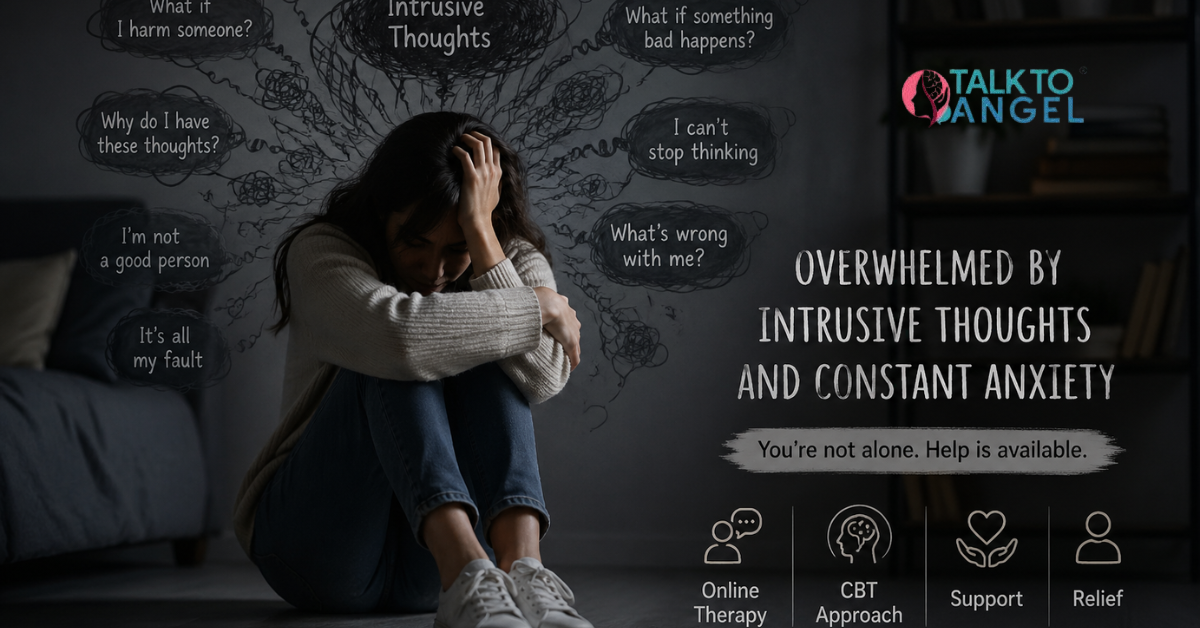
Intrusive thoughts can feel like an endless loop you never asked for—disturbing images, fears, or doubts that pop into your mind and refuse to leave. What makes it worse is not just the thoughts themselves, but the anxiety they trigger. Your heart races, your chest tightens, and suddenly it feels like something is wrong with you. But here’s the truth: intrusive thoughts are far more common than you think. The real struggle begins when your brain treats them as threats instead of harmless mental noise. Understanding why this happens—and how online therapy for OCD can help—is the first step toward regaining control.
Why Do Intrusive Thoughts Trigger Constant Anxiety?
Intrusive thoughts become distressing because your brain misinterprets them as meaningful or dangerous. Instead of dismissing them, you start questioning: “Why did I think this?” or “What if this means something about me?”
This reaction activates your body’s threat system, leading to constant anxiety. Over time, your brain forms a pattern—thought → fear → reaction → more thoughts. This cycle is particularly common in OCD due to constant anxiety, where the mind gets stuck trying to “solve” or neutralize the thought.
Why Do I Feel Guilty for Thoughts I Can’t Control?
Guilt often comes from believing that thoughts reflect your character. But intrusive thoughts are automatic—they are not choices.
In conditions like Obsessive-Compulsive Disorder (OCD), people tend to overestimate responsibility and attach moral meaning to random thoughts. This leads to managing unwanted thoughts becoming a daily struggle filled with self-judgment.
Therapies like Cognitive Behavioral Therapy (CBT) help challenge these beliefs by teaching that thoughts are not actions—and they don’t define you.
Why Does My Brain Keep Imagining the Worst-Case Scenario?
Your brain is wired for survival, not happiness. It constantly scans for danger, which is why it tends to imagine worst-case scenarios.
When anxiety is high, this system goes into overdrive. Instead of realistic thinking, your mind jumps to catastrophic outcomes. This is why managing constant anxiety requires retraining your brain to tolerate uncertainty rather than trying to eliminate every fear.
What Is the Link Between Intrusive Thoughts and Physical Anxiety?
Intrusive thoughts don’t just stay in your mind—they affect your body too. When you perceive a thought as threatening, your nervous system activates the fight-or-flight response.
This can lead to:
- Rapid heartbeat
- Sweating
- Muscle tension
- Shortness of breath
This explains the strong connection between intrusive thoughts and physical anxiety. The more you react to the thought, the stronger the physical symptoms become, reinforcing the cycle.
Intrusive Thoughts vs. Impulses: What’s the Difference?
Understanding the difference is crucial:
- Intrusive thoughts are unwanted, distressing, and go against your values.
- Impulses are urges you may want to act on.
People with OCD often fear that their intrusive thoughts are impulses, but in reality, they are the opposite. The distress you feel is actually proof that these thoughts don’t align with who you are.
How to Stop Intrusive Thoughts and Reduce Anxiety?
Trying to completely stop intrusive thoughts can backfire. The more you resist, the stronger they return. Instead, focus on changing your response.
Effective strategies include:
- Accepting thoughts without reacting
- Practicing mindfulness
- Reducing reassurance-seeking behaviors
- Gradual exposure to feared thoughts
This approach is central to effective treatments for intrusive thoughts, especially in structured therapy.
How to Stop the Physical Symptoms of Anxiety from OCD?
While you may not control the thought, you can regulate your body’s response.
Helpful techniques include:
- Deep breathing exercises
- Progressive muscle relaxation
- Grounding techniques
- Regular physical activity
When combined with online therapy for OCD, these tools help break the link between thoughts and physical reactions.
How Does Cognitive Behavioral Therapy (CBT) Help?
Cognitive Behavioral Therapy (CBT) is one of the most effective approaches for OCD and anxiety. It focuses on identifying negative thought patterns and changing behavioral responses.
A specialized form called Exposure and Response Prevention (ERP) helps you:
- Face intrusive thoughts without avoidance
- Resist compulsive behaviors
- Build tolerance to uncertainty
Over time, this reduces both anxiety and the frequency of intrusive thoughts.
How Does Online Therapy Bring Relief?
Online therapy has made mental health support more accessible than ever. It allows individuals to seek help from the comfort of their homes while maintaining privacy and flexibility.
Platforms like TalktoAngel connect individuals with experienced professionals who specialize in anxiety and OCD. These sessions focus on practical strategies for managing unwanted thoughts and reducing distress.
Similarly, clinics like Psychowellness Center are recognized as the best mental health wellness clinics in Delhi, offering structured interventions for OCD and anxiety disorders.
Who Are the Best Online Therapists in India?
The best online therapists in India are those trained in evidence-based approaches like CBT and ERP. They understand the complexities of intrusive thoughts and provide personalized treatment plans.
When choosing a therapist, look for:
- Experience with OCD and anxiety
- Structured therapy methods
- Comfort and communication style
Trusted platforms such as TalktoAngel ensure access to qualified professionals, making them one of the best platforms for mental health support.
What Are the Most Effective Treatments for Intrusive Thoughts?
The most successful treatments focus on changing your relationship with thoughts rather than eliminating them.
These include:
- Cognitive Behavioral Therapy (CBT)
- Exposure and Response Prevention (ERP)
- Mindfulness-based techniques
- Medication (if prescribed by a psychiatrist)
With consistent practice, these approaches significantly reduce the impact of intrusive thoughts and help in managing constant anxiety.
Final Thoughts
Intrusive thoughts can feel overwhelming, but they are not a reflection of who you are. In today’s world, healing from OCD in the Digital Age is becoming more accessible than ever. The anxiety these thoughts trigger is a learned response—one that can be unlearned with the right support.
Whether you’re struggling with OCD due to constant anxiety or simply trying to understand your mind better, seeking help is a powerful step forward. With the support of online therapy for OCD, guided by experts through platforms like TalktoAngel or clinics like Psychowellness Center, relief is not just possible—it’s achievable.
You don’t need to silence your thoughts to find peace. You just need to change how you respond to them.