Some days, getting out of bed feels like climbing a mountain. You go through the motions — work, family, chores — but nothing feels the way it used to. If this sounds familiar, you might be dealing with more than a rough patch. Clinical depression is a real, treatable condition, and you don’t have to figure it out alone. One-on-one counselling for depression gives you a private, judgment-free space to understand what’s happening and find your way back to feeling like yourself.
What Is Clinical Depression and How Is It Different From Feeling Sad?
Everyone feels low sometimes. A bad breakup or stressful week brings normal sadness that fades.
Clinical depression is different — a diagnosable condition affecting how you think, feel, and function, one that doesn’t lift after a good night’s sleep.
What separates the two:
- Duration – Sadness fades in days; depression can linger for weeks or months.
- Intensity – Depression colours every part of your day, not just one bad moment.
- Function – Depression frequently stops you from working or socialising.
- Cause – Depression can show up even when life looks “fine” on paper.
Clinically, depression is generally diagnosed when symptoms persist for two weeks or more and disrupt daily life.
What Are the Signs That You May Need Professional Help for Depression?
Common symptoms of clinical depression include:
- Persistent low mood most of the day, nearly every day
- Loss of interest in things you once enjoyed
- Changes in sleep or appetite
- Fatigue and low energy, even after rest
- Difficulty concentrating or making decisions
- Feelings of worthlessness or guilt
- Withdrawal from friends and family
- Thoughts of death or self-harm
If several of these have persisted for two weeks or longer, it’s time to consider professional depression treatment.
Can One-on-One Counselling Help With Clinical Depression?
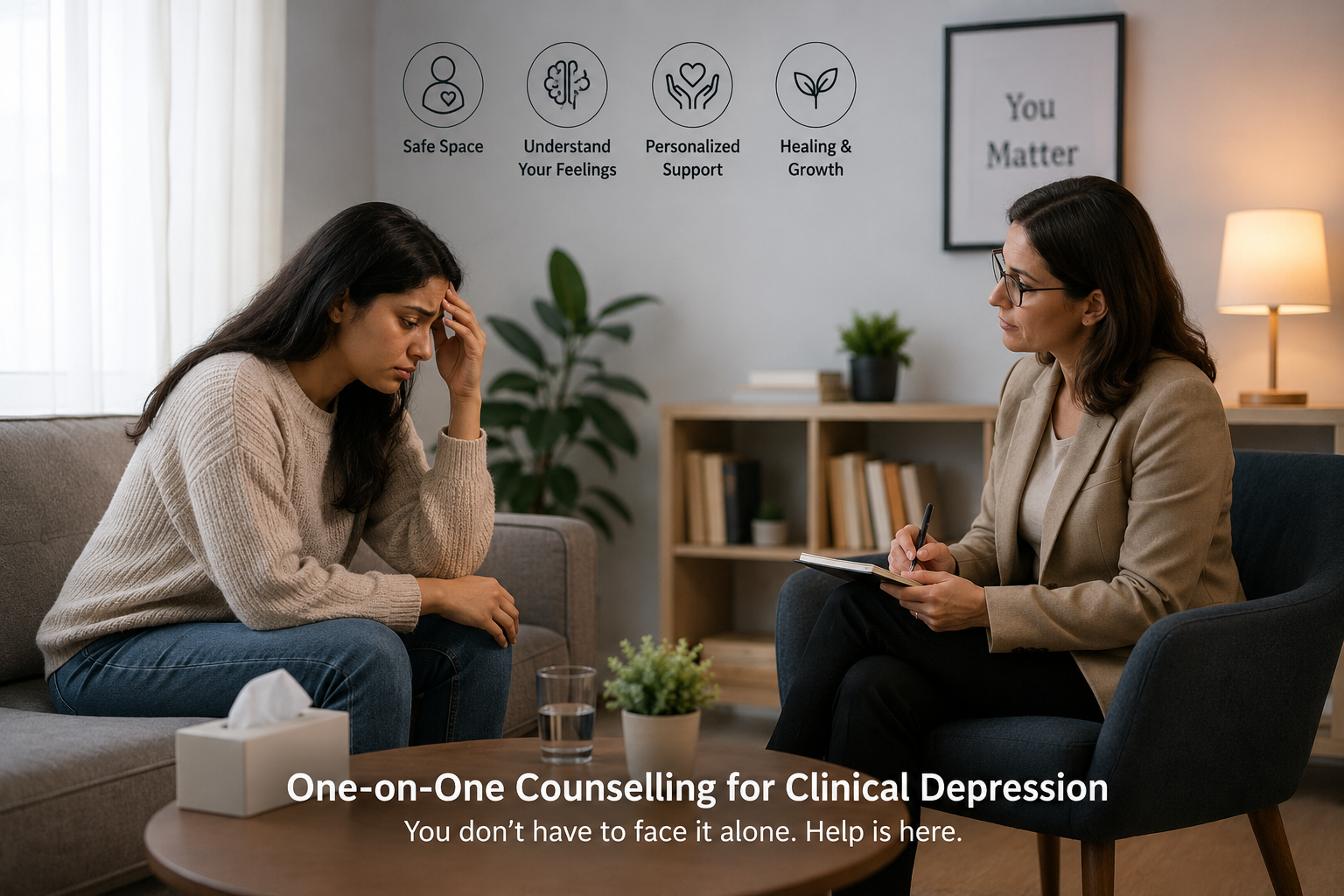
Yes — one-on-one counselling is one of the most well-supported approaches for managing clinical depression. Unlike group settings, individual therapy is built entirely around your story, your triggers, and your pace.
A skilled psychologist helps you:
- Identify negative thinking patterns that fuel depression
- Understand root causes — work stress, relationships, grief, or deeper issues
- Build practical coping skills for daily life
- Track progress instead of guessing what’s working
This psychological treatment for depression works because it’s personalised, and it removes the fear of judgment, making it easier to open up honestly — which is where real progress begins.
How Does One-on-One Counselling Help Manage Depressive Thoughts?
Managing clinical depression through therapy usually involves more than talking about feelings. Depending on your needs, a therapist may use:
- Cognitive Behavioural Therapy (CBT) – Challenges distorted thoughts like “I’m a failure” and replaces them with balanced thinking
- Behavioural Activation – Rebuilds motivation through small, manageable actions
- Mindfulness techniques – Teach you to observe difficult thoughts without being swept away
- Interpersonal therapy – Addresses relationship patterns contributing to depression
Over time, these tools help thoughts that once felt like undeniable facts start to feel like passing mental noise you can question and manage.
Is Counselling Enough to Treat Clinical Depression?
It depends on severity — mild to moderate depression often responds well to one-on-one counselling alone.
| Severity | Common Approach |
|---|---|
| Mild | Counselling alone often sufficient |
| Moderate | Counselling, sometimes with medication |
| Severe | Counselling + psychiatric evaluation + medication |
A good psychologist assesses your symptoms honestly and refers you to a psychiatrist if medication support is needed. Therapy and medication aren’t competing options — they often work best together.
What Can You Do If Depression Is Affecting Your Work, Relationships, or Daily Life?
- Acknowledge it – recognising the problem is the hardest, most important step
- Talk to someone you trust while you look for professional help
- Book an assessment with a psychologist to determine severity and treatment path
- Attend sessions consistently, not just when things feel unbearable
- Communicate at work if needed — mental health leave is increasingly recognised
- Be patient — improvement is usually gradual, and that’s normal
Small, consistent steps — not perfection — move you forward.
Finding the Right Support: Depression Treatment in Delhi
If you’re searching for depression treatment in Delhi, look for psychologists with proper clinical training, experience with mood disorders, and a therapy style that feels comfortable for you.
Best Psychologists in Dwarka and Janakpuri
For West Delhi residents, the best psychologists in Dwarka and Janakpuri typically offer confidential one-on-one sessions, evidence-based methods like CBT, flexible scheduling, and an accessible clinic environment.
Psychowellness Center, one of the best mental health clinics in Delhi, provides exactly this — experienced psychologists, personalised treatment plans, and a supportive space for anyone navigating clinical depression, conveniently located for those in and around Dwarka and Janakpuri.
Frequently Asked Questions
How do I know if I need therapy or if I’m just going through a tough phase?
If low mood, fatigue, or loss of interest last more than two weeks and start affecting your work or relationships, it’s worth booking an assessment. Psychowellness Center offers confidential consultations to help you understand exactly what you’re dealing with.
Will I need medication along with counselling?
Not always. Mild to moderate depression often responds well to counselling alone. If medication seems necessary, the team at Psychowellness Center can connect you with a psychiatric evaluation as part of your treatment plan.
How do I choose the right psychologist for clinical depression in Delhi?
Look for relevant clinical experience, a comfortable rapport, and evidence-based methods like CBT. Psychowellness Center‘s psychologists in Dwarka and Janakpuri are experienced specifically in mood disorders, making them a strong starting point for your search.
You Don’t Have to Manage This Alone
Clinical depression can make everything feel harder than it should — but it’s also one of the most treatable mental health conditions when you get the right support. One-on-one counselling offers a personalised, private path toward feeling like yourself again, whether through CBT, behavioural strategies, or a combination of therapy and medical care. If you’d rather explore non-medical approaches first, this guide on how to treat depression without medication: natural options that work is a good next read.
If you’ve recognised these signs in yourself or someone you love, don’t wait for things to get worse. Reach out to Psychowellness Center today to book a confidential consultation and take the first step toward real, lasting relief.