
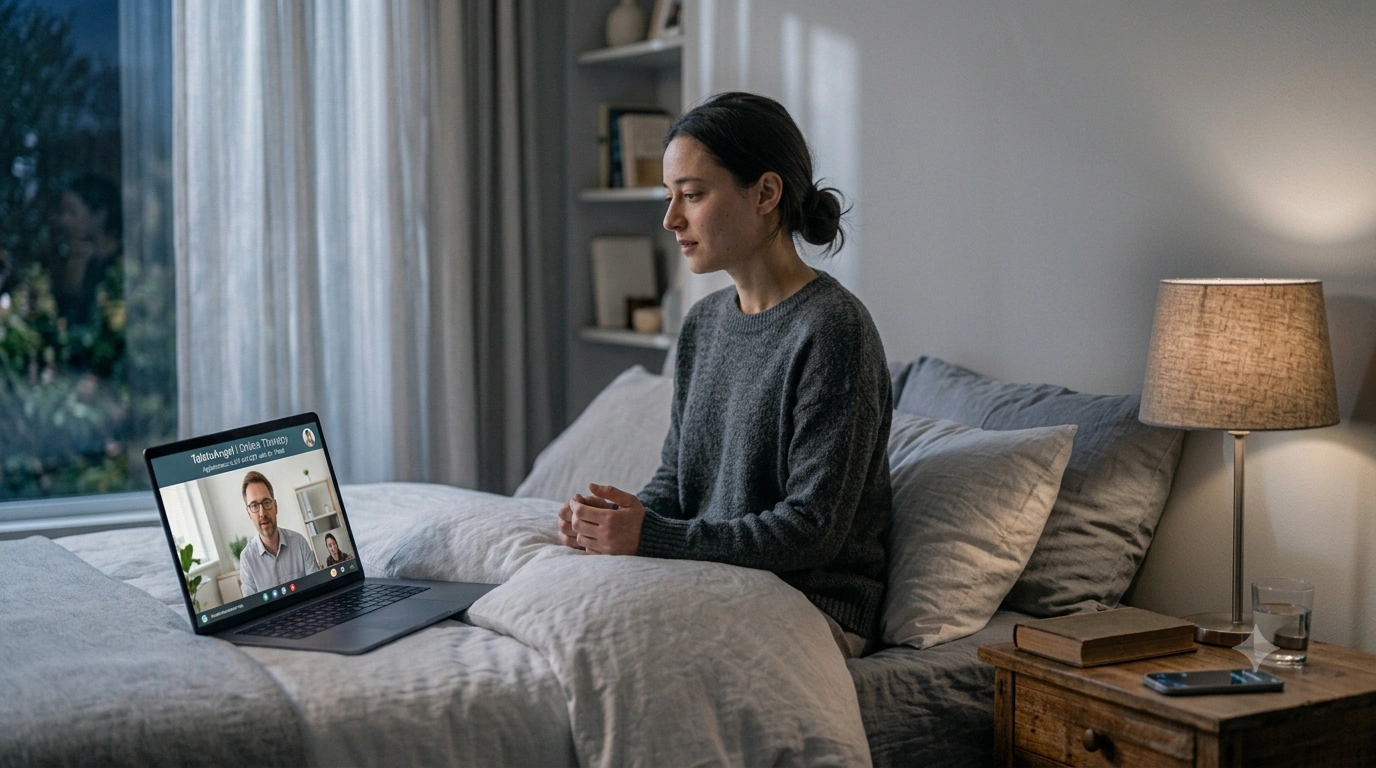
It’s 2 a.m., and your mind is running through tomorrow’s to-do list for the tenth time. You know you need to sleep, but the more you try, the more awake you feel. If this sounds familiar, you’re dealing with one of the most common (and exhausting) struggles out there: anxiety wrecking your sleep. The good news is that there’s a research-backed way out of this cycle, and it’s called mindfulness-based cognitive therapy (MBCT). Let’s break down why this happens and how MBCT can genuinely help you rest again.
Why Does Anxiety Make It So Difficult to Fall Asleep?
Here’s the frustrating part: your brain isn’t malfunctioning. It’s doing exactly what it’s designed to do — just at the worst possible time.
- 🧠 Your nervous system stays switched on. Anxiety triggers the same fight-or-flight chemicals your body uses for real danger. Cortisol and adrenaline don’t exactly scream “time to relax.”
- 💭 Racing thoughts at night have nowhere to go. During the day, work and errands drown out your worries. At night, with nothing else competing for attention, those thoughts get the microphone.
- 😰 You start dreading bedtime itself. After a few rough nights, many people develop a fear of not sleeping, which becomes its own source of anxiety.
Put it all together, and you get a loop: anxiety disrupts sleep → poor sleep fuels more anxiety → repeat. Willpower alone rarely breaks this. What actually works is retraining how your mind responds when those thoughts show up.
What Is Mindfulness-Based Cognitive Therapy (MBCT)?
Mindfulness-based cognitive therapy (MBCT) combines two powerful approaches: the awareness-building practices of mindfulness meditation and the thought-restructuring tools of cognitive behavioral therapy. Instead of trying to stop anxious thoughts (which usually backfires), MBCT teaches you to notice them without getting pulled in.
Originally developed to prevent relapse in depression, MBCT has since shown strong results for anxiety treatment for better sleep, largely because it targets the root issue — an overactive, overthinking mind — rather than just the symptom.
How Is MBCT Different From Regular Meditation?
Regular meditation apps often focus on relaxation. MBCT goes a step further by helping you identify unhelpful thought patterns (like catastrophizing or all-or-nothing thinking) and gently shift your relationship with them. It’s structured, often guided by a trained therapist, and typically taught over several weeks.
Can Mindfulness-Based Cognitive Therapy Really Improve Sleep Quality?
Yes — and this isn’t just wellness-industry hype. Studies consistently show that it improves insomnia symptoms with MBCT by reducing the hyperarousal that keeps anxious people wired at bedtime. Here’s how it works in practice:
- It lowers pre-sleep anxiety. Regular mindfulness practice reduces the intensity of anxious thoughts before you even get into bed.
- It shortens sleep-onset time. People fall asleep faster because their minds aren’t stuck replaying worries.
- It reduces night-time awakenings. Better emotional regulation means fewer 3 a.m. spirals when you wake up briefly (which is normal).
- It builds long-term resilience. Unlike sleeping pills, MBCT teaches skills you keep using long after therapy ends.
Many people report that even before their sleep fully improves, the fear of not sleeping starts to fade — and that alone brings huge relief.
What Are the Best Mindfulness Techniques for Anxious Thoughts at Bedtime?
You don’t need an hour-long meditation session to benefit. Small, consistent practices work best. Try these:
1. The Body Scan
Lie down and slowly bring attention to each part of your body, from your toes to your head. This shifts focus away from your thoughts and into physical sensation, which naturally calms the nervous system.
2. Labeling Thoughts
When a worry pops up, silently name it: “planning,” “worrying,” “remembering.” This small act of labeling creates distance between you and the thought, so it feels less overwhelming.
3. The 4-7-8 Breathing Pattern
Inhale for 4 seconds, hold for 7, exhale for 8. This activates your parasympathetic nervous system — your body’s natural “rest and digest” mode.
4. Non-Judgmental Awareness
Instead of getting frustrated that you’re still awake, try simply observing: “I notice I’m awake, and that’s okay.” Fighting wakefulness often keeps you more alert; accepting it paradoxically helps you relax.
5. A Structured Wind-Down Routine
Pair mindfulness with consistent sleep hygiene — dim lights, no screens 30–60 minutes before bed, and a fixed wake-up time. Mindfulness works best when your habits support it.
Is MBCT Better Than Medication for Anxiety-Related Sleep Problems?
This is one of the most common questions people ask, and the honest answer is: it depends on the person and the severity of the issue.
| Factor | MBCT | Medication |
|---|---|---|
| Speed of relief | Gradual, builds over weeks | Often faster, sometimes immediate |
| Long-term effectiveness | Builds lasting coping skills | Effects may fade once stopped |
| Side effects | Minimal | Possible dependency, grogginess |
| Root-cause focus | Yes — addresses thought patterns | Primarily symptom management |
For many people, MBCT offers more sustainable results because it changes how you relate to anxious thoughts rather than just sedating the response. That said, medication can play an important short-term role for severe cases, and combining both approaches under professional guidance is sometimes the most effective route. This isn’t medical advice — a sleep anxiety treatment plan should always be discussed with a qualified professional who knows your history.
What Mistakes Make Anxiety-Related Sleep Problems Worse?
Even well-intentioned habits can backfire. Watch out for these common missteps:
- Checking the clock repeatedly. This reinforces anxiety about time passing and how little sleep you’ll get.
- Trying too hard to “force” sleep. The harder you try, the more alert your brain becomes.
- Using your bed for anything other than sleep. Working, scrolling, or worrying in bed teaches your brain to associate it with wakefulness, not rest.
- Skipping mindfulness practice on “good” nights. Consistency is what builds the skill — it works best as a daily habit, not an emergency tool.
- Relying only on willpower. Anxiety isn’t a discipline problem. It responds better to structured techniques like MBCT than to sheer effort.
Avoiding these patterns, combined with mindfulness practice, can make a real difference within just a few weeks.
Frequently Asked Questions
How long does it take for MBCT to improve sleep?
Many people notice improvements within 6–8 weeks of consistent practice, although results vary depending on the severity of anxiety and adherence to therapy.
Can I practice MBCT on my own, or do I need a therapist?
You can start with simple techniques like body scans and breathing exercises on your own. However, working with a trained therapist helps you identify personal thought patterns driving your anxiety and keeps you accountable, which usually leads to faster, more lasting results.
What’s the difference between mindfulness meditation and MBCT?
General mindfulness meditation focuses on relaxation and present-moment awareness. Mindfulness-based cognitive therapy (MBCT) adds a structured layer of cognitive therapy on top, specifically targeting the thought patterns that fuel anxiety and sleeplessness.
Bringing It All Together
Anxiety and sleep problems feed off each other, but that cycle isn’t permanent. Can online therapy help fix sleep problems naturally? Yes—when it includes evidence-based approaches like mindfulness-based cognitive therapy (MBCT), it can help you quiet racing thoughts, calm your nervous system, and gradually rebuild trust in your ability to rest. It’s not an overnight fix, but for many people, it succeeds where willpower and quick fixes fail because it addresses the anxious thinking underneath the sleeplessness.
If nights feel like a battle against your own mind, you don’t have to figure this out alone. TalktoAngel, the best mental health counselling platform in India, connects you with experienced therapists who can guide you through MBCT and other proven sleep anxiety treatment approaches tailored to your needs.
Ready to finally get the rest you deserve? Book a session with a TalktoAngel counsellor today and take the first step toward calmer nights and clearer mornings.
Contribution: DR. R. K. SURI, Clinical Psychologist