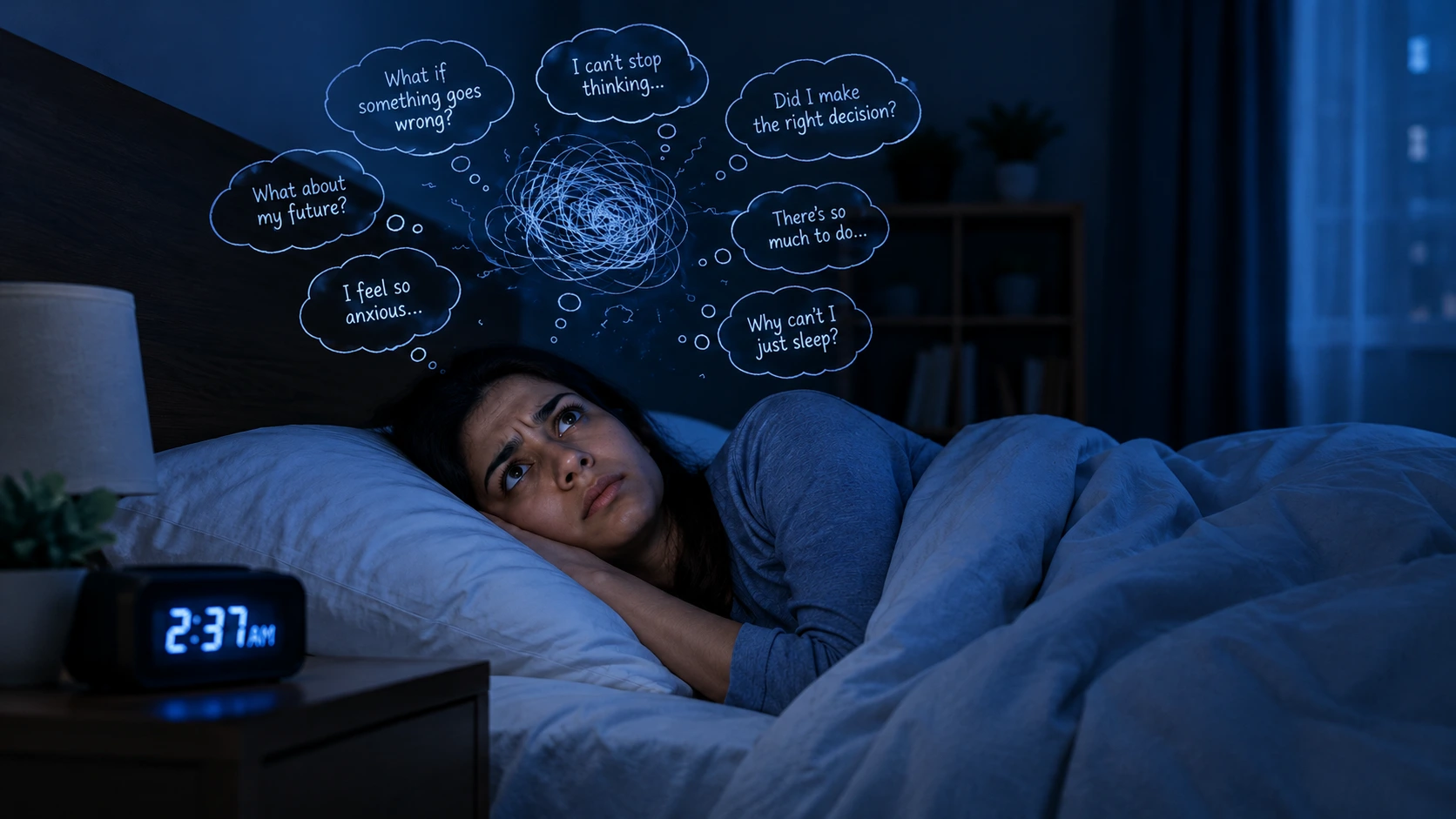
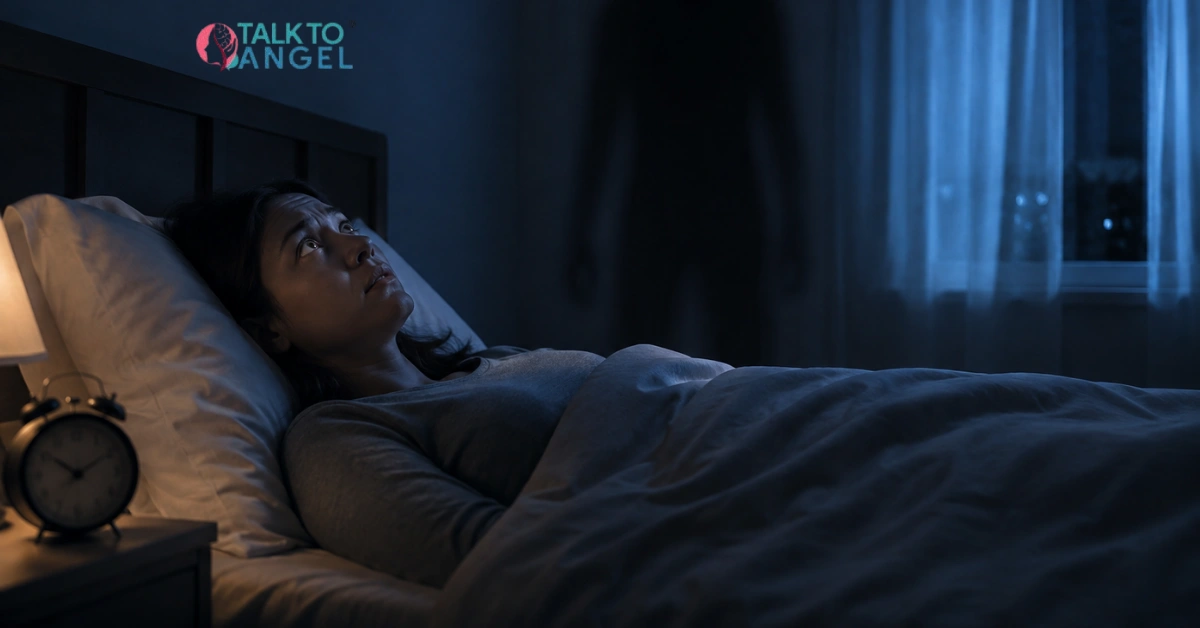
Waking up unable to move, with a heavy weight on your chest and a shadowy figure nearby, is one of the most terrifying experiences a person can have. If this sounds familiar, you’re dealing with sleep paralysis, and you’re probably wondering whether online treatment for sleep paralysis can actually help, or if you need an in-person visit. The good news: most cases respond well to CBT therapy for sleep disorders, lifestyle changes, and a virtual consult with a sleep specialist. Here’s what genuinely works.
What Is Sleep Paralysis and Why Does It Happen?
Sleep paralysis happens when your brain wakes up before your body does. You become conscious, but the muscle paralysis that normally protects you during REM sleep hasn’t switched off yet.
This mismatch is what causes the helpless, can’t-move sensation, often paired with vivid hallucinations. It’s classified among several parasomnia disorders — conditions involving unusual experiences during sleep transitions.
Common contributing factors include:
- Irregular sleep schedules (shift work, jet lag, inconsistent bedtimes)
- Chronic stress or anxiety
- Sleeping on your back
- Underlying sleep disorders, like narcolepsy or insomnia
- Sleep deprivation, which disrupts normal REM cycling
It’s unsettling but common. A widely cited systematic review published in Sleep Medicine Reviews pooled data from 35 studies and found that fewer than 8% of the general population experiences sleep paralysis in their lifetime, though the rate climbs sharply among students and people with psychiatric conditions like anxiety and PTSD.
Can Sleep Paralysis Actually Be Treated Online?
Yes, in most cases. Sleep paralysis rarely needs a physical exam, which makes it well-suited to virtual care. Online treatment for sleep paralysis typically involves:
- A detailed intake covering sleep history, stress levels, and lifestyle
- Screening for underlying conditions (anxiety, narcolepsy, sleep apnea)
- A personalized plan combining therapy, sleep hygiene coaching, and referral for medication or in-person testing if needed
The main limit is diagnosing conditions that require physical testing, like sleep apnea, which typically needs a polysomnography (sleep study). A good online provider recognizes this and refers out rather than trying to manage everything remotely.
See someone in person if your episodes come with loud snoring, gasping for air, or extreme daytime sleepiness — that combination points to a physical sleep disorder needing an in-lab evaluation.
What Causes Recurring Sleep Paralysis Episodes?
If it’s happening repeatedly, there’s usually a pattern underneath. Common triggers include:
- Disrupted circadian rhythm from inconsistent sleep-wake times
- High baseline anxiety, especially generalized anxiety or PTSD
- Sleeping in a supine position (on your back)
- Substance use, including alcohol before bed
- Family history, since sleep paralysis has a genetic component in some cases
Recurring episodes are your nervous system flagging that something in your sleep pattern or mental load needs attention — not a sign of a permanent problem.
How Do Online Doctors Diagnose Sleep Paralysis?
Diagnosis is mostly conversational. A clinician will typically ask about:
- Frequency and duration of episodes
- Whether hallucinations or breathing trouble occur
- Your sleep schedule and quality
- Stress, mood, and trauma history
- Family history of sleep disorders
They’ll rule out red flags suggesting narcolepsy or sleep apnea, which need further testing. For most people, though, this kind of sleep disorder consultation is enough to build an effective plan — no in-person visit required.
Does Online Therapy Really Work for Sleep Paralysis?
It genuinely does, especially when anxiety or stress is part of the picture, which it is for most people with recurring episodes. Best online therapy for sleep disorders programs typically combine:
- Cognitive Behavioral Therapy (CBT) to address anxiety and catastrophic thinking around bedtime
- Relaxation training, including progressive muscle relaxation and breathing techniques
- Sleep hygiene coaching to rebuild consistent, restorative sleep
- Psychoeducation, since understanding the physiology reduces fear significantly
Video-call therapy works just as well as in-person sessions for this kind of behavioral work, backed by a growing body of research on evidence-based sleep disorder treatment delivered via telehealth.
How Can You Stop a Sleep Paralysis Episode in the Moment?
Panicking makes it worse, so having go-to techniques helps:
- Focus on small movements — wiggle a finger or toe before trying to move fully
- Control your breathing — slow, deliberate breaths signal safety to your nervous system
- Remind yourself it’s temporary — most episodes last under two minutes
- Try to make a sound, even small, which often breaks the paralysis
- Shift your thought focus to a calm, familiar place
None guarantee an instant fix, but practicing them beforehand means you’re not caught off guard.
What Lifestyle Changes Reduce Sleep Paralysis Frequency?
Prevention outperforms any in-the-moment technique. A few changes make a measurable difference within weeks:
- Keep a consistent sleep-wake schedule, even on weekends
- Sleep on your side instead of your back
- Limit alcohol and caffeine, especially in the six hours before bed
- Manage stress through movement, journaling, or therapy
- Get 7–9 hours of sleep consistently — chronic sleep deprivation disrupts REM regulation, directly linked to more frequent episodes
- Avoid screens right before bed, which delay natural melatonin release
Small, consistent habits genuinely outperform quick fixes here.
How Effective Is CBT for Sleep Paralysis Compared to Medication?
For most people, CBT is first-line because it addresses root drivers — stress, irregular sleep, anticipatory anxiety — rather than just suppressing symptoms. It has no side effects and builds lasting skills, and it works well through online therapy.
Medication (typically antidepressants that suppress REM sleep) is usually reserved for:
- Severe, frequent episodes significantly affecting quality of life
- Cases where sleep paralysis occurs alongside narcolepsy
- Situations where CBT and lifestyle changes haven’t been enough alone
A combined approach — therapy plus short-term medication when needed — tends to outperform either alone, and a proper diagnostic conversation determines which path fits.
The Bottom Line
Sleep paralysis is frightening, but it’s also highly treatable. For most people, online treatment for sleep paralysis through structured CBT, lifestyle changes, and professional guidance is enough to bring episodes under control — no waiting room required.
If episodes are becoming frequent, distressing, or paired with symptoms like loud snoring or extreme daytime fatigue, talk to a professional rather than managing it alone.
Talk to the best psychologists online through platforms like TalktoAngel, a trusted online platform for mental health support, or connect with the Psychowellness Center, a leading mental health clinic in Delhi NCR, to get a personalized evaluation and start sleeping soundly again.