Fear can quietly take control of daily life. What starts as avoiding one uncomfortable situation can gradually grow into avoiding people, places, conversations, or experiences altogether. Over time, anxiety becomes stronger because the brain never gets the chance to learn that the feared situation may not be as dangerous as it seems. If you have ever wondered, “Why does my anxiety get worse when I try to face difficult situations?” or “How do I face anxiety-provoking situations without becoming overwhelmed?”, Exposure Therapy may offer a practical and effective solution. This evidence-based approach helps individuals confront fears gradually, safely, and confidently, reducing anxiety without forcing them into overwhelming situations.
What Is Exposure Therapy and How Does It Work?
Exposure Therapy is a psychological treatment designed to help people face situations, thoughts, memories, or objects they fear and often avoid. Instead of escaping anxiety-provoking experiences, individuals learn to approach them in a structured and gradual way.
The core principle behind Exposure Therapy for Anxiety and Fear is that avoidance strengthens anxiety. When people repeatedly avoid feared situations, the brain never learns that the danger is manageable or less severe than expected. Through repeated and controlled exposure, anxiety naturally decreases over time, allowing individuals to gain confidence and emotional resilience.
This therapeutic approach is commonly used as part of an anxiety disorder treatment. It has shown effectiveness for conditions such as social anxiety, panic disorder, specific phobias, obsessive-compulsive disorder (OCD), and trauma-related concerns.
Can Exposure Therapy Help Me Stop Avoiding Things I Fear?
Yes. One of the primary goals of Exposure Therapy is to reduce avoidance behaviors.
Many individuals with anxiety find themselves avoiding situations that trigger discomfort. For example:
- Avoiding social gatherings due to fear of judgment
- Avoiding driving after a stressful experience
- Avoiding public speaking because of performance anxiety
- Avoiding certain places associated with fear or panic
While avoidance may provide temporary relief, it often increases anxiety in the long run. Through Professional Exposure Therapy Support, individuals gradually face feared situations in manageable steps. Each successful experience teaches the brain that anxiety can be tolerated and overcome.
As confidence grows, people often regain the freedom to participate in activities they once avoided.
Why Does My Anxiety Get Worse When I Try to Face Difficult Situations?
Many people notice that anxiety initially increases when they confront a fear. This reaction is completely normal.
When a person faces a feared situation, the brain activates its threat-response system. Physical symptoms such as a racing heart, sweating, trembling, or nervousness may temporarily intensify. However, these reactions do not mean the situation is dangerous.
In Exposure Therapy for Anxiety and Fear, therapists help individuals stay with the experience long enough for anxiety to decrease naturally. This process, known as habituation, teaches the brain that the feared situation can be managed without escaping or avoiding it.
Over time, the intensity and frequency of anxiety responses decrease significantly, making previously feared situations feel less threatening.
How Do I Face Anxiety-Provoking Situations Without Becoming Overwhelmed?
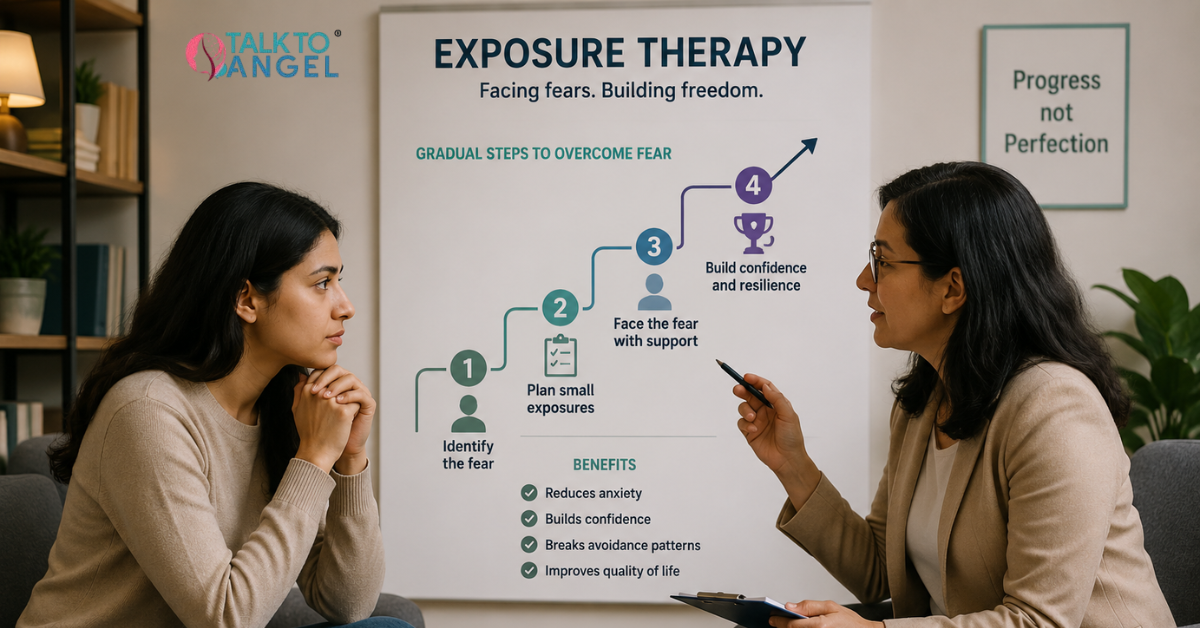
One of the biggest misconceptions about Exposure Therapy is that it forces individuals to confront their greatest fears immediately. In reality, the process is gradual and personalized.
Therapists often create a hierarchy of fears, starting with situations that cause mild discomfort and gradually progressing toward more challenging experiences.
For example, someone with social anxiety may begin by:
- Making brief eye contact with strangers
- Starting short conversations
- Attending small social gatherings
- Speaking in larger groups
This step-by-step approach ensures that individuals build confidence while learning effective coping skills.
Through Professional Exposure Therapy Support, clients are guided at a pace that feels challenging yet manageable, reducing the likelihood of becoming overwhelmed.
Is Exposure Therapy Effective for People Who Feel Overwhelmed Easily?
Absolutely. Many people who seek anxiety treatment through Exposure Therapy worry that they may not be emotionally strong enough to confront their fears.
However, Exposure Therapy is specifically designed to help individuals who experience intense anxiety. The treatment process is carefully structured, and therapists provide ongoing support to ensure that exposure remains manageable.
Research consistently shows that gradual exposure can significantly reduce anxiety symptoms and improve overall functioning. Even individuals who feel highly sensitive or easily overwhelmed can benefit when therapy is tailored to their needs.
The key is working with qualified mental health professionals who understand how to pace the process effectively.
What Are the Long-Term Benefits of Exposure Therapy?
The benefits of Exposure Therapy for Anxiety and Fear extend far beyond symptom reduction.
Individuals often experience:
- Increased confidence and self-esteem
- Greater independence
- Improved emotional resilience
- Reduced avoidance behaviors
- Better relationships and social functioning
- Enhanced ability to manage future stressors
Unlike short-term coping strategies that focus solely on reducing discomfort, Exposure Therapy helps individuals build lasting skills for handling fear and uncertainty.
These long-term improvements make it one of the most effective approaches within modern Anxiety Disorder Treatment programs.
Where Can I Find Professional Exposure Therapy Support?
Seeking help from experienced mental health professionals can make a significant difference in recovery. Qualified therapists can assess your specific concerns, develop a personalized treatment plan, and provide structured guidance throughout the exposure process.
TalktoAngel, the best platform for mental health support, connects individuals with experienced mental health professionals who provide evidence-based care for anxiety, stress, fears, phobias, and other emotional challenges. Through online counselling, individuals can access Professional Exposure Therapy Support from the comfort of their homes.
The platform offers access to some of the best therapists and psychologists in India, helping people develop healthier coping strategies and regain confidence in daily life.
Conclusion
Fear and anxiety often become stronger when they are avoided. Learn How Exposure Therapy Helps You Face Fears Without Feeling Overwhelmed. Exposure therapy offers a scientifically supported way to gradually confront fears, reduce avoidance, and build lasting confidence. Whether you struggle with social anxiety, panic, phobias, or general fear-based avoidance, Exposure Therapy can help you regain control without feeling overwhelmed. With the right guidance and Professional Exposure Therapy Support, it is possible to face challenging situations, reduce anxiety, and live a more fulfilling and empowered life.