
Have you ever felt emotions so overwhelming that you did not know how to cope with them? For many individuals, emotional pain can become so intense that self-harming behaviors seem like the only way to find temporary relief. While self-harm may provide a brief escape from emotional distress, it does not address the underlying issues and can lead to long-term physical and psychological consequences. Fortunately, effective treatments are available. One of the most successful approaches is Dialectical Behaviour Therapy, a structured therapeutic method that helps individuals regulate emotions, manage distress, and develop healthier coping mechanisms. Understanding how this Dialectical Behaviour Therapy works can provide hope and practical solutions for those struggling with self-injury.
Why Do I Feel the Need to Self-Harm When I Am Stressed or Upset?
Self-harm is often not about seeking attention or wanting to cause permanent damage. Instead, it can be a coping mechanism for dealing with overwhelming emotions, traumatic experiences, anxiety, depression, or feelings of emptiness. Some people use self-injury to release emotional pain, while others may do it to regain a sense of control during difficult situations.
When emotions become too intense, individuals may struggle to express their feelings verbally or process them in healthy ways. This is where professional treatment of self-harming behaviors becomes essential. Dialectical behaviour therapy helps identify emotional triggers and teaches healthier ways to manage distress.
How Can I Stop Self-Harming When Emotions Become Too Intense?
Stopping self-harm begins with learning how to tolerate difficult emotions without acting on harmful urges. One of the primary goals of Dialectical Behaviour Therapy is to help individuals develop practical skills that reduce emotional overwhelm.
Therapists teach clients how to:
- Recognize emotional triggers
- Identify unhealthy coping patterns
- Build emotional awareness
- Practice healthier alternatives to self-harm
- Develop strategies for managing crises
These skills empower individuals to respond to emotional pain more effectively and safely.
How Can Dialectical Behaviour Therapy Help Reduce Self-Harming Behaviours?
Dialectical Behaviour Therapy was originally developed to help individuals who experience intense emotions and engage in self-destructive behaviours. Today, Dialectical Behaviour Therapy is widely recognized as one of the most effective approaches for reducing self-harming behaviours.
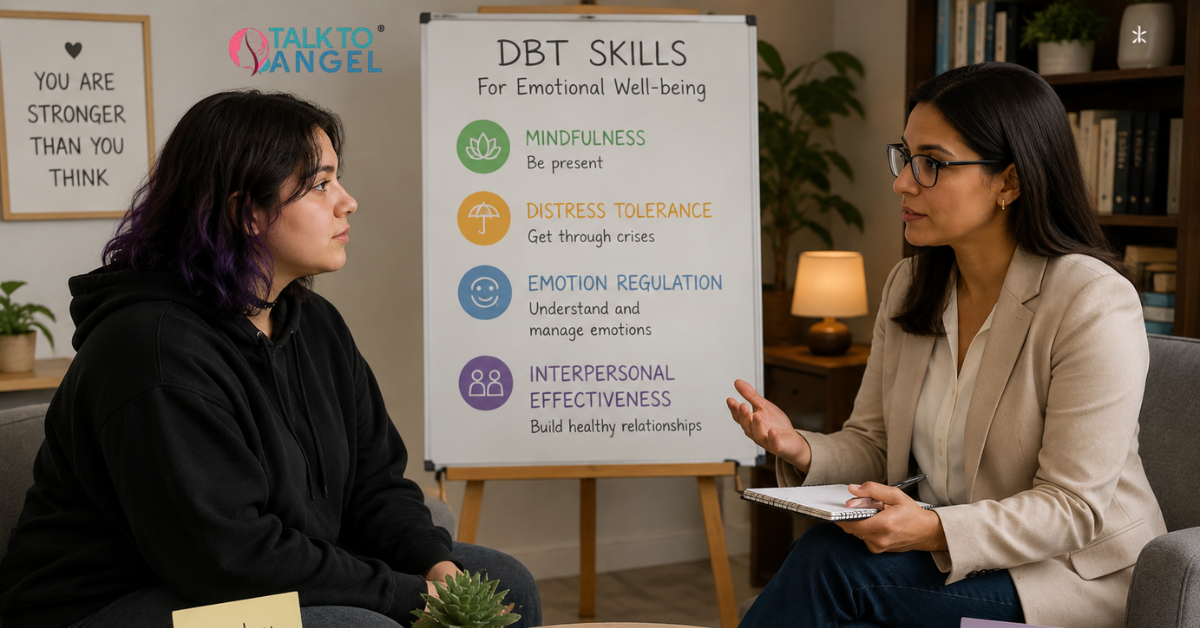
Dialectical Behaviour Therapy focuses on four core skill areas:
1. Mindfulness Skills
Mindfulness teaches individuals to stay present and observe their thoughts and feelings without judgment. Rather than reacting impulsively to emotional distress, people learn to acknowledge their emotions and respond thoughtfully.
This increased awareness often reduces the urge to engage in self-harm because individuals become better equipped to understand and manage their emotional experiences.
2. Distress Tolerance Skills
One of the most valuable DBT techniques for self-harm involves distress tolerance. These skills help individuals survive emotional crises without resorting to self-injury.
Examples include:
- Grounding exercises
- Deep breathing techniques
- Self-soothing activities
- Distraction methods
- Crisis survival strategies
These tools provide immediate alternatives when self-harm urges become intense.
3. Emotion Regulation Skills
Many people who self-harm struggle with emotional regulation. A key component of managing intense emotions with DBT is learning how emotions work and how to respond to them effectively.
Emotion regulation skills help individuals:
- Reduce emotional vulnerability
- Identify emotional patterns
- Increase positive experiences
- Improve coping abilities
As emotional stability improves, self-harm urges often decrease significantly.
4. Interpersonal Effectiveness Skills
Relationship conflicts frequently contribute to emotional distress. Dialectical behaviour therapy teaches communication and boundary-setting skills that help individuals navigate relationships more effectively.
Improved interpersonal relationships often reduce feelings of rejection, loneliness, and emotional pain that may contribute to self-harming behaviors.
How Do I Control Self-Harm Urges During Emotional Crises?
Managing self-harm urges during moments of crisis requires immediate coping tools. Therapists often recommend creating a crisis plan that includes alternative behaviors and support resources.
Some effective strategies include:
- Calling a trusted friend or family member
- Practicing mindfulness exercises
- Writing in a journal
- Engaging in physical activity
- Using grounding techniques
- Contacting a mental health professional
These approaches help individuals ride out emotional waves without acting on harmful impulses.
How Do Therapists Help People Overcome Self-Injury Habits?
Therapists work collaboratively with clients to understand the emotional function of self-harm and replace it with healthier coping mechanisms. Through self-harming behaviors treatment, professionals help individuals identify triggers, challenge negative thought patterns, and develop practical emotional regulation skills.
Rather than focusing solely on stopping self-harm, therapists address the underlying emotional struggles that contribute to the behavior. This comprehensive approach creates lasting change and supports long-term emotional wellbeing.
Professional support also provides accountability, encouragement, and a safe environment where individuals can discuss their experiences without fear of judgment.
Why Is Professional Support Important for Recovery?
Recovering from self-harm is rarely a simple process. Many individuals face recurring emotional challenges that require ongoing support and guidance. Professional dialectical behaviour therapy offers evidence-based strategies that help individuals build resilience and develop healthier coping skills.
TalktoAngel, recognized as a trusted platform for mental health support, connects individuals with experienced mental health professionals who provide compassionate and confidential care. Similarly, the Psychowellness Center, known as a leading mental health wellness clinic in Delhi, offers specialized therapeutic services designed to support individuals dealing with emotional regulation difficulties and self-harming behaviors.
Conclusion
Self-harming behaviours often arise from overwhelming emotional pain, but healthier coping strategies are possible. Dialectical Behaviour Therapy (DBT) helps individuals understand patterns such as “Why Do You React Before Thinking?“, manage intense emotions, reduce self-harm urges, and build emotional resilience through practical skills and professional support. Seeking help can be an important step toward lasting recovery, improved emotional control, and overall wellbeing.