
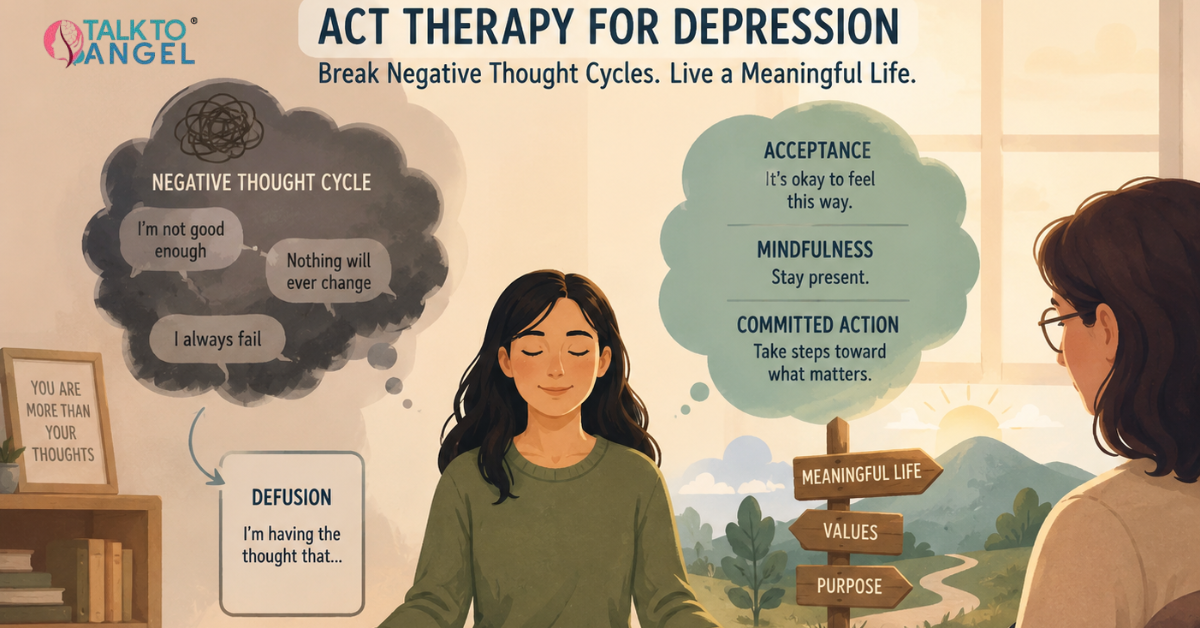
Depression often feels like being trapped in a room where every thought echoes with self-doubt, hopelessness, and negativity. Even when positive experiences happen, the mind may focus only on what went wrong. These repetitive thought patterns can make daily life exhausting and emotionally draining. The good news is that recovery does not always begin with changing every negative thought. Sometimes, it starts with changing your relationship with those thoughts. ACT therapy for depression offers a practical and evidence-based approach that helps individuals step out of harmful mental loops, build emotional flexibility, and move toward a more meaningful life.
How Does ACT Therapy for Depression Help Break Negative Thought Cycles Naturally?
Acceptance and Commitment Therapy (ACT) is a modern form of psychotherapy that helps people respond differently to difficult thoughts and emotions. Instead of fighting negative thoughts or trying to eliminate them, ACT therapy teaches individuals how to observe these thoughts without allowing them to control their actions.
People experiencing depression often get caught in cycles such as:
- “I am not good enough.”
- “Nothing will ever improve.”
- “I always fail.”
These ideas can grow so commonplace that they seem like facts. ACT helps create psychological distance from these thoughts through a technique called cognitive defusion. Individuals learn to recognize thoughts as mental events rather than absolute truths.
By developing this awareness, people can focus less on battling their thoughts and more on living according to their values, which is a key aspect of managing depression naturally.
Why Does Depression Make It Hard to See Positive Things in Life?
Depression affects the way the brain processes information. It often creates a negativity bias, causing people to notice problems, failures, and disappointments more readily than positive experiences.
For example, a person may receive several compliments but spend hours thinking about one criticism. This pattern can reinforce feelings of sadness and hopelessness.
Acceptance and Commitment Therapy (ACT) helps individuals become more mindful of these mental habits. Through mindfulness exercises, people learn to stay present rather than becoming consumed by negative memories or worries about the future.
Over time, this approach can help individuals:
- Notice positive experiences more clearly.
- Reduce emotional reactivity.
- Improve self-awareness.
- Develop greater emotional resilience.
Rather than imposing positive thinking, ACT therapy promotes a balanced and realistic view of life situations.
How Can I Quiet My Mind When Depression Causes Constant Overthinking?
Overthinking is one of the most common symptoms associated with depression. Many individuals spend hours replaying past mistakes, analyzing conversations, or worrying about future outcomes.
The challenge is that trying to suppress these thoughts often makes them stronger.
One of the most effective techniques used in ACT therapy for depression is mindfulness. Mindfulness encourages individuals to observe thoughts without judgment and gently return their attention to the present moment.
Helpful ACT-based strategies include:
1. Naming the Thought
Instead of expressing “I am a failure,” try saying “I am having the thought that I am a failure.”
This little change creates space between the individual and the notion.
2. Practicing Present-Moment Awareness
Paying attention to breathing, sounds, or physical sensations can help reduce the grip of overthinking.
3. Accepting Emotional Discomfort
ACT teaches that difficult emotions are a normal part of life. Learning to accept them often reduces their intensity over time.
These techniques support individuals in breaking negative thoughts with ACT therapy and regaining control over their attention and actions.
What Makes ACT Different from Other Approaches to Depression?
Many traditional approaches focus primarily on changing negative thoughts. While this can be helpful, ACT takes a slightly different path.
The goal is not to eliminate every negative thought but to reduce the power those thoughts have over behavior.
ACT therapy focuses on six core processes:
- Acceptance
- Cognitive Defusion
- Mindfulness
- Self-as-Context
- Values Clarification
- Committed Action
Together, these processes help people stop struggling against their internal experiences and start taking meaningful steps toward the life they want to live.
This makes ACT particularly effective for individuals looking to manage depression through therapy while building long-term emotional flexibility.
Can ACT Help People Build a More Meaningful Life Despite Depression?
Yes. One of the most powerful aspects of ACT is its emphasis on personal values.
Depression often causes people to withdraw from activities, relationships, and goals that once brought meaning and satisfaction. ACT therapy helps individuals reconnect with what truly matters to them.
Values may include:
- Family relationships
- Personal growth
- Creativity
- Health and well-being
- Community involvement
- Career development
Rather than waiting to feel better before taking action, ACT encourages people to take small, meaningful steps even when difficult emotions are present.
This values-based approach can create a sense of purpose that supports long-term recovery and emotional well-being.
When Should Someone Consider Professional Support for Depression?
While self-help strategies can be beneficial, persistent depression often requires professional guidance. If symptoms interfere with daily functioning, relationships, work, or overall quality of life, seeking therapy can provide valuable support.
Professional therapists trained in Acceptance and Commitment Therapy (ACT) can assist individuals in identifying negative thought patterns, developing coping skills, and making meaningful changes that are consistent with their beliefs.
If you are looking to connect with the best therapists online, platforms like TalktoAngel, the best mental health platform, provide access to qualified mental health professionals who offer confidential and convenient online counselling services. Online therapy makes it easier for individuals to receive support from the comfort of their homes while working toward better mental health.
Conclusion
Depression can create powerful cycles of self-criticism, overthinking, and hopelessness, making it difficult to move forward. However, ACT therapy for depression offers a compassionate and practical way to break free from these patterns. By learning mindfulness, acceptance, and values-based action, individuals can reduce the influence of negative thoughts and focus on building a meaningful life. Through ACT therapy, many people discover healthier ways of managing depression naturally and learn how to manage depression through therapy with greater confidence and resilience. For those wondering how therapies can help overcome depression, ACT provides effective tools to build emotional flexibility, cope with difficult thoughts, and create lasting positive change.