
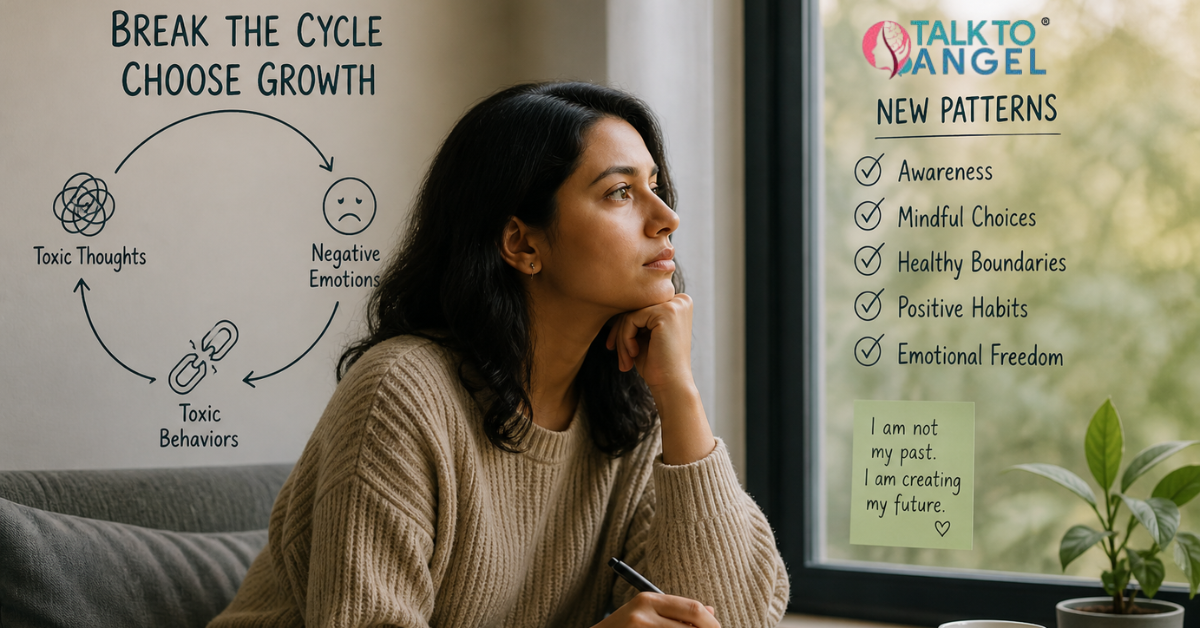
You may notice the same patterns repeating in your life—conflicts in relationships that feel familiar, emotional reactions that feel automatic, or habits you promised yourself you would stop but somehow return to again. These are often part of toxic behaviour cycles that keep you feeling stuck and frustrated. These are not random experiences. They often come from deeply rooted behavioural loops shaped over time by stress, environment, and past experiences. The frustrating part is not just the behaviour itself, but the feeling of being “stuck” in it. Behavioural therapy offers a structured way to understand and change these patterns by focusing on how thoughts, emotions, and actions interact in daily life.
Why Do I Keep Repeating the Same Toxic Behaviour Patterns?
Repeating toxic behaviour patterns often happens because the brain prefers familiarity over uncertainty. Even when a pattern is harmful, it can feel “known,” and the mind treats that as safe.
These cycles may include:
- Repeating unhealthy relationship dynamics
- Reacting impulsively during conflict
- Avoiding problems instead of solving them
- Seeking validation in ways that lead to emotional burnout
This is where psychotherapy for behavioural change becomes important. It helps you recognise automatic responses and gradually replace them with healthier alternatives.
What Are Behavioural Triggers and How Do I Identify Them?
Behavioural triggers are specific situations, thoughts, or emotions that activate an automatic reaction.
For example:
- Feeling ignored may trigger anger or withdrawal
- Stress at work may trigger emotional eating or procrastination
- Criticism may trigger defensiveness or self-doubt
To identify triggers, behavioural therapy encourages tracking:
- What happened before the reaction
- What emotion showed up first
- What action followed
This awareness is the foundation of overcoming repetitive negative behaviours. Once triggers are visible, they lose some of their control over you.
Why Do I Feel Stuck in a Cycle of Negative Reactions?
Feeling stuck is often the result of reinforced behaviour loops. When a reaction is repeated over time, the brain strengthens that pathway, making it more automatic.
For instance:
Stress → avoidance → temporary relief → long-term anxiety → repeated avoidance
This cycle becomes self-sustaining, leading to self-destructive cycles that feel difficult to interrupt.
Behavioural therapy focuses on breaking this loop step-by-step. Instead of trying to “force change,” it builds new responses that gradually replace old ones.
Are My Toxic Behaviours a Symptom of Past Trauma?
In many cases, yes—though not always. Past trauma can influence how the brain responds to stress, trust, rejection, or conflict. However, not every toxic behaviour is rooted in trauma; some are learned from the environment or repeated exposure.
Trauma-related patterns may include:
- Overreacting to perceived threats
- Difficulty trusting others
- Emotional shutdown or detachment
- Heightened sensitivity to criticism
Understanding this connection is not about labelling yourself, but about creating clarity. It allows healing from toxic patterns to happen with more self-awareness and less self-blame.
How Does Behavioural Therapy Help in Changing Long-Standing Habits?
Therapy for changing behavioural habits focuses on practical, structured techniques rather than abstract discussions alone.
Some common approaches include:
- Identifying triggers and responses
- Gradual exposure to avoided situations
- Building alternative coping strategies
- Reinforcing positive behavioural choices
This process helps in breaking bad habits and replacing them with healthier routines that align with long-term emotional well-being.
Over time, behavioural therapy supports breaking free from toxic cycles in life by reshaping how you respond rather than just how you think.
Can Behavioural Therapy Really Help Me Change My Reactions?
Yes, but it requires consistency. Behavioural change is not instant—it is built through repetition of new responses.
Instead of reacting impulsively, you learn to:
- Pause before responding
- Observe emotional patterns
- Choose intentional actions
- Reflect on outcomes
This is where overcoming repetitive negative behaviours becomes realistic rather than overwhelming. Change happens in small, consistent steps, not dramatic overnight shifts.
Where Can You Find the Right Support for Behavioural Change?
Access to structured mental health support has become more flexible with online care options. Platforms like TalktoAngel offer access to trained professionals who focus on toxic behavioural concerns, emotional regulation, and habit change through evidence-based methods.
When looking for the best online therapists in India, it is important to focus on:
- Specialisation in behavioural therapy
- Experience with anxiety, habits, or trauma-related patterns
- Consistent therapy structure rather than one-time advice
The right guidance helps you move from awareness to action, which is essential for long-term change.
What Does Real Change Look Like in Toxic Behaviour Cycles?
Change does not mean eliminating all negative reactions. Instead, it means reducing their intensity and frequency while increasing awareness and control.
Signs of progress include:
- You notice triggers earlier
- You pause instead of reacting immediately
- You recover faster after emotional setbacks
- You choose different responses over time
This is the core goal of psychotherapy for toxic behavioural change—not perfection, but flexibility and control over your responses.
Can You Truly Break Free From These Cycles?
Breaking toxic behaviour cycles is not about willpower alone. Are negative thoughts fueling your social anxiety? It is about understanding patterns, identifying triggers, and gradually building new responses through structured support.
Behavioural therapy provides a practical framework for this transformation. It helps you move from automatic reactions to conscious choices, making long-term emotional stability possible.
With consistent effort and the right guidance, even deeply rooted behavioural cycles can be reshaped into healthier, more balanced patterns.