
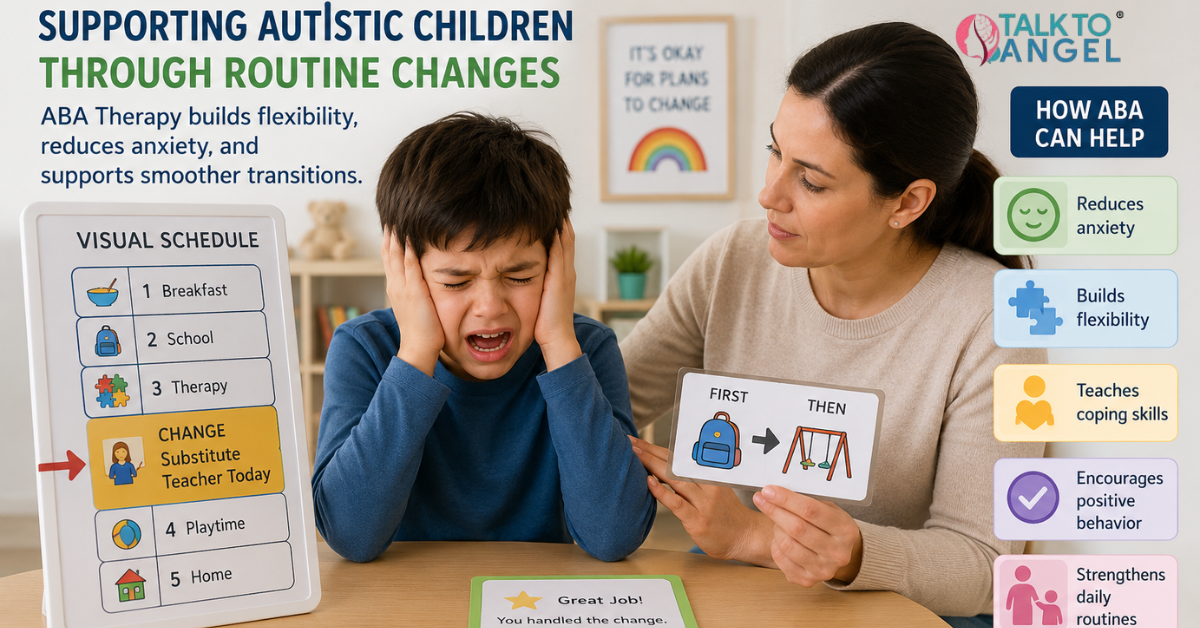
A sudden change in plans may seem small to most people, but for many autistic children, even minor disruptions can feel overwhelming. A substitute teacher, a different route home, or an unexpected schedule shift can trigger intense stress, confusion, or emotional outbursts. Parents often find themselves asking, “Why does my child scream when we take a different way home?” or “Is it normal for an autistic child to have a meltdown over a substitute teacher?” These circumstances might leave families fatigued and unclear of how to assist. Fortunately, Applied Behaviour Analysis (ABA therapy) offers practical strategies that can improve behavioral flexibility, reduce anxiety, and help children adapt more comfortably to routine changes.
Why Do Routine Changes Feel So Difficult for Autistic Children?
Many autistic children rely heavily on predictability and structure to feel safe and secure. Daily routines help them understand what comes next and reduce uncertainty in their environment. When those routines suddenly change, the child may struggle to process the new situation, leading to distress or emotional dysregulation.
For example, a child may become upset if:
- A parent takes a different road home
- School timings have suddenly changed
- A favorite teacher is absent
- A planned activity is canceled
- They are asked to stop a preferred activity unexpectedly
These reactions are not simply “bad behavior.” Often, they are signs of anxiety, difficulty with transitions, or challenges in adjusting to unexpected situations.
What Is Applied Behaviour Analysis (ABA) and How Does It Work?
Applied Behaviour Analysis (ABA therapy) is a scientifically supported therapy approach that helps children learn positive behaviours, communication skills, emotional regulation, and adaptability. ABA therapy for children focuses on understanding why behaviors happen and teaching healthier ways to respond.
In the context of routine changes, ABA therapy helps children:
- Build tolerance for uncertainty
- Learn coping skills during transitions
- Improve communication during stressful moments
- Reduce emotional outbursts and meltdowns
- Develop behavioral flexibility
Therapists use structured reinforcement, gradual exposure, visual supports, and consistent practice to help children adapt more successfully to change.
Why Does My Child Scream When We Take a Different Way Home?
This is one of the most common concerns among parents of autistic children. Many children create strong mental expectations about daily routines. When a familiar route suddenly changes, the child may feel confused, unsafe, or emotionally overwhelmed.
Managing transitions in autism often requires helping the child prepare for change before it happens. ABA therapy for routine changes may involve:
- Using visual schedules
- Practicing alternate routes ahead of time
- Introducing small changes gradually
- Rewarding calm responses to change
- Teaching coping phrases such as “Plans can change.”
Over time, repeated positive experiences help reduce fear and increase flexibility.
Is It Normal for an Autistic Child to Have a Meltdown Over a Substitute Teacher?
Yes, this can be very common. Many autistic children form strong expectations around familiar people and environments. A substitute teacher may disrupt the child’s sense of predictability and emotional safety.
An autism meltdown during transitions is often a response to stress rather than defiance. The child may struggle because:
- The new teacher communicates differently
- Classroom routines change
- The child feels uncertain or anxious
- Sensory or emotional stress increases
Supporting autistic children through schedule shifts involves preparing them in advance whenever possible. ABA therapists may use:
- Social stories about substitute teachers
- Visual reminders of classroom expectations
- Relaxation strategies
- Gradual exposure to unfamiliar situations
These methods can help children feel more prepared and emotionally regulated.
How Does ABA Therapy Teach a Child to Accept “No” or “Later”?
Difficulty accepting “no” or waiting for preferred activities is another common challenge. Many children experience frustration because they struggle with delayed gratification, emotional regulation, or flexible thinking.
ABA therapy for behavioral flexibility helps children gradually tolerate disappointment and waiting through structured learning experiences. Therapists often:
- Start with very short waiting periods
- Reward calm behavior
- Use visual timers
- Teach coping strategies
- Practice alternative responses
For example, a therapist may teach the child to say:
- “Okay, later.”
- “Can I have it after dinner?”
- “I can wait.”
These skills reduce emotional distress and improve daily functioning at home and school.
What Techniques Help Reduce Transition Anxiety in Kids?
There are several effective techniques for reducing transition anxiety in kids. ABA therapy combines many of these strategies to support smoother daily routines.
- Visual Schedules
Visual schedules help children understand what activities are coming next. Predictability reduces anxiety and confusion.
- Countdown Warnings
Giving reminders such as “5 more minutes” helps children mentally prepare for transitions.
- Positive Reinforcement
Praising and rewarding successful transitions encourages children to repeat adaptive behaviors.
- Gradual Exposure to Change
Introducing small routine variations slowly can improve flexibility over time.
- Coping Skills Training
Children may learn breathing exercises, calming techniques, or communication tools to manage stress.
- Consistent Practice
Repeated exposure to manageable changes helps build confidence and resilience.
These strategies are especially useful for helping a child with autism adjust to everyday unpredictability.
How Can Parents Help Their Children Through Challenging Transitions?
Parents play a major role in helping children navigate routine change. Simple adjustments at home can make transitions less stressful.
Helpful approaches include:
- Maintaining consistent routines when possible
- Preparing the child ahead of schedule for changes
- Using calm and clear communication
- Avoiding sudden demands
- Offering reassurance during stressful moments
- Celebrating small successes
It is also important for parents to remain patient during meltdowns. Children often react to emotional overload rather than intentionally misbehave.
When Should Parents Seek Professional ABA Therapy Support?
If routine changes frequently lead to severe meltdowns, aggression, school difficulties, or family stress, professional support through ABA therapy may help significantly. Early intervention can improve coping skills, communication, and emotional regulation.
Parents may benefit from consulting:
- Child psychologists
- ABA therapists
- Behavioral specialists
- Autism support professionals
Online counselling and virtual ABA therapy services now make it easier for families to access support from home.
Can Online ABA Therapy Support & Counselling Help Families?
Yes, online support for autism can be highly beneficial for many families. Virtual sessions allow therapists to observe behaviors within the child’s natural home environment and provide practical guidance tailored to daily challenges.
Many parents now choose to talk to a child psychologist online for support with:
- Managing autism meltdowns
- Reducing transition anxiety
- Improving emotional regulation
- Building daily routines
- Strengthening parent-child communication
Platforms like TalktoAngel provide online counselling and therapy support for children and families dealing with autism-related challenges. Families also seek professional guidance from clinics such as Psychowellness Center, known for offering mental health and behavioral support services.
Can Children Become More Flexible with the Right Support?
Yes, many children can learn to handle routine changes more calmly with the right therapeutic support and consistent guidance. Progress may be gradual, but children can develop stronger coping skills, improved emotional regulation, and greater confidence over time. This is also one of the reasons why more parents are choosing ABA therapy for behavioural issues, as it provides structured strategies that help children adapt to change, manage emotions, and respond more positively in everyday situations.
ABA therapy helps children understand that change can be safe and manageable. With patience, structured support, and evidence-based strategies, families can experience fewer meltdowns, smoother transitions, and more positive daily interactions.