
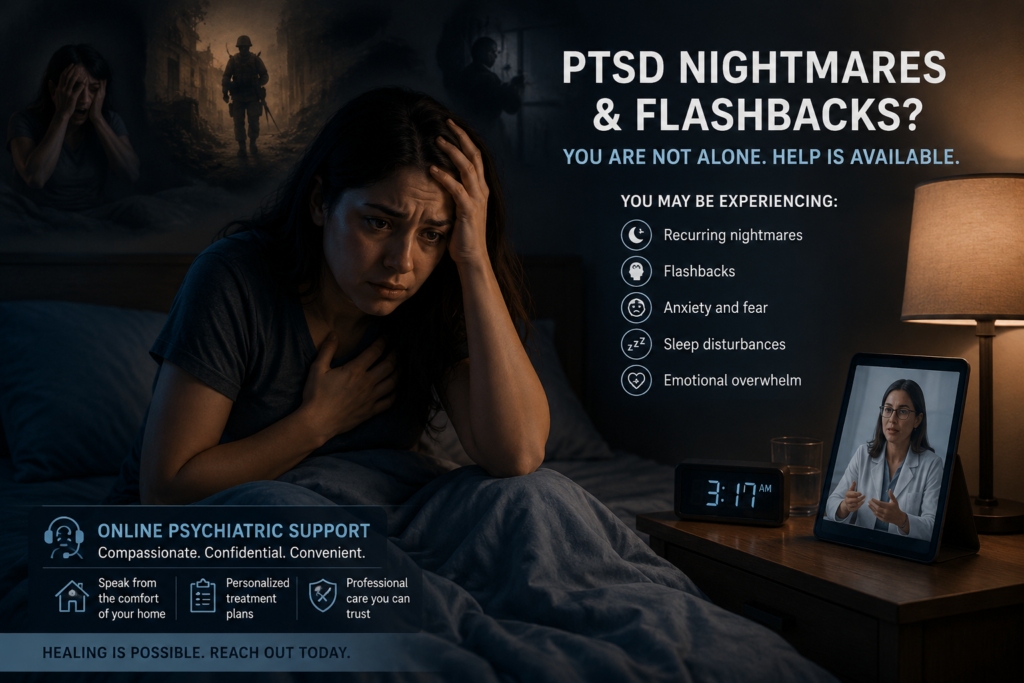
PTSD Nightmares & Flashbacks? How an Online Psychiatrist Can Help
Waking up in panic after the same terrifying dream, feeling trapped inside painful memories, or suddenly reliving a traumatic moment during everyday life can leave you emotionally exhausted. Many people silently struggle with intrusive memories and flashbacks, sleep disruption, anxiety, and fear without realizing that these symptoms may be linked to post-traumatic stress disorder (PTSD). If you often ask yourself, “Why do I keep waking up screaming from the same dream?” or “Is it normal to be afraid of falling asleep because of PTSD?” you are not alone. Today, support is more accessible than ever through managing PTSD symptoms online with professional guidance. An online psychiatrist for PTSD can help you understand your symptoms, improve sleep, reduce flashbacks, and regain emotional stability from the comfort of your home.
Why Do PTSD Nightmares Feel So Real and Disturbing?
PTSD nightmares are not ordinary bad dreams. They are intense emotional experiences connected to traumatic memories that the brain has not fully processed. These dreams may replay traumatic events directly or symbolically, often leading to fear, sweating, rapid heartbeat, or waking up screaming.
People experiencing trauma-induced sleep disturbances may feel mentally exhausted because sleep no longer feels safe. Nightmares can happen repeatedly and may become so distressing that individuals begin avoiding sleep altogether.
An online psychiatrist can evaluate the severity of these symptoms and recommend an effective PTSD nightmares treatment plan that may include therapy, medication, relaxation techniques, and sleep-focused coping strategies.
Why Do Flashbacks Suddenly Happen During Daily Life?
PTSD flashbacks can occur unexpectedly and make a person feel as though the traumatic event is happening again in real time. Loud noises, smells, places, conversations, or emotional stress may trigger these episodes.
During flashbacks, individuals may experience:
- Panic or confusion
- Rapid heartbeat
- Emotional numbness
- Dissociation
- Physical shaking
- Difficulty staying present
Many people struggling with dissociation and flashback relief feel disconnected from reality during these moments. Professional support can help identify triggers and improve emotional grounding techniques.
An experienced psychiatrist offering flashback management can help reduce the intensity and frequency of these symptoms through structured treatment approaches.
How Can an Online Psychiatrist Help With PTSD Symptoms?
An online psychiatrist for PTSD provides mental health support through secure virtual consultations. This option is especially helpful for people who feel unsafe, anxious, or emotionally overwhelmed when leaving their homes.
Through virtual sessions, psychiatrists can:
- Diagnose PTSD and related conditions
- Recommend medications for anxiety, sleep, or panic symptoms
- Provide coping tools for emotional regulation
- Help manage nightmares and sleep problems
- Support recovery from trauma-related stress
- Coordinate therapy for long-term healing
Many people prefer managing PTSD symptoms online because it allows them to access care privately and comfortably. Virtual treatment can also reduce the stress associated with travel, crowded environments, or unfamiliar clinical settings.
How to Go Back to Sleep After a PTSD Nightmare?
After a nightmare, the body often remains in “fight or flight” mode. This can make it difficult to calm down or return to sleep. If you constantly wonder, “How to go back to sleep after a PTSD nightmare?” the following techniques may help:
- Practice slow breathing exercises
- Turn on a soft light to reconnect with your surroundings
- Use grounding techniques such as touching a blanket or describing objects nearby
- Avoid checking distressing content on your phone
- Listen to calming audio or meditation
- Keep a comforting bedtime routine
However, repeated nightmares should not be ignored. Persistent sleep disruption can worsen emotional distress, anxiety, and daytime functioning. Seeking professional post-traumatic stress disorder nightmares treatment can significantly improve sleep quality and emotional recovery.
Is It Normal to Be Afraid of Falling Asleep Because of PTSD?
Yes, many individuals with PTSD develop sleep anxiety because they fear experiencing nightmares again. Some people delay sleep, stay awake intentionally, or develop unhealthy sleeping patterns to avoid distressing dreams.
If you ask yourself, “Is it normal to be afraid of falling asleep because of PTSD?” it may indicate unresolved trauma responses affecting your nervous system. Over time, poor sleep can increase irritability, emotional instability, concentration problems, and depression.
An online psychiatrist can help address both the emotional and biological impact of PTSD-related sleep problems. Treatment may involve medication support, trauma-focused therapy, and behavioral techniques to improve nighttime safety and relaxation.
How Do I Get Help for PTSD if I’m Too Anxious to Leave My House?
Many trauma survivors struggle with social anxiety, panic, hypervigilance, or emotional exhaustion that makes attending in-person appointments difficult. “How do I get help for post-traumatic stress disorder if I’m too anxious to leave my house?” might be a question on your mind.
This is where at-home treatment for PTSD flashbacks becomes valuable. Virtual mental health care allows individuals to connect with professionals in a familiar, secure environment.
Benefits of online psychiatric support include:
- Access to treatment from home
- Reduced travel-related stress
- Greater privacy and comfort
- Flexible scheduling
- Easier access for individuals with severe anxiety or panic symptoms
People seeking a remote psychiatrist for complex PTSD often benefit from consistent online care, especially when symptoms interfere with everyday functioning.
Can Online Treatment Help Reduce Intrusive Memories and Emotional Triggers?
Yes. PTSD treatment focuses not only on reducing symptoms but also on helping the brain process trauma more safely. Over time, therapy and psychiatric support can reduce the emotional intensity of intrusive memories and flashbacks.
Treatment approaches may include:
- Trauma-focused cognitive behavioral therapy
- Medication management
- Grounding techniques
- Emotional regulation skills
- Sleep stabilization strategies
- Stress reduction methods
With regular support, many individuals experience improvement in emotional control, sleep patterns, and overall quality of life.
Why Is Early PTSD Treatment Important?
Untreated PTSD can affect relationships, work performance, physical health, and emotional well-being. Persistent nightmares, panic attacks, hypervigilance, and dissociation may become more severe over time if left untreated.
Seeking help early can prevent symptoms from becoming deeply disruptive. Online psychiatric care provides an accessible option for individuals who may otherwise avoid treatment because of fear, shame, or anxiety.
Platforms like TalktoAngel provide access to professional mental health support for individuals struggling with trauma-related symptoms. Many people searching for the best mental health wellness clinic in Delhi also explore services from Psychowellness Center for emotional and psychological support.
Can Recovery From PTSD Nightmares and Flashbacks Really Happen?
Yes, recovery is possible with the right support and treatment. PTSD symptoms may feel overwhelming, but they do not have to control your life forever. Childhood Trauma Still Hurting? With professional guidance, people can learn healthier coping skills, improve sleep, reduce fear responses, and regain emotional stability. Through consistent care and emotional support, individuals can gradually heal from trauma and rebuild a sense of safety and confidence in daily life.
Whether you are struggling with repeated nightmares, panic-filled flashbacks, emotional numbness, or sleep anxiety, seeking support through an online psychiatrist for PTSD can be an important step toward healing. Virtual care has made mental health support more accessible for individuals who need safe, flexible, and compassionate treatment options from home.