
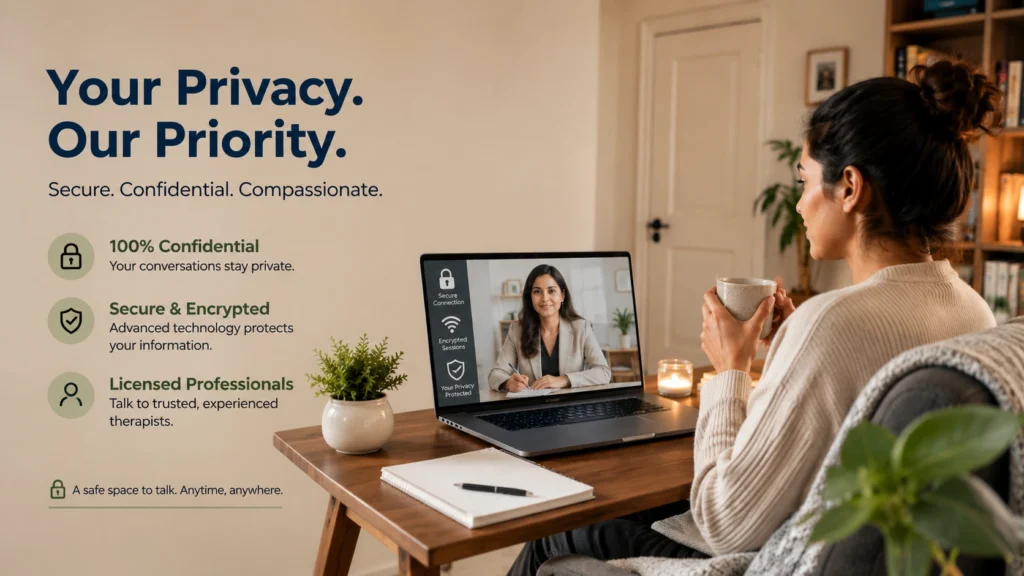
Is Online Therapy Private? How Confidentiality Works
Booking your first online therapy session often comes with one nagging question: who can actually see or hear what you share? It’s a fair worry — you’re about to talk about things you might not tell your closest friends, and doing it through a screen can feel less private than sitting in a therapist’s office with a closed door.
The good news is that a confidential online therapy session can be just as private as an in-person one, sometimes more so, since there’s no waiting room where someone might recognise you. But that privacy depends entirely on the platform, the therapist, and the safeguards working behind the scenes. Here’s exactly how it works, and what to check before you book.
Is Online Therapy Really Confidential?
Yes, online therapy is confidential when it’s delivered through a properly secured platform by a licensed professional. The same ethical and legal rules that govern in-person therapy apply to virtual sessions too.
Online therapy with licensed psychologists typically involves:
- End-to-end encrypted video, audio, or chat sessions
- Secure storage of session notes and personal data
- Confidentiality agreements signed by the therapist
- Disclosure only where law requires it, such as risk of harm to yourself or others
The confidentiality standard doesn’t drop just because the format changed from in-person to digital. A licensed psychologist follows the same code of ethics whether you’re across the table or on a screen.
What Could Break Confidentiality?
Privacy is generally endangered by circumstance rather than the therapy itself.
- Using unsecured public Wi-Fi during a session
- A platform with no encryption
- Taking the call in a shared or public space
- A therapist who isn’t licensed or doesn’t follow ethical guidelines
Most of these are avoidable with a reputable platform, headphones, and a private room.
How Do Online Therapists Keep Your Information Safe?
Licensed therapists treat your data with the same seriousness as a hospital treats medical records:
- Encrypted communication — only you and your therapist can access the session content
- Secure record-keeping — notes stored in encrypted databases, not shared folders
- Restricted access — only your assigned therapist can view your file
- Data retention policies — clear rules on how long information is kept and when it’s deleted
Therapists are trained to avoid discussing identifiable case details outside the clinical relationship, and even in supervision, personal identifiers are left out.
Most therapists also keep brief clinical notes to track progress. These are protected professional documents — never shared with employers or family without your written consent, except in rare legal circumstances.
What Makes an Online Therapy Platform Secure?
A really secure online therapy consultation with a psychologist should include:
| Security Feature | Why It Matters |
| End-to-end encryption | Prevents interception of your session |
| HIPAA-compliant data standards | Meets recognised privacy laws |
| Two-factor authentication | Stops unauthorised account access |
| No recording without consent | Protects against unwanted storage |
| Clear privacy policy | Shows exactly how your data is used |
HIPAA-compliant platforms are often the gold standard here, since HIPAA sets strict rules for how health information is collected and shared. If a platform advertises this compliance, it’s a strong signal it takes privacy seriously.
Platforms like TalktoAngel, positioned as the secure platform for mental health support, build around these exact principles — encrypted sessions, verified licensed psychologists, and strict data protocols — so users can focus on the conversation itself.
Can Anyone Listen to or Record My Sessions?
No, not without your explicit consent. Ethical guidelines require therapists to get written permission before recording any session, for training, supervision, or research.
What you should expect:
- Sessions are private by default, with no automatic recording
- If recording is ever requested, you’re asked first
- You can decline without it affecting your care
- Any approved recording is stored securely and deleted per policy
If a platform records without asking first, that’s a red flag worth raising — or a reason to switch providers. Legitimate platforms also don’t sell or share your data with advertisers, employers, or insurers without consent, so it’s worth checking the privacy policy for third-party data clauses.
How Can You Verify a Platform Is Trustworthy?
Before committing, run a quick trust check:
- Credentials — Are the psychologists licensed and verified?
- Privacy policy — Does it clearly explain storage and sharing practices?
- Encryption — Is end-to-end encryption or HIPAA-style compliance mentioned?
- Reviews — What do other users say about privacy and professionalism?
- Support — Are they responsive when asked about security?
A trustworthy online therapy platform won’t hesitate to answer these questions. Vagueness is the warning sign.
What Privacy Features Should You Look for Before Booking?
A quick checklist before your first session:
- Encrypted video/audio/chat so sessions can’t be intercepted
- Anonymous sign-up options, where available
- Secure payment gateways
- Clear cancellation and data deletion policies
- Option to switch therapists privately, without explanation
Five minutes of checking now can save a lot of worry later.
What Ethical Rules Do Psychologists Follow?
Licensed psychologists work under codes of conduct that treat confidentiality as a core obligation:
- Informed consent — explaining confidentiality and its limits upfront
- Duty to protect — violating confidentiality only when there is an immediate threat to life
- Professional boundaries — no discussing cases outside supervision or legal need
- Secure documentation — notes stored to prevent unauthorised access
These apply whether therapy happens in person or online — the medium doesn’t change the obligation.
When Can Confidentiality Be Broken?
Only in narrow, legally recognised situations:
- Risk of serious harm to yourself or someone else
- Suspected abuse of a child, elderly person, or vulnerable adult
- A court order requiring disclosure
Outside these, what you share stays between you and your therapist.
Are Text, Audio, and Video Sessions Equally Secure?
Security depends more on the platform’s infrastructure than the format:
- Text-based therapy — private, provided chat logs are encrypted
- Audio sessions — generally very secure, with no visual data involved
- Video therapy — most immersive, but needs stronger encryption for both audio and video
All three can be equally private with proper encryption and recognised data standards behind them. The format is a matter of comfort, not a security trade-off.
Frequently Asked Questions
Is online therapy through TalktoAngel confidential?
Yes. TalktoAngel sessions run over encrypted video, audio, and chat channels, and every psychologist on the platform follows strict confidentiality guidelines.
What makes TalktoAngel a secure platform for mental health support?
It combines encrypted communication with verified, licensed psychologists and clear data privacy policies, matching the confidentiality of in-person consultations.
Does TalktoAngel record therapy sessions?
No, not without explicit user consent — sessions are private by default.
Final Thoughts: Choosing Privacy You Can Trust
Online therapy can absolutely be private, but that privacy isn’t automatic. It comes from choosing a licensed therapist and a platform that takes data protection seriously—one with encryption, a clear privacy policy, and transparency about how your information is stored. If you’re unsure whether professional help is right for you, our guide on How to Know If You Need Mental Health Support can help you recognize the signs and make an informed decision before booking a confidential online therapy session.
If you’re considering online therapy, choose a platform that values your privacy and works with qualified, licensed psychologists. A quick look at its privacy policy can help you feel more confident before your first session. When you know your conversations are protected, it’s easier to focus on opening up and getting the support you need.